

Types of garment transfers: choose the best DTF options
Compare standard and specialty DTF garment transfers, evaluate top suppliers, and discover which transfer types best fit your apparel business needs in 2026.

Many small apparel businesses struggle to find garment transfers that meet quality, cost, and fabric needs. Choosing the wrong transfer type can lead to wasted money, poor durability, or unhappy customers. This guide explains selection criteria, details standard and specialty DTF transfers, and compares suppliers so you can confidently pick the best options for your business.
Table of Contents
- How To Choose The Right Garment Transfer: Key Selection Criteria
- Standard DTF Transfers: The Workhorse For Versatile Printing
- Specialty DTF Transfers: Metallic, Glitter, Puff, Stretch, Neon, And Eco-Friendly
- Comparing Garment Transfer Methods: DTF Vs Screen Printing Vs Others
- Supplier Comparison: Top DTF Transfer Providers In 2026
- Situational Recommendations: Choosing The Best Transfer For Your Business
- Explore Same Day DTF Transfers At DIY Printz
Key takeaways
| Point | Details |
|---|---|
| Selection criteria | Garment transfer choice depends on durability, fabric compatibility, cost, and production scale. |
| Standard and specialty DTF | Standard DTF transfers offer versatile high-quality printing for various fabrics, while specialty options like metallic, glitter, puff, and stretch add unique effects. |
| Method comparison | DTF eliminates costly screen setup, supports complex full-color designs, and excels at low minimums compared to screen printing. |
| Supplier landscape | Top DTF suppliers differ in price, quality, and turnaround to fit various business needs. |
| Situational recommendations | Matching transfer types to specific use cases helps startups, activewear brands, and eco-conscious businesses make informed decisions. |
How to choose the right garment transfer: key selection criteria
Selecting the right garment transfer requires evaluating several factors that directly impact your business operations and product quality. Understanding these criteria helps you avoid costly mistakes and ensures your apparel meets customer expectations.
Print durability stands as the most critical factor. Transfers must withstand repeated washing and wearing without cracking, fading, or peeling. Look for transfers rated for at least 50 wash cycles to ensure customer satisfaction and reduce returns.
Fabric compatibility affects how well transfers adhere and how long they last. Different transfer types work better on specific materials. Cotton, polyester, nylon, and blends each have unique surface properties that influence adhesion and longevity.
Cost per unit influences profitability, especially for small businesses operating on tight margins. Factor in setup costs, minimum order quantities, and per-print pricing. DTF transfers often reduce costs for short runs by eliminating expensive screen preparation.
Ease of application saves time and labor. Some transfers require precise temperature and pressure settings, while others offer more forgiving application windows. Choose methods that integrate smoothly with your existing heat press equipment and workflow.
Turnaround time impacts your ability to fulfill orders quickly and scale during busy periods. Faster production cycles improve customer satisfaction and allow you to take on more projects. Same day options can be game changers for rush orders.
Design complexity and color fidelity requirements guide your method choice. Full-color photo-realistic designs demand different capabilities than simple one-color logos. Evaluate how many colors you typically need and whether gradients or fine details appear in your designs.
Pro Tip: Start with a sample order from any new transfer supplier to test durability, color accuracy, and application ease before committing to large production runs.
For businesses new to transfer printing, understanding these criteria creates a solid foundation for evaluating different options and suppliers.
Standard DTF transfers: the workhorse for versatile printing
Standard DTF transfers have become the go-to solution for small businesses and print shops seeking versatile, high-quality apparel decoration without complicated setup. These transfers deliver professional results across a wide range of applications.
DTF supports photo-realistic, full-color designs compatible with most fabrics and durable for 50+ washes. Unlike screen printing, you need no screens or color separations. This flexibility lets you print complex graphics, photographs, and gradient designs without setup costs eating into profits.
Compatibility with cotton, polyester, nylon, and blends makes standard DTF transfers incredibly versatile. The same transfer type works on t-shirts, hoodies, activewear, tote bags, and more. You can diversify your product line without investing in multiple printing technologies.
Key benefits of standard DTF transfers include:
- Full-color capability with unlimited colors and photographic detail
- No minimum order quantities, making single custom pieces profitable
- Soft hand feel that breathes well and stretches with fabric
- Fast turnaround times, often same day or next day
- Simple application requiring only a heat press
- Lower upfront investment compared to DTG or screen printing equipment
Durability reaches 50+ wash cycles when properly applied, making standard DTF practical for everyday wear, activewear, and casual apparel. The prints maintain color vibrancy and resist cracking even after repeated laundering.
Cost-effectiveness for short to medium production runs gives small businesses a competitive edge. Without screen setup fees, you can profitably produce 1 to 100 pieces. Pricing typically ranges from $0.017 to $0.10 per square inch depending on order size and supplier.
Standard DTF simplifies workflow without requiring complex press setups or specialized training. Most businesses can start producing quality transfers within hours of receiving their first order. This ease of use reduces labor costs and speeds up production.
Pro Tip: Test press temperature and pressure settings with each new batch of transfers, as slight variations in adhesive formulation can affect optimal application parameters.
For businesses exploring the benefits of DTF transfers, standard options provide the best starting point before moving into specialty effects.
Specialty DTF transfers: metallic, glitter, puff, stretch, neon, and eco-friendly
Specialty DTF transfers expand creative possibilities and help businesses differentiate their products with unique visual and tactile effects. These variants command premium pricing while meeting specific customer demands.
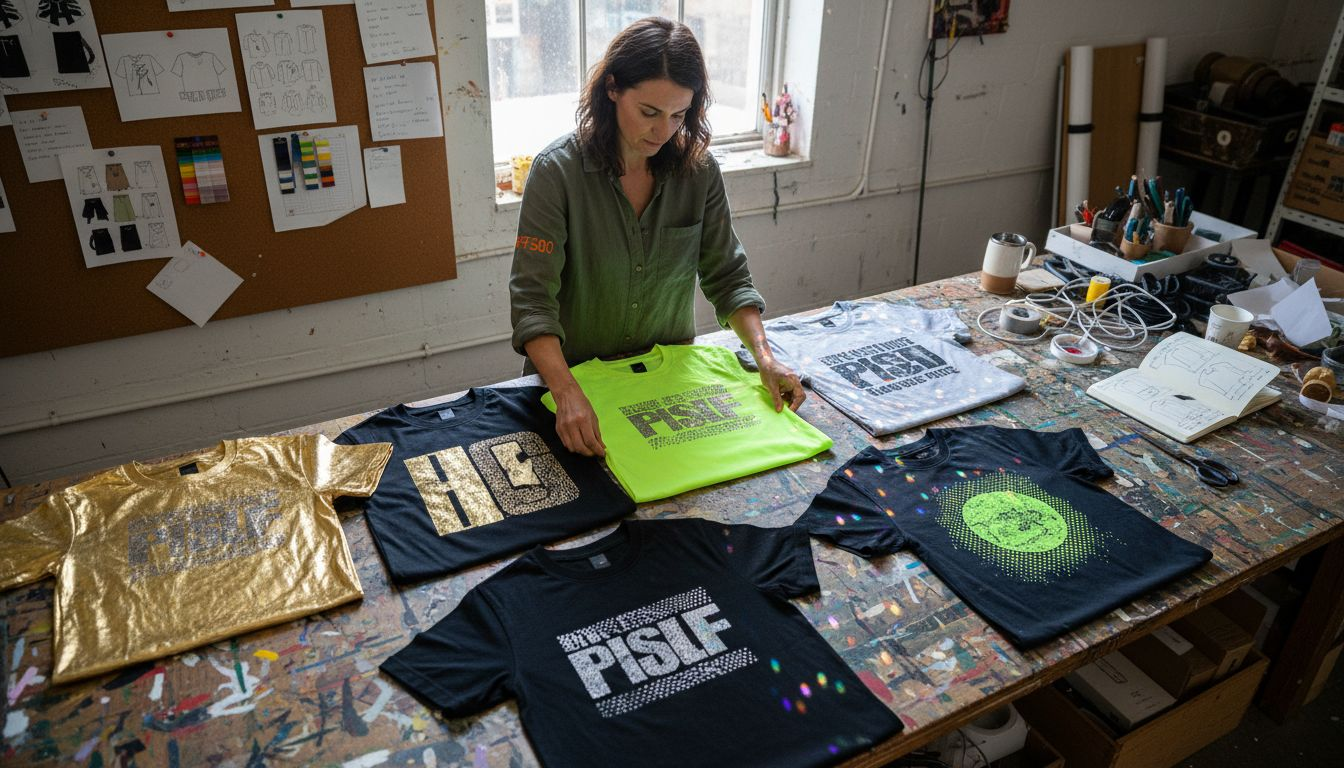
Metallic transfers create reflective, fashion-forward apparel that catches light and stands out. Gold, silver, rose gold, and copper finishes add luxury appeal to branded merchandise, event apparel, and fashion collections. The metallic effect remains vibrant through washing and maintains its reflective quality.
Glitter transfers add sparkle and tactile texture, popular in niche markets like cheer uniforms, dance wear, and children’s apparel. The embedded glitter particles create dimension without the mess of loose glitter application. These transfers work well for special occasion clothing and branded merchandise targeting younger demographics.
Puff transfers provide raised 3D effects for standout branding and tactile interest. The foam additive expands during heat application, creating a raised surface perfect for logos, text, and bold graphics. This effect works especially well on caps, hoodies, and streetwear.
Stretch transfers maintain integrity on elastic fabrics, ideal for activewear, yoga pants, and performance apparel. Standard transfers can crack on high-stretch materials, but stretch-specific formulations flex with the fabric. These transfers are essential for any business serving the athletic and fitness markets.
Neon transfers enhance visibility with fluorescent colors, great for safety wear, promotional items, and event merchandise. The bright colors grab attention in daylight and under UV lighting. Construction companies, event coordinators, and sports teams frequently request neon options.
Eco-friendly transfers reduce environmental impact with sustainable inks and adhesives, appealing to green brands and conscious consumers. Water-based inks, reduced chemical usage, and biodegradable components meet growing demand for sustainable apparel. Marketing these transfers helps attract environmentally aware customers willing to pay premium prices.
| Specialty Type | Ideal Use Case | Durability | Cost Premium |
|---|---|---|---|
| Metallic | Fashion apparel, luxury branding | 40-50 washes | 20-30% higher |
| Glitter | Special occasion, children’s wear | 30-40 washes | 25-35% higher |
| Puff | Bold logos, streetwear | 40-50 washes | 15-25% higher |
| Stretch | Activewear, athletic apparel | 50+ washes | 10-20% higher |
| Neon | Safety wear, promotional items | 45-55 washes | 15-20% higher |
| Eco-friendly | Sustainable brands, organic apparel | 45-50 washes | 20-30% higher |
Pro Tip: Combine specialty effects strategically rather than overusing them. A metallic accent on an otherwise standard design often creates more impact than an entirely metallic graphic.
Exploring different types of DTF transfers helps businesses identify which specialty options align with their target market and product positioning.
Comparing garment transfer methods: DTF vs screen printing vs others
Understanding how DTF stacks up against traditional methods helps you make informed decisions about which technology best serves your business model and production needs.
DTF printing eliminates costly screen and color separation setup, reducing setup costs by up to 70%. Screen printing requires creating screens for each color, making setup expensive and time-consuming. This front-loaded cost only makes sense for large bulk orders.
Screen printing suits large bulk orders but limits complex color designs. Once screens are made, per-unit costs drop significantly for runs of 100+ pieces. However, photographic images, gradients, and designs with many colors become prohibitively expensive due to multiple screen requirements.
DTF supports low minimums and faster turnaround, aiding small businesses and niche products. You can profitably produce single pieces or small batches without setup fees. This flexibility allows you to test designs, offer customization, and serve smaller market segments.
| Method | Setup Cost | Min Order | Color Limit | Fabric Compatibility | Durability (Washes) |
|---|---|---|---|---|---|
| DTF | None | 1 piece | Unlimited | Cotton, poly, nylon, blends | 50+ |
| Screen Printing | $50-200+ | 24-50 pieces | 1-6 practical | Cotton, cotton blends | 50-100+ |
| Heat Transfer Vinyl | None | 1 piece | Single color per layer | Most fabrics | 30-50 |
| Direct to Garment | None | 1 piece | Unlimited | Cotton, light colored | 40-50 |
| Sublimation | None | 1 piece | Unlimited | Polyester only | 100+ |
Cost per print varies with order size and complexity. DTF often proves more cost-effective for short runs under 50 pieces. Screen printing wins for simple designs in quantities over 100. Calculate your typical order size and design complexity to determine which method maximizes profitability.
Key advantages of DTF over other methods:
- No color separation or screen making required
- Works on dark and light fabrics without pretreatment
- Softer hand feel than heat transfer vinyl
- Better durability than standard heat transfers
- Faster production than screen printing for small runs
- More fabric compatibility than sublimation
Fabric compatibility and durability differ by method, affecting product lifespan and customer satisfaction. Sublimation only works on polyester, limiting product options. DTG struggles on dark fabrics and polyester. DTF works across virtually all fabric types with consistent quality.
Pro Tip: Consider hybrid approaches. Use DTF for complex multicolor designs and small runs, screen printing for simple bulk orders, and vinyl for single-color quick jobs to optimize costs across your product mix.
Businesses exploring custom transfers benefit from understanding these tradeoffs, while the cost-effective DTF guide provides deeper financial analysis.
Supplier comparison: top DTF transfer providers in 2026
Choosing the right DTF transfer supplier impacts your production costs, product quality, and ability to meet customer deadlines. Key factors include pricing structure, durability standards, turnaround speed, and minimum order requirements.
Price range spans $0.017 to $0.10 per square inch based on quality and order size. Volume discounts reward larger orders, but even small quantities remain affordable. Compare pricing across multiple suppliers and factor in shipping costs for accurate total cost.
Wash durability varies from 50 to over 100 cycles depending on supplier quality standards and adhesive formulations. Request wash test data and customer reviews to verify durability claims. Some suppliers cut corners on adhesive quality to lower prices, resulting in premature failure.
Turnaround times range from same day to four days for standard orders. Rush services may cost extra but can save crucial time for urgent projects. Reliable turnaround consistency matters more than promised speed, so check supplier reviews for on-time delivery rates.
Minimum order quantities differ, impacting suitability for small vs large businesses. Some suppliers require minimum dollar amounts or square inch totals, while others accept any order size. Find a supplier whose minimums match your typical order patterns.
| Supplier Feature | Budget Option | Mid-Tier | Premium |
|---|---|---|---|
| Price per sq in | $0.05-0.07 | $0.04-0.05 | $0.017-0.04 |
| Turnaround | 3-4 days | 2-3 days | Same day to 2 days |
| Wash Durability | 50+ washes | 60+ washes | 80+ washes |
| Minimum Order | $25-50 | $50-100 | None |
| Color Accuracy | Good | Excellent | Exceptional |
Small businesses improve workflow and product consistency by outsourcing DTF transfer printing to specialists. You avoid printer maintenance, supply management, and the learning curve associated with in-house printing. Outsourcing converts fixed costs into variable costs, improving cash flow for growing businesses.
Outsourcing reduces overhead and speeds up production reliability. Equipment failures, supply shortages, and technical troubleshooting disappear when you work with established suppliers. Focus your time on sales, customer service, and business growth instead of printer maintenance.
Pro Tip: Establish relationships with two suppliers to ensure backup capacity during peak seasons or if your primary supplier experiences delays or quality issues.
For detailed supplier evaluations, review the top DTF transfer suppliers comparison to find the best fit for your business size and needs.
Situational recommendations: choosing the best transfer for your business
Applying transfer knowledge to your specific business context helps you make practical decisions that align with your goals, budget, and customer base.
-
Small batch and startups: Standard DTF provides low cost and versatile use across multiple product types. Start with a reliable mid-tier supplier offering no minimums. Test different designs and fabrics before scaling up. This approach minimizes risk while you develop your product line and identify best sellers.
-
Activewear and athletic brands: Stretch DTF transfers maintain elasticity and durability on performance fabrics. Prioritize suppliers with proven wash durability over 60 cycles. Your customers demand products that withstand intense use and frequent washing. Invest in quality transfers that protect your brand reputation.
-
Fashion and specialty brands: Metallic and glitter transfers enhance branding and product appeal for premium positioning. These effects justify higher retail prices and differentiate your products from competitors. Combine specialty accents with standard transfers to balance visual impact with cost control.
-
Eco-conscious and sustainable brands: Prioritize eco-friendly DTF transfers with water-based inks and sustainable materials. Marketing your environmental commitment attracts conscious consumers willing to pay premium prices. Partner with suppliers who provide transparency about their environmental practices and certifications.
-
High-volume production shops: Establish relationships with suppliers offering volume discounts and consistent quality at scale. Consider multiple suppliers to manage risk and maintain capacity during peak seasons. Negotiate pricing based on committed monthly volumes to maximize margins.
-
Custom and personalization services: Same day or next day turnaround becomes critical for serving customers who want fast delivery. Choose suppliers with reliable rush services and clear communication. Speed and reliability drive repeat business in the custom apparel market.
-
Event and promotional merchandise: Neon and specialty transfers create memorable branded items that stand out. Fast turnaround matters for time-sensitive events. Work with suppliers experienced in rush orders and last-minute changes.
Pro Tip: Document your transfer specifications, press settings, and supplier performance in a simple spreadsheet. This knowledge base helps train staff, troubleshoot issues, and maintain consistency as you grow.
Explore diverse apparel printing examples to see how different businesses apply transfer technologies to their specific niches and markets.
Explore same day DTF transfers at DIY Printz
Putting your transfer knowledge into action becomes easier when you partner with a reliable supplier who understands small business needs. DIY Printz specializes in fast turnaround, high-quality DTF transfers that streamline apparel production.
We offer same day DTF transfers to help you meet tight deadlines and keep customers happy. Our production capacity handles everything from single custom pieces to bulk orders of thousands, maintaining consistent quality regardless of order size.
You get access to standard and specialty transfer options, including metallic, glitter, stretch, and eco-friendly variants. This variety lets you serve diverse customer needs without managing multiple suppliers or technologies. We handle the printing complexity so you can focus on growing your business.
Outsourcing to DIY Printz eliminates equipment costs, maintenance headaches, and the learning curve associated with in-house DTF printing. Convert fixed costs into variable costs while improving quality consistency and turnaround speed. Join hundreds of successful print shops and apparel brands who rely on our expertise to power their production.
Frequently asked questions
What are the most durable garment transfer types for apparel?
Standard DTF transfers offer excellent durability, lasting 50+ washes with proper application. Screen printing provides the longest lifespan at 50 to 100+ washes, especially on cotton fabrics. Sublimation on polyester can exceed 100 washes but works only on synthetic materials. For most small businesses, DTF provides the best balance of durability, versatility, and cost.
Can DTF transfers be used on all fabric types?
DTF transfers work on cotton, polyester, nylon, and most fabric blends, making them highly versatile. They adhere well to both light and dark colored garments without pretreatment. However, stretch DTF formulations are recommended for high-elasticity fabrics like spandex and athletic wear to prevent cracking. Always test new fabric types with sample transfers before committing to large production runs.
How do turnaround times compare between DTF transfers and screen printing?
DTF transfers generally offer faster turnaround, often same day to two days for standard orders, with no screen setup required. Screen printing requires one to two days just for screen preparation, then additional production time. For orders under 50 pieces, DTF typically ships two to three days faster than screen printing. This speed advantage helps small businesses respond quickly to customer demands.
Is it better to outsource DTF transfer printing or handle it in-house?
Outsourcing DTF transfer printing eliminates printer maintenance and upfront equipment expenses for small businesses. DTF printers cost $8,000 to $30,000 plus ongoing supplies and maintenance. Outsourcing converts these fixed costs into variable costs that scale with revenue. However, in-house printing offers more control over timing and can reduce per-unit costs once volume exceeds several thousand transfers monthly. Most businesses under $100,000 in annual transfer spending benefit from outsourcing.
Recommended
READY TO PRINT?
Send us your artwork and we'll dial in your DTF transfer, color, and same-day turnaround.


