

7 Practical Examples of DIY Apparel Printing for Brands
Discover 7 actionable examples of diy apparel printing to help brands and creators produce custom shirts and merch easily and affordably.

Bringing your brand to life through custom apparel can feel overwhelming when you’re faced with decisions about fabrics, printing techniques, and design placements. Knowing where to start and how to achieve professional results is often what separates successful merchandise from wasted investment. By uncovering proven methods for custom printing across t-shirts, hoodies, sportswear, tote bags, and more, you’ll gain the confidence to create durable, eye-catching products that truly represent your vision. Get ready to discover actionable insights and step-by-step strategies that will help you turn creative ideas into retail-ready apparel without unnecessary trial and error.
Table of Contents
- Using Dtf Transfers For Custom T-Shirts
- Creating Branded Hoodies With Diy Printing
- Applying Transfers To Sportswear And Jerseys
- Making Unique Tote Bags With Dtf Transfers
- Personalizing Caps And Hats With Custom Prints
- Printing Limited Edition Apparel For Events
- Producing Sample Merchandise For Small Businesses
Quick Summary
| Takeaway | Explanation |
|---|---|
| 1. Use DTF for vibrant apparel | Direct-to-film transfers enable printing of multicolor designs on various fabrics, making custom t-shirt production easy and cost-effective. |
| 2. Plan designs for hoodies carefully | Strategic selection of fabric and print methods is crucial for producing high-quality branded hoodies that stand out in the market. |
| 3. Test transfers on sportswear fabrics | Ensuring proper adhesion and durability through test transfers on similar scraps helps maintain the functionality and appearance of athletic gear. |
| 4. Create unique promotional tote bags | DTF printing allows the creation of high-resolution, custom tote bags that serve as effective branding tools for small businesses. |
| 5. Produce professional sample merchandise | Crafting high-quality sample items enhances brand identity and serves as powerful marketing materials, attracting customer interest and engagement. |
1. Using DTF Transfers for Custom T-Shirts
Custom t-shirt printing has transformed from complex screen printing to accessible digital methods. Direct-to-film (DTF) transfers have emerged as a game-changing technique for brands looking to produce vibrant, professional-quality apparel with minimal equipment investment.
DTF printing offers remarkable versatility compared to traditional printing methods. By leveraging digital transfer technologies, brands can create full-color designs on multiple fabric types including cotton and polyester.
Key advantages of DTF transfers include:
- Ability to print complex multicolor designs
- Lower startup costs compared to screen printing
- High durability and wash resistance
- Quick turnaround times for small and medium runs
- No minimum order quantity requirements
The process involves several straightforward steps:
- Design artwork digitally
- Print design onto special PET transfer film
- Apply adhesive powder
- Cure the transfer
- Heat press onto garment
DTF transfers allow brands to produce professional-quality custom apparel without massive equipment investments.
Pro tip: Always test your DTF transfer on a sample fabric to ensure color accuracy and adhesion before running full production.
2. Creating Branded Hoodies with DIY Printing
Custom hoodie printing offers small brands an exciting opportunity to create unique merchandise with professional results. Fabric choice and printing technique are critical factors in producing high-quality branded apparel.
Professional hoodie design requires strategic planning across multiple elements including fabric selection and print method.
Key considerations for DIY hoodie printing include:
- Selecting appropriate fabric blends
- Understanding various print technologies
- Mapping design placement strategically
- Preparing artwork for specific printing methods
Most effective printing techniques for branded hoodies:
- Screen printing for bulk orders
- Direct-to-garment (DTG) for detailed designs
- Heat transfer vinyl for small batches
- Sublimation for polyester fabrics
Strategic design placement can transform a simple hoodie into a powerful brand statement.
Pro tip: Always create a digital mockup of your design before printing to visualize exact placement and proportions.
3. Applying Transfers to Sportswear and Jerseys
Sportswear printing requires specialized techniques that go beyond standard apparel customization. Performance fabric transfers demand precision and technical understanding to maintain athletic garment functionality.
Sports jersey fabric composition dramatically impacts transfer application success, with polyester and synthetic blends presenting unique challenges.
Key considerations for sportswear transfers:
- Understanding fabric stretch characteristics
- Selecting heat-transfer technologies compatible with synthetic materials
- Managing moisture-wicking fabric properties
- Ensuring transfer durability during athletic movement
Recommended transfer application steps:
- Verify fabric composition
- Choose heat-press compatible transfers
- Adjust temperature settings precisely
- Apply even pressure during transfer
- Allow proper cooling time
Professional sports jersey transfers require more than just printing technology they demand a nuanced understanding of fabric engineering.
Pro tip: Always conduct a test transfer on a similar fabric scrap to confirm adhesion and durability before applying to the final garment.
4. Making Unique Tote Bags with DTF Transfers
Designing custom tote bags has become a powerful branding strategy for small businesses and creative entrepreneurs. Direct-to-film transfer technology offers an innovative solution for producing vibrant personalized bags with minimal equipment.
DTF printing works exceptionally well on various fabric types including cotton canvas and polyester blends.
Key advantages of DTF tote bag transfers:
- High-resolution full color designs
- Exceptional wash durability
- Compatible with multiple fabric weights
- Low startup investment required
- Quick production turnaround
Recommended steps for successful tote bag transfers:
- Select appropriate fabric material
- Pre-treat bag surface
- Remove surface lint carefully
- Apply transfer with precise heat press settings
- Allow proper cooling before handling
Professional-quality custom tote bags are within reach for any creative entrepreneur willing to learn the process.
Pro tip: Always conduct a test transfer on a similar fabric scrap to confirm color vibrancy and adhesion before producing your final batch of tote bags.
5. Personalizing Caps and Hats with Custom Prints
Custom cap printing has become a powerful branding strategy for businesses seeking unique merchandise. Personalized headwear designs offer an excellent opportunity to showcase creativity and brand identity.
Custom printing methods for caps enable entrepreneurs to transform standard headwear into distinctive marketing tools.
Top printing techniques for caps:
- Screen printing for solid color designs
- Embroidery for textured logos
- Heat transfer vinyl for intricate graphics
- Direct-to-film (DTF) transfers for full-color artwork
- Sublimation for polyester blend caps
Key considerations for cap customization:
- Choose appropriate fabric material
- Select compatible printing method
- Prepare high-resolution artwork
- Test print on similar fabric
- Ensure proper heat press settings
Professional cap printing transforms simple headwear into powerful brand communication tools.
Pro tip: Always pre-treat the cap surface and use a protective pressing pillow to ensure even heat distribution and prevent unwanted texture distortions.
6. Printing Limited Edition Apparel for Events
Limited edition event apparel transforms simple merchandise into powerful marketing tools. Strategic event branding can create memorable experiences that extend far beyond the event itself.
Creating event apparel with strategic design allows brands to generate excitement and long-term engagement.
Key strategies for limited edition event apparel:
- Align design with event theme
- Use high-quality printing techniques
- Create scarcity and exclusivity
- Incorporate unique commemorative elements
- Design for multi-channel marketing potential
Effective limited edition printing steps:
- Research target audience preferences
- Develop unique artwork
- Select appropriate printing method
- Produce small controlled batches
- Create multi-platform promotional strategy
Limited edition apparel transforms event participation into a collectible brand experience.
Pro tip: Consider numbering each item and creating a certificate of authenticity to increase perceived value and collectibility.
7. Producing Sample Merchandise for Small Businesses
Sample merchandise represents a strategic opportunity for small businesses to showcase brand identity and attract potential customers. Digital branding technologies have transformed how emerging companies create and leverage promotional products.
Branding strategies for small enterprises help businesses build competitive advantage through targeted merchandising.
Key considerations for producing sample merchandise:
- Align design with brand identity
- Choose high-quality printing methods
- Create versatile product samples
- Focus on visual appeal and functionality
- Develop cost-effective production strategies
Effective sample merchandise development steps:
- Research target audience preferences
- Design compact and memorable items
- Select appropriate printing technique
- Produce small initial batches
- Use samples for marketing and networking
Strategic sample merchandise can transform small business marketing from expensive to incredibly effective.
Pro tip: Always produce sample merchandise that looks professional enough to make customers want to display or use the item, turning them into walking brand ambassadors.
Below is a comprehensive table summarizing the key techniques and considerations discussed throughout the article regarding custom apparel production and personalized merchandise strategies.
| Main Topic | Key Points | Advantages |
|---|---|---|
| DTF Transfers for T-Shirts | Enables vibrant, multicolor designs on various fabrics, with durable and quick production. | Low startup cost, versatility, and quality outcomes. |
| DIY Hoodie Printing | Requires strategic planning including fabric selection and suitable printing methods. | Cost-effective, custom branding opportunities. |
| Sportswear Transfers | Specialized techniques for performance fabrics ensuring functionality and durability. | Maintains athletic performance and appearance. |
| Tote Bags with DTF Transfers | Consistent high-quality designs on cotton and polyester blends. | Excellent branding tool with minimal equipment investment. |
| Custom Caps and Hats | Incorporates diverse methods like embroidery and DTF transfers. | Creates unique, brand-centric merchandise efficiently. |
| Limited Edition Apparel | Aligns design with event themes to enhance engagement. | Generates exclusivity and memorable brand association. |
| Sample Merchandise | Represents the brand effectively with compact designs. | Facilitates professional and effective customer engagement and marketing. |
Unlock the Power of DIY Apparel Printing Without the Hassle
The article highlights common challenges when producing vibrant, durable custom apparel using techniques like DTF transfers, heat press, and personalized printing for various fabric types and products. Many small businesses and creators face obstacles such as high startup costs, mastering complex equipment, and ensuring consistent quality while managing multiple printing methods for t-shirts, hoodies, sportswear, tote bags, and caps.
DIY Printz offers the perfect solution by handling all your Direct-to-Film transfer needs with professional precision and fast turnaround. Our service eliminates the steep learning curve and maintenance of owning a DTF printer, letting you focus on selling, pressing, and growing your brand. Whether you need hundreds or thousands of transfers, we deliver ready-to-press, full-color transfers that are durable and compatible with multiple fabric types.
- Save time and avoid costly equipment investments
- Get consistent quality for all your apparel printing projects
- Perfect for small runs, limited editions, and bulk production
Discover how to streamline your DTF transfer printing process and produce professional-quality custom apparel that stands out.
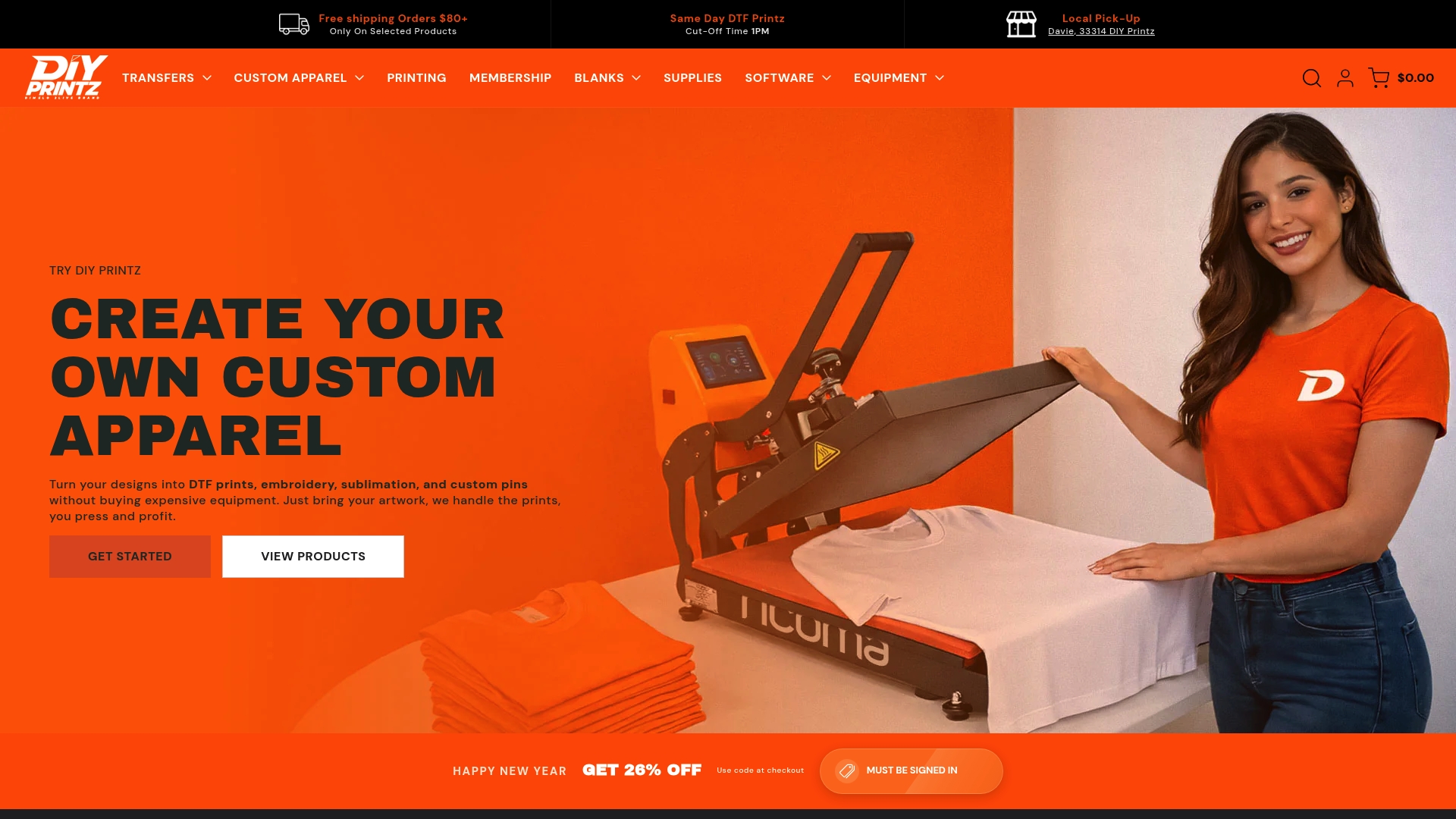
Bring your DIY apparel ideas to life with ease and confidence today. Explore our trusted services at DIY Printz and start elevating your brand with vibrant, ready-to-use transfers. Ready to simplify your production and boost your sales? Visit DIY Printz now and take the first step toward hassle-free apparel printing.
Frequently Asked Questions
How can I get started with DIY apparel printing for my brand?
To get started with DIY apparel printing, identify the type of apparel you want to customize, such as t-shirts or hoodies. Research different printing methods like Direct-to-Film (DTF) or heat transfer vinyl, and then create or procure design artwork that aligns with your brand.
What are the key advantages of using DTF transfers for printing apparel?
The key advantages of using DTF transfers include versatility in creating multicolor designs, lower initial investment compared to screen printing, and high durability. Start by familiarizing yourself with the DTF process, which involves printing designs onto PET transfer film and applying them to garments.
How do I ensure my apparel designs are high quality?
To ensure high-quality designs, choose high-resolution artwork and select appropriate fabric materials that complement your printing technique. Create a digital mockup to visualize the design placement and proportions before printing, allowing adjustments for optimal results.
What steps should I follow for producing sample merchandise?
To produce sample merchandise effectively, research your target audience’s preferences and create designs that reflect your brand identity. Focus on producing small initial batches to refine your offerings and utilize these samples for marketing efforts or networking opportunities.
What printing techniques are best for custom hoodies?
For custom hoodies, effective printing techniques include screen printing for larger orders, Direct-to-Garment (DTG) for intricate details, and heat transfer vinyl for smaller batches. Choose the method that aligns with your design complexity and production goals to achieve the best results.
How can I personalize caps and hats for marketing purposes?
To personalize caps and hats, consider using embroidery for a textured logo or Direct-to-Film transfers for full-color designs. Prepare your artwork, select the appropriate printing method, and conduct a test print on similar fabric to ensure quality before proceeding with your production.
Recommended
- 7 Inspiring Examples of Custom Apparel Designs for Brands – DIYPRINTZ
- DIY Transfers for Apparel – Why Invest Now – DIYPRINTZ
- BYO T‑Shirt Printing with DTF & DTG at DIY Printz – DIYPRINTZ
- DIY Whats Trending: Embroidery, UV, and More – DIYPRINTZ
- What Is Custom Apparel? Complete Guide for 2024 – Custom T-Shirts and Printed Merch in Utah | Pulse Merch
READY TO PRINT?
Send us your artwork and we'll dial in your DTF transfer, color, and same-day turnaround.


