

Why Invest in DIY Transfers on Apparel Printing Now
Explore why DIY apparel printing matters, covering benefits, types of transfers, cost savings, creative control, and business growth potential.

Turning a blank T-shirt into a custom design is not just about fashion, but about making your vision real. For North American small business owners and creative entrepreneurs, DIY apparel printing brings creative control and deep product connection without the need for industrial equipment. This article explains practical techniques and smart business strategies to help you personalize clothing, manage costs, and grow your brand through hands-on design.
Jump to a section
- DIY Apparel Printing Defined and Demystified
- Types of Transfers and Printing Methods
- Cost Savings Versus Traditional Printing Models
- Creative Control and Customization Benefits
- Scaling a Small Business With DIY Printing
- Unlock Your Creative Potential With DIY Printz Today
- Frequently Asked Questions
- Recommended
Key Takeaways
| Point | Details |
|---|---|
| Understanding Transfer Technologies | Familiarize yourself with different transfer methods such as DTF and DTG to enhance your DIY apparel printing capabilities. |
| Embrace Creative Freedom | Utilize digital design tools to express your individuality and create unique clothing that reflects your personal style. |
| Cost-Efficiency Advantages | Leverage on-demand printing to reduce inventory risks and operational costs compared to traditional printing models. |
| Scaling Your Business | Focus on niche markets and adapt your business model based on customer feedback to effectively grow your DIY printing venture. |
DIY Apparel Printing Defined and Demystified
DIY apparel printing represents more than just creating custom clothing - it’s a transformative creative practice where individuals design, personalize, and produce their own textiles. Holistic fashion design engagement emerges as a powerful method of self-expression, empowerment, and skill development.
At its core, DIY apparel printing involves using specialized transfer technologies like direct-to-film (DTF) and direct-to-garment (DTG) methods to transform blank clothing into personalized masterpieces. These techniques enable small business owners, hobbyists, and entrepreneurs to produce professional-quality custom garments without requiring massive industrial equipment.
The key components of DIY apparel printing include:
- Transfer Technologies: DTF, DTG, and UV transfer methods
- Printing Equipment: Heat presses, specialized printers, and transfer paper
- Design Software: Digital design tools for creating custom artwork
- Finishing Techniques: Heat application and curing processes
Beyond technical skills, DIY apparel printing represents a profound creative journey. Makers develop deep connections with their products, understanding each step of the design and production process. This approach transforms clothing creation from a passive consumption activity into an active, meaningful engagement.
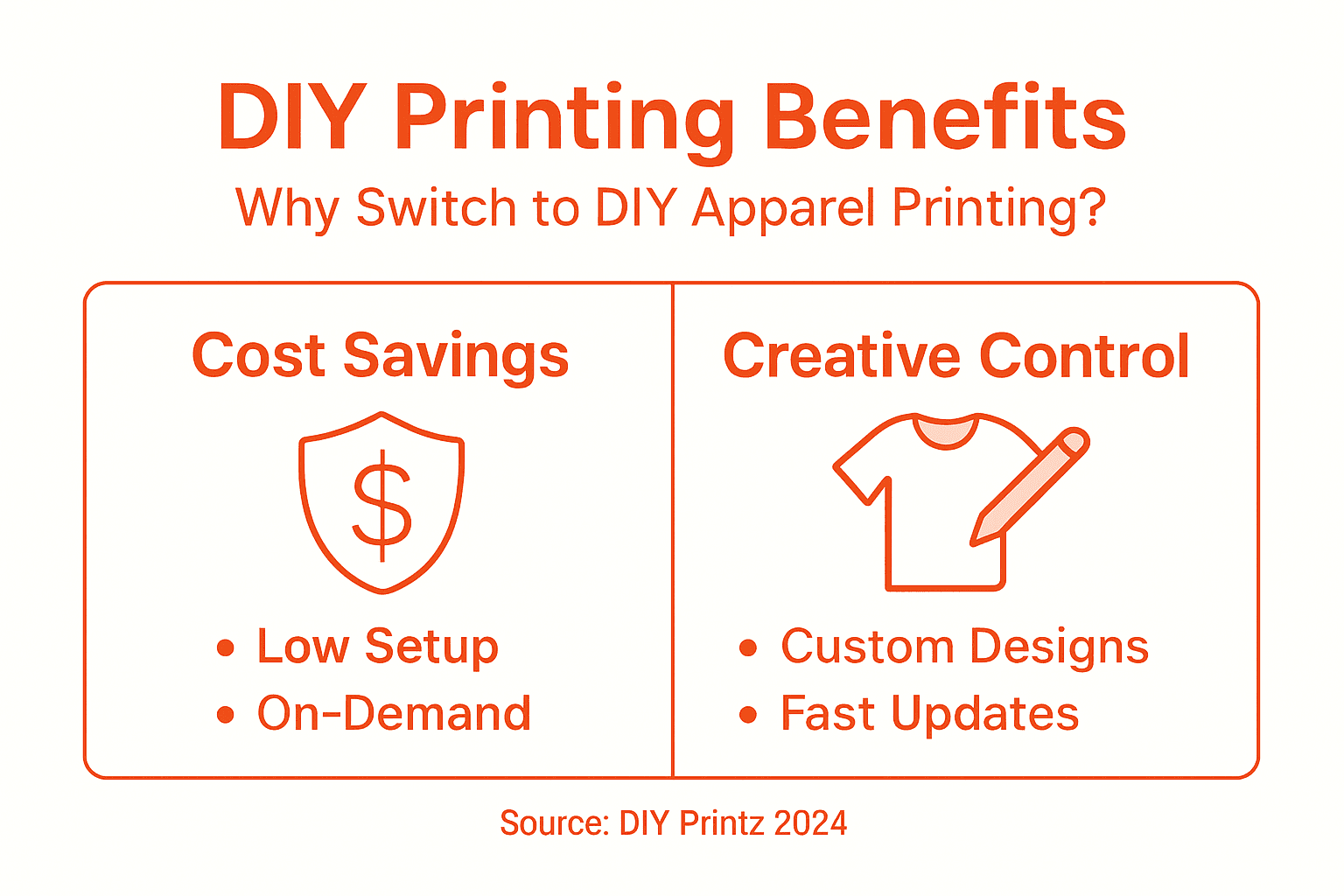
Pro tip: Start with simple, single-color designs to master basic transfer techniques before advancing to more complex multi-layer prints.
Types of Transfers and Printing Methods
In the world of DIY apparel printing, multiple transfer and printing technologies offer unique advantages for small business owners and creators. Transfer printing methods vary significantly in their application, durability, and suitability for different fabric types and design requirements.
The primary transfer and printing techniques include:
- Direct-to-Film (DTF) Transfers: Versatile method allowing full-color prints on various fabric types
- Direct-to-Garment (DTG) Printing: Best for natural fiber fabrics like cotton
- Screen Printing: Traditional method ideal for large batch production
- Heat Transfer Vinyl (HTV): Perfect for single-color and simple graphic designs
- Sublimation Printing: Excellent for polyester fabrics and all-over print designs
Each printing method comes with specific strengths and limitations. Digital direct printing works exceptionally well for natural fibers, providing crisp details and vibrant colors. Screen printing remains popular for larger production runs, offering durability and cost-effectiveness for consistent designs.
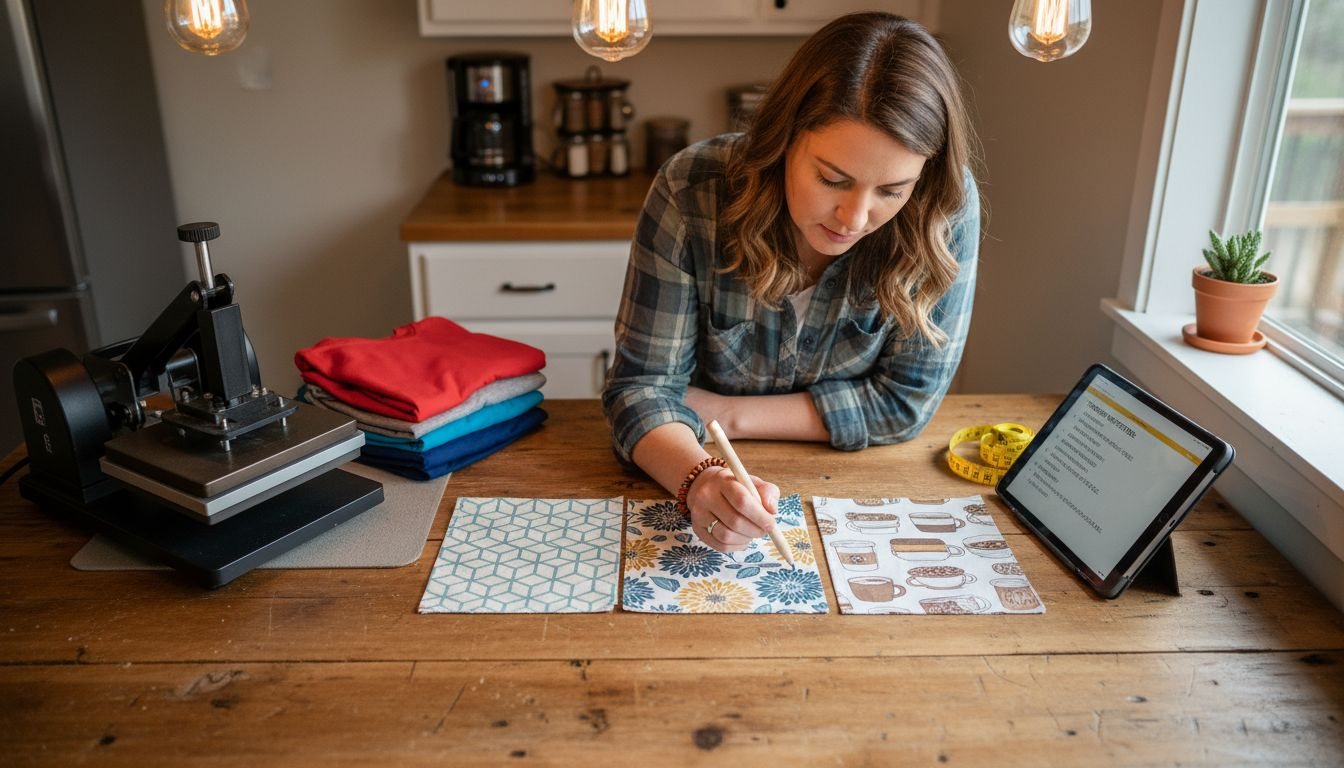
Here’s a comparison of popular DIY apparel printing methods and their suitability for various applications:
| Method | Best Use Case | Suitable Fabrics | Typical Setup Cost |
|---|---|---|---|
| Direct-to-Film (DTF) | Full-color designs | Cotton, polyester | Moderate |
| Direct-to-Garment | Detailed art, small runs | Natural fibers | High |
| Screen Printing | Bulk orders, bold logos | Most fabrics | Low to moderate |
| Heat Transfer Vinyl | Simple shapes, names | Cotton, polyester | Low |
| Sublimation | All-over prints | Polyester only | Moderate |
Pro tip: Experiment with sample transfers on different fabric types to understand how each printing method performs and interacts with various materials.
Cost Savings Versus Traditional Printing Models
DIY apparel printing represents a significant departure from traditional manufacturing models, offering small business owners unprecedented cost advantages. Digital printing technologies have revolutionized the approach to custom apparel production by dramatically reducing operational expenses and inventory risks.
Traditional printing models typically require:
- Large minimum order quantities
- Significant upfront investment in inventory
- Higher per-unit production costs
- Extended production timelines
- Complex supply chain management
In contrast, digital printing methods enable entrepreneurs to minimize financial risks through:
- On-demand production capabilities
- Lower initial investment requirements
- Reduced fabric and material waste
- Faster turnaround times
- Simplified inventory management
By leveraging digital printing technologies, small business owners can effectively eliminate the substantial financial barriers that traditionally prevented entry into custom apparel markets. The ability to produce small batches or even single-item designs without significant overhead represents a fundamental shift in manufacturing economics.
This summary outlines cost-saving advantages of DIY digital printing versus traditional bulk production:
| Expense Factor | Traditional Model | DIY Digital Printing |
|---|---|---|
| Initial Investment | High (equipment, stock) | Low (on-demand tools) |
| Minimum Order Quantity | Large batches required | Single item possible |
| Production Speed | Weeks | Days or less |
| Inventory Risk | Significant | Minimal to none |
Pro tip: Calculate your potential savings by comparing digital printing costs against traditional bulk manufacturing models, focusing on reduced inventory and production expenses.
Creative Control and Customization Benefits
DIY apparel printing represents far more than a manufacturing technique - it’s a gateway to personal creative expression. DIY textile design empowers entrepreneurs and creatives to transform their unique visions into tangible, wearable art through hands-on production processes.
The creative advantages of DIY apparel printing include:
- Complete design autonomy
- Unlimited artistic experimentation
- Rapid prototype development
- Immediate design iteration
- Personal brand storytelling
Digital design tools have democratized the creative process, allowing individuals with minimal technical training to produce professional-quality custom garments. This approach breaks down traditional barriers between conception and production, enabling makers to quickly translate imaginative concepts into real-world products.
Unlike mass-production models that prioritize uniformity, DIY printing celebrates individual creativity. Small business owners can now craft unique merchandise that reflects their distinct aesthetic, target niche markets, and respond dynamically to emerging design trends without significant financial risk.
Pro tip: Invest time in learning digital design software and experimenting with different transfer techniques to maximize your creative potential and develop a unique design signature.
Scaling a Small Business With DIY Printing
Successfully expanding a DIY printing business requires strategic planning and a nuanced understanding of market dynamics. Scaling small business operations demands careful assessment of growth potential, operational efficiency, and sustainable business models.
Key strategies for scaling your DIY printing venture include:
- Identifying and targeting niche market segments
- Developing a flexible, adaptable business model
- Investing in scalable design and printing technologies
- Building a robust customer feedback system
- Maintaining consistent product quality
Print-on-demand platforms offer entrepreneurs a low-risk entry point for business expansion. By leveraging these services, small business owners can test market demand, minimize initial inventory investments, and gradually build their production capabilities without significant upfront capital.
Successful scaling goes beyond technical capabilities. It requires developing a deep understanding of customer needs, creating unique value propositions, and continuously refining your approach based on market feedback. Small printing businesses can differentiate themselves by offering personalized service, rapid turnaround times, and highly customized design options.
Pro tip: Start with a focused product line and expand methodically, reinvesting profits into equipment and marketing as your customer base grows.
Unlock Your Creative Potential With DIY Printz Today
The challenge to balance creative control, cost efficiency, and fast turnaround in DIY apparel printing can feel overwhelming. This article highlights how mastering transfer printing techniques like Direct-to-Film and Heat Transfer Vinyl empowers you to break free from traditional manufacturing constraints. If your goal is to create high-quality custom apparel without the burdens of large inventory or expensive equipment, DIY Printz offers exactly the solutions you need.
Our platform specializes in providing durable, vibrant transfers and all the essential tools for small business owners, hobbyists, and entrepreneurs aiming for professional-grade results. You will benefit from fast turnaround times, including same-day printing, plus exclusive membership perks like discounted pricing and in-store press access that keep your projects moving smoothly. With clear educational resources and comprehensive support, DIY Printz bridges the gap between creative vision and practical execution so you can grow your apparel business confidently.
Why wait to bring your unique designs to life? Visit DIY Printz now to explore our full range of custom transfer printing solutions. Start your journey to professional customization with expert tools and fast service. Take control of your apparel production with Direct-to-Film Transfers and unlock the true benefits of DIY printing today.
Frequently Asked Questions
What are the main benefits of DIY apparel printing?
DIY apparel printing allows for complete design control, cost savings on small runs, and the ability to create unique custom garments that reflect personal style. It empowers makers to connect with their products and provides a platform for self-expression.
How does DIY apparel printing differ from traditional printing methods?
DIY apparel printing utilizes advanced digital technologies like DTF and DTG, allowing for on-demand production and reduced waste, whereas traditional methods often require large batch orders and higher upfront investments.
What types of fabrics are suitable for different DIY printing methods?
Common fabrics include cotton for DTG printing, polyester for sublimation, and a variety of materials for DTF and screen printing. It’s essential to select the appropriate method based on the fabric type and design requirements.
What initial investments are needed to start DIY apparel printing?
Starting DIY apparel printing typically requires a moderate investment in transfer technologies and equipment, such as specialized printers, heat presses, and design software, but the costs are significantly lower than traditional bulk production methods.
Recommended
READY TO PRINT?
Send us your artwork and we'll dial in your DTF transfer, color, and same-day turnaround.


