

Top 5 Custom Apparel Examples: 70% Screen Printing 2026
Discover top custom apparel examples for 2026. Learn why 70% choose screen printing, compare DTF transfers, embroidery, and make informed business decisions.

Screen printing still dominates 70% of custom apparel orders in 2026, yet business owners face tough choices when selecting the right printing method and apparel styles for their operations. The decision hinges on durability, print quality, fabric compatibility, production scale, and cost considerations. Making informed choices ensures operational efficiency, product appeal, and sustainable growth in an evolving market where technology and consumer preferences shape what sells.
Table of Contents
- How To Choose The Right Custom Apparel For Your Business
- Examples Of Custom Apparel Styles And Design Trends In 2026
- Comparison Of Print Methods And Apparel Types
- Benefits Of DTF Transfer Solutions For Business Owners And Creators
- Summary Comparison Of Custom Apparel Examples And Print Methods
- Situational Recommendations: Choosing The Best Custom Apparel For Your Business Needs
- Enhance Your Apparel Business With DIY Printz DTF Solutions
- Frequently Asked Questions
Key Takeaways
| Point | Details |
|---|---|
| Screen printing dominates bulk orders | Accounts for 70% of custom apparel due to scalability and durability. |
| Embroidery suits premium products | Comprises 20% of orders for long-lasting, textured designs. |
| DTF transfers enable vibrant, scalable outsourcing | Offers color-rich prints across fabrics without equipment investment. |
| Business needs dictate method selection | Volume, design complexity, and fabric type guide optimal choices. |
| Outsourcing DTF reduces overhead | Eliminates printer maintenance while improving workflow and quality. |
How to Choose the Right Custom Apparel for Your Business
Selecting custom apparel requires evaluating criteria that directly impact your operations and customer satisfaction. Start with durability. Your apparel must withstand repeated washing and wear, especially for branded uniforms or retail merchandise. Print quality determines brand perception, so the method must deliver crisp, vibrant designs that match your vision.
Fabric compatibility matters because not all printing methods work equally well on cotton, polyester, blends, or performance materials. Production scale influences cost per unit. High volume orders benefit from different methods than small, specialized runs. Maintenance and scalability considerations include equipment costs, learning curves, and the time spent managing printing processes versus focusing on sales and fulfillment.
Balancing aesthetics with operational efficiency means choosing methods that produce attractive results without overwhelming your workflow. In 2026, trends favor oversized prints, sustainable materials, and premium fabrics that elevate brand perception. These influences shape what customers expect and what sells.
Key selection factors include:
- Durability requirements for your target market and use case
- Print quality needed to convey your brand identity effectively
- Fabric types you plan to offer in your product line
- Order volume and frequency affecting per-unit economics
- Maintenance burden and equipment investment capacity
- Scalability to support business growth without bottlenecks
Pro Tip: Test fabric and print combinations on sample garments before committing to bulk orders. This prevents costly mistakes and ensures your final product meets quality standards and customer expectations.
Examples of Custom Apparel Styles and Design Trends in 2026
Custom apparel styles in 2026 reflect bold visual statements and quality construction. Puff and flat ink combinations create textured, dimensional designs that stand out. Oversized back prints are a growing trend in 2026 custom apparel, offering maximum visual impact and effective storytelling for brands. Minimalist front logos balance these bold backs, creating clean, professional looks.
Premium fabrics dominate product lines. Structured heavyweight garments convey quality and justify higher price points. Customers increasingly expect eco-friendly materials and sustainable production practices. Brands that align with these values gain competitive advantages.
Design placement shapes branding effectiveness. Large back graphics allow complex artwork and messaging. Small left chest logos maintain professionalism for corporate wear. Sleeve prints add creative flair without overwhelming garments. These placements work seamlessly with modern types of DTF transfers that deliver vibrant colors and fine detail across various fabrics.
Popular 2026 apparel styles include:
- Oversized hoodies with full back graphics and minimalist front branding
- Premium heavyweight tees featuring puff ink accents and photorealistic prints
- Athletic performance wear with moisture-wicking fabrics and bold team graphics
- Vintage wash garments with distressed prints for retro aesthetic appeal
- Eco-conscious organic cotton basics with earth-tone color palettes
Understanding DTF transfer applications helps you execute these trends with professional results. The versatility of custom transfers explained through detailed guides empowers businesses to expand product offerings without investing in expensive printing equipment. Explore comprehensive 2026 custom apparel trends to stay ahead of market demands.
Comparison of Print Methods and Apparel Types
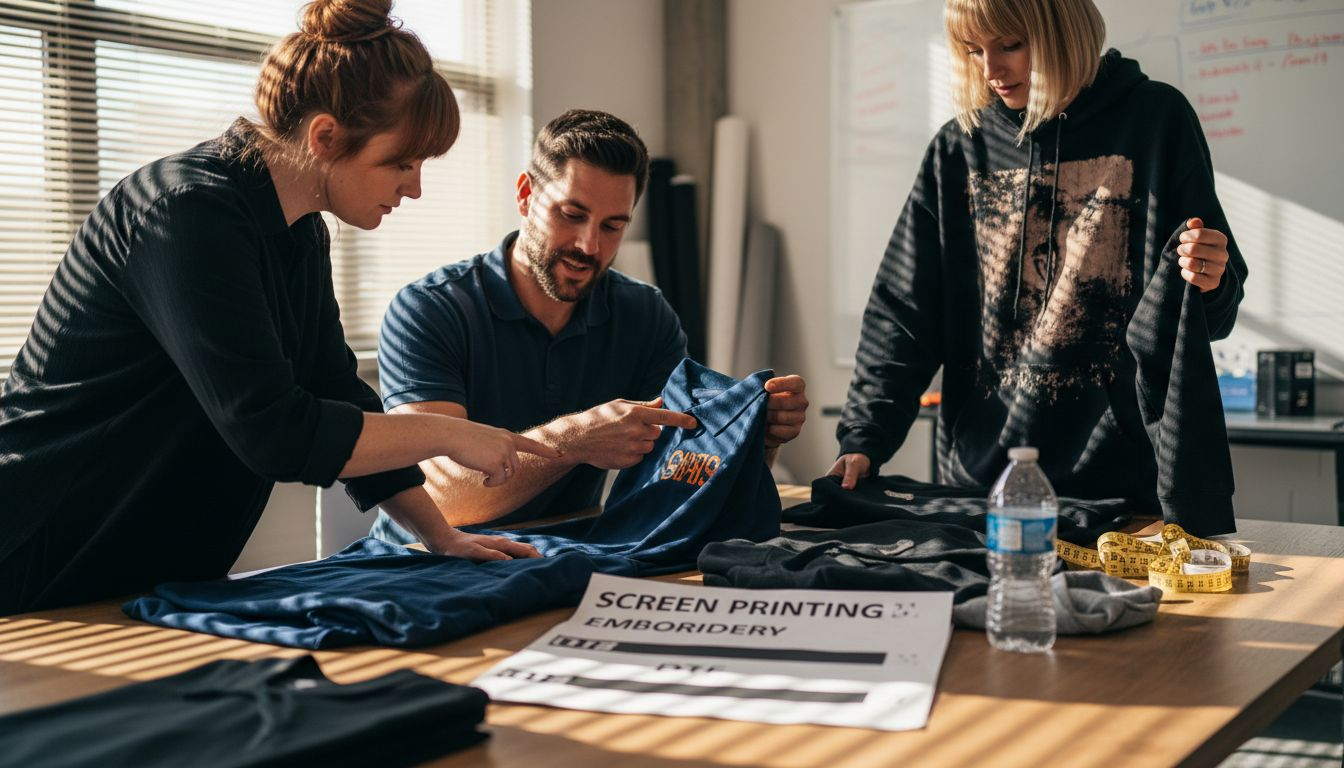
Three major print methods serve the custom apparel market in 2026, each with distinct advantages. Screen printing accounts for about 70% of custom apparel orders due to scalability, cost-effectiveness, and durability. Embroidery comprises nearly 20% of custom apparel orders for durable, premium-feel garments. DTF transfers fill the remaining market with vibrant, detailed prints across diverse fabrics.
| Print Method | Durability | Print Quality | Fabric Compatibility | Best For |
|---|---|---|---|---|
| Screen Printing | Excellent for simple designs | Limited colors, bold graphics | Cotton, cotton blends | High-volume orders (100+ units) |
| Embroidery | Outstanding, long-lasting | Textured, professional | Most wovens, structured fabrics | Premium branding, uniforms |
| DTF Transfers | Excellent with proper care | Photorealistic, full color | Cotton, polyester, blends | Small to medium runs, complex designs |
Screen printing excels for bulk orders with simple, bold designs. Setup costs decrease per unit as volume increases. The method produces durable prints that withstand industrial washing. However, color complexity raises costs and setup time.
Embroidery delivers premium texture and perceived value. The method suits corporate wear, uniforms, and high-end retail. Embroidery lasts longer than most printing methods but works poorly for photorealistic images or very small text.
DTF transfers offer unmatched color vibrancy and detail. The method handles gradients, photographs, and intricate designs that screen printing and embroidery cannot match. DTF works across cotton, polyester, and blends without fabric restrictions. Outsourcing wholesale DTF transfers eliminates equipment investment and maintenance while maintaining quality consistency.
Print method pros and cons:
- Screen printing: Low per-unit cost at volume, durable, limited color complexity
- Embroidery: Premium feel, exceptional durability, higher cost per piece
- DTF transfers: Full color capability, fabric versatility, requires heat press application
Pro Tip: Choose your print method based on order volume and design complexity. For orders over 100 units with simple graphics, screen printing offers the best economics. For detailed, colorful designs or mixed fabric types, outsourcing DTF transfers provides quality and flexibility without equipment overhead. Consult an apparel printing guide to match methods with business goals. Stay informed with 2026 custom apparel trends to remain competitive.
Benefits of DTF Transfer Solutions for Business Owners and Creators
Outsourcing DTF transfers transforms operations for custom apparel businesses in 2026. You avoid the substantial upfront cost of purchasing a DTF printer, which ranges from several thousand to tens of thousands of dollars. You eliminate ongoing maintenance, ink costs, and the technical learning curve required to produce consistent quality.
Consistent quality comes from specialized providers producing hundreds to thousands of transfers monthly. Their expertise and equipment calibration deliver reliable results you can trust for every order. Fast turnaround supports agile fulfillment, letting you respond quickly to customer demands and market trends.
Fabric compatibility advantages mean you can offer cotton tees, polyester athletic wear, and cotton-poly blends without switching printing setups. Vibrant, detailed prints attract customers and justify premium pricing. Your focus shifts from managing printing equipment to what grows revenue: selling, pressing transfers, fulfilling orders, and building your brand.
Key outsourcing benefits include:
- Zero equipment investment or depreciation costs
- No ink, film, powder, or consumable supply management
- Consistent quality from specialized, high-volume production
- Fast turnaround enabling quick customer fulfillment
- Fabric versatility without technical adjustments
- More time for sales, marketing, and business development
Pro Tip: Vet DTF transfer providers by ordering samples before committing to production runs. Evaluate print quality, color accuracy, adhesion, and wash durability. Reliable providers maintain consistency across orders, which protects your brand reputation and customer satisfaction.
Learn about the comprehensive advantages of DTF transfers for streamlining operations. Understand how DTF printing production scales with your business. Discover why DTF transfer efficiency boost matters for profitability.
Summary Comparison of Custom Apparel Examples and Print Methods
Understanding trade-offs helps you make informed decisions quickly. This table summarizes how each method performs across critical business factors.
| Factor | Screen Printing | Embroidery | DTF Transfers |
|---|---|---|---|
| Print Quality vs Durability | Bold, durable but limited detail | Textured, extremely durable | Photorealistic, excellent durability |
| Cost at Low Volume | High (setup costs) | Moderate to high | Low to moderate |
| Cost at High Volume | Very low per unit | Moderate | Moderate |
| Maintenance Burden | Moderate (in-house) | Low (equipment simple) | Zero (outsourced) |
| Scalability | Excellent for bulk | Limited by speed | Excellent (provider scales) |
| Fabric Compatibility | Cotton, cotton blends | Woven, structured fabrics | All fabric types |
| Design Complexity | Simple, limited colors | Text, logos, simple graphics | Full color, photorealistic |
| Trend Alignment | Works for bold graphics | Premium, professional | Oversized prints, complex art |
Screen printing remains unbeatable for high-volume, simple designs where per-unit cost matters most. Embroidery justifies its cost for premium positioning and exceptional longevity. DTF transfers deliver the best balance of quality, versatility, and scalability when you outsource to a reliable provider.
Your business goals, order volumes, and design requirements determine the optimal method. Many successful operations use multiple methods strategically, matching each to specific product lines or customer segments.
Situational Recommendations: Choosing the Best Custom Apparel for Your Business Needs
Apply these insights to real-world scenarios matching your business situation:
-
High-volume promotional apparel (500+ units, simple logo): Choose screen printing for lowest per-unit cost and proven durability. Setup costs spread across large orders make this the most economical choice.
-
Premium corporate uniforms (50-200 units, professional branding): Select embroidery for perceived value and exceptional longevity. The textured, upscale appearance justifies higher pricing and reinforces brand quality.
-
Colorful merch with detailed graphics (25-500 units, complex designs): Outsource DTF transfers to achieve vibrant, photorealistic prints without equipment investment. This method handles gradients, fine detail, and mixed fabric types effortlessly.
-
Sustainable brand positioning (any volume, eco-conscious customers): Specify organic cotton or recycled polyester fabrics with water-based inks or DTF transfers using eco-friendly processes. Communicate sustainability in marketing to differentiate your brand.
-
Testing new designs or seasonal limited editions (10-100 units): Use DTF transfers for flexibility and low minimums. Avoid screen printing setup costs when validating market demand before scaling production.
-
Mixed product line (varied styles, volumes, complexity): Combine methods strategically. Screen print bulk basics, embroider premium items, and outsource DTF for detailed or low-volume designs. This maximizes efficiency and quality across your catalog.
Explore 2026 merch trends small runs to capitalize on emerging opportunities. Research best DTF transfer services to find providers matching your quality and turnaround requirements.
Enhance Your Apparel Business with DIY Printz DTF Solutions
After evaluating custom apparel options and print methods, consider how outsourcing DTF transfers streamlines your operations. DIY Printz handles the full transfer-printing process, producing hundreds to thousands of orders monthly with consistent quality and fast turnaround. You avoid printer costs, maintenance headaches, and technical learning curves while accessing vibrant, detailed prints across all fabric types.
Focus on what grows your business: selling, pressing, and fulfilling orders. DIY Printz delivers ready-to-press transfers that make your workflow cleaner and more profitable. Whether you run a print shop, merch brand, or DIY hobby business, our solutions scale with your needs. Discover how a DTF transfers efficiency boost transforms production. Visit the DIY Printz website to explore solutions, guides, and same day DTF transfers that keep your operations moving fast.
Frequently Asked Questions
What is DTF transfer and why is it beneficial?
DTF (Direct-to-Film) transfer is a printing method where designs are printed onto special film, then heat-pressed onto fabric. It benefits businesses by delivering vibrant, full-color prints on any fabric type without equipment investment or maintenance when outsourced.
How do I choose the right print method for my apparel volume?
For orders over 100 units with simple graphics, screen printing offers the best per-unit cost. For detailed designs or volumes under 100 units, outsourcing DTF transfers provides quality and flexibility without high setup costs.
Can outsourcing DTF transfers lower my business costs?
Yes. You avoid printer purchase costs (thousands to tens of thousands of dollars), ongoing maintenance, ink supplies, and technical training. Outsourcing converts fixed costs to variable costs, improving cash flow and scalability.
What fabric types work best with DTF printing?
DTF transfers work excellently on cotton, polyester, cotton-poly blends, and performance fabrics. This versatility lets you offer diverse product lines without changing printing methods or equipment.
Are there eco-friendly options in custom apparel production?
Yes. Choose organic cotton or recycled polyester fabrics. Many DTF providers use eco-friendly processes with reduced water usage and waste compared to traditional screen printing.
How do oversized back prints affect production costs?
Oversized prints increase material usage and may require larger transfer sheets. However, DTF transfers handle large formats efficiently without the significant setup cost increases that screen printing would incur for large, complex designs.
Recommended
READY TO PRINT?
Send us your artwork and we'll dial in your DTF transfer, color, and same-day turnaround.


