

Why Use DTF Transfers for Apparel Success
Discover why DTF transfers boost quality, ease workflows, and save costs for apparel businesses. Compare with alternatives and real use cases.

Every small apparel shop from Alberta to Texas faces the same headache—delivering top-notch prints without buying costly, complicated machines. Direct-to-Film transfers give American and Canadian businesses the power to create vibrant, detailed apparel graphics for any fabric, all while avoiding high setup costs and lengthy processes. This guide breaks down exactly how DTF transfers work and why more owners are choosing this flexible, cost-smart option to stay competitive.
Table of Contents
- Direct-to-Film Transfers Explained Clearly
- Major Benefits Over Heat Transfer and Screen Printing
- DTF Transfer Process and Key Features
- Ideal Scenarios and Everyday Business Use
- Hidden Costs, Risks, and What to Avoid
Key Takeaways
| Point | Details |
|---|---|
| Advantage of DTF Printing | DTF printing offers superior color vibrancy, durability, and flexibility across various fabric types. |
| Efficiency of Production | The DTF process minimizes setup time and allows for high-quality, multi-color prints in a single pass. |
| Cost Considerations | Entrepreneurs should budget for ongoing costs associated with equipment maintenance, inks, and potential material waste. |
| Ideal Business Applications | DTF transfers are particularly beneficial for small to mid-sized businesses, enabling rapid production of custom designs. |
Direct-to-Film Transfers Explained Clearly
Direct-to-Film (DTF) printing represents a cutting-edge textile decoration technique that transforms how custom apparel businesses produce high-quality designs. This innovative method allows entrepreneurs to create vibrant, durable prints across multiple fabric types with unprecedented flexibility and precision.
At its core, DTF printing involves a sophisticated multi-step process that begins with digital printing onto specialized transfer film. Unlike traditional screen printing or heat transfer methods, DTF enables businesses to achieve remarkable image clarity and color reproduction without extensive setup costs.
Key advantages of DTF transfers include:
- Superior color vibrancy and detail reproduction
- Compatibility with multiple fabric types including cotton, polyester, and blends
- Lower minimum order quantities compared to traditional printing methods
- Reduced setup time and equipment complexity
- Enhanced durability of printed designs
The technical workflow involves strategically printing a design onto a specialized film using digital printers, then applying a powder adhesive that bonds the ink. During the heat press stage, this film transfers the design seamlessly onto fabric, creating a professional-grade custom garment with minimal production steps.
Pro tip: Always test your DTF transfer on a sample fabric swatch to confirm color accuracy and adhesion before running full production batches.
Major Benefits Over Heat Transfer and Screen Printing
DTF printing has emerged as a game-changing technology that fundamentally outperforms traditional textile printing methods like heat transfer and screen printing. Apparel printing is being revolutionized by this innovative technique that offers unprecedented flexibility and efficiency for custom garment businesses.
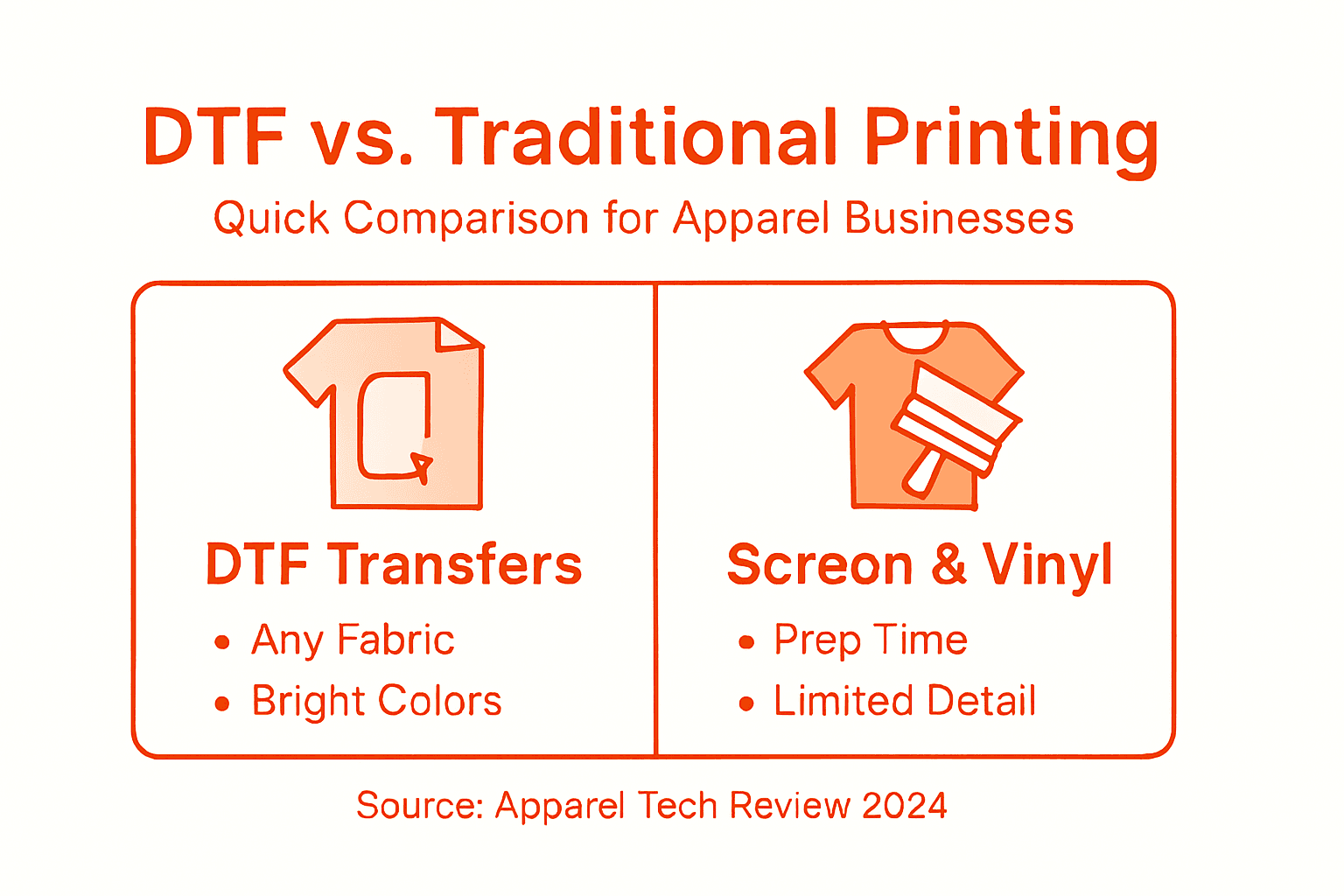
Compared to traditional methods, DTF transfers provide significant advantages that make them increasingly attractive for small to mid-sized apparel businesses. Screen printing requires extensive setup, multiple screens for different colors, and substantial upfront costs. Heat transfer vinyl limits design complexity and often results in stiff, less comfortable prints. In contrast, DTF eliminates these constraints by enabling full-color, highly detailed designs with superior print quality.
Key competitive advantages of DTF printing include:
- Ability to print complex, multi-color designs in a single pass
- No screen or color separation requirements
- Lower minimum order quantities
- Faster production turnaround times
- Exceptional print durability and wash resistance
- Compatibility with virtually any fabric type
The technical superiority of DTF transfers becomes evident in their production workflow. Unlike screen printing, which requires creating separate screens for each color and precise alignment, DTF allows entrepreneurs to print intricate designs directly onto a transfer film. The powder adhesive application and heat transfer process create prints with remarkable elasticity and color vibrancy that traditional methods simply cannot match.
Here’s a side-by-side comparison of DTF, screen printing, and heat transfer vinyl techniques:
| Criteria | Direct-to-Film Printing | Screen Printing | Heat Transfer Vinyl |
|---|---|---|---|
| Design Complexity | High, unlimited colors | Medium, limited per screen | Low, restrictions on detail |
| Setup Time | Minimal | Extensive, multi-stage | Moderate |
| Fabric Compatibility | Works on most fabrics | Limited by ink, mesh | Restricted by vinyl type |
| Durability | Excellent, wash-resistant | Good, may crack over time | Often less flexible |
| Production Batch Size | Cost-effective for small | Best for large batches | Not ideal for bulk orders |
Pro tip: Invest in high-quality DTF transfer films and test different fabric types to understand the full range of printing possibilities for your specific business needs.
DTF Transfer Process and Key Features
The Direct-to-Film (DTF) printing process represents a sophisticated approach to textile decoration that transforms how custom apparel designs come to life. DTF transfers operate through a precise multi-step workflow that enables businesses to create high-quality, vibrant garment prints with unprecedented efficiency.
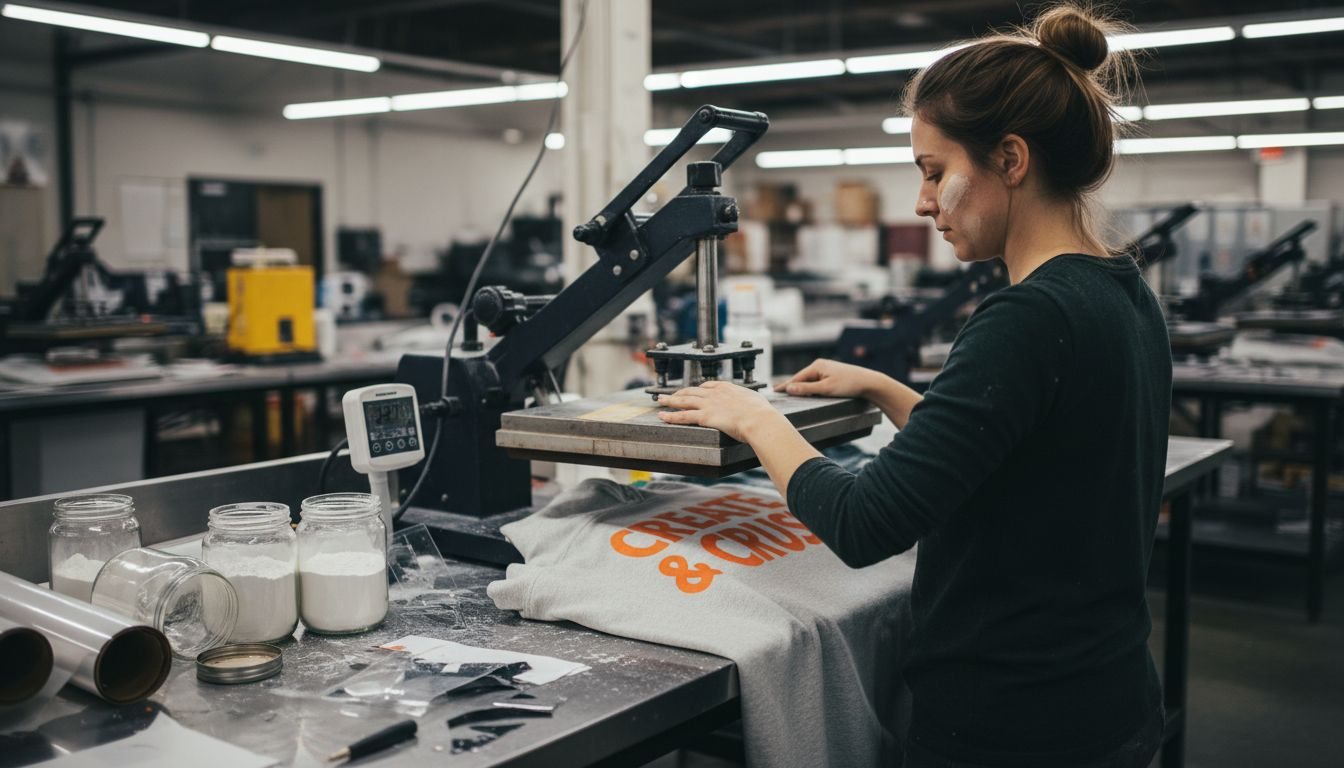
At its core, the DTF transfer process involves four critical stages that distinguish it from traditional printing methods. First, digital artwork is printed directly onto a specialized release film using advanced digital printers. Next, a textile adhesive powder is carefully applied to the printed design, creating a critical bonding layer that ensures transfer durability.
Key technical features of DTF transfers include:
- Instant design reproduction capabilities
- Compatibility with both light and dark fabrics
- Superior color management control
- Enhanced print durability and elasticity
- Minimal equipment and setup requirements
- Reduced production time compared to traditional methods
The final two stages involve precision curing of the powdered design and heat pressing the transfer onto the target garment. This method allows entrepreneurs to produce complex, multi-color designs without the traditional limitations of screen printing or heat transfer vinyl. The result is a crisp, flexible print that maintains its vibrancy through multiple wash cycles and provides exceptional design clarity.
Pro tip: Calibrate your heat press temperature and pressure settings specifically for DTF transfers to maximize print quality and transfer longevity.
Ideal Scenarios and Everyday Business Use
DTF transfers offer remarkable versatility that makes them an ideal solution for a wide range of apparel business scenarios. Small to mid-sized businesses, in particular, can leverage this printing technology to expand their product offerings and streamline their production processes without substantial upfront investments.
Entrepreneurs across multiple industries can benefit from DTF transfers in unique ways. Custom merchandise creators, local screen print shops, online apparel brands, and even small boutique clothing lines can utilize this technology to produce high-quality, small-batch designs with exceptional flexibility.
Ideal business scenarios for DTF transfers include:
- Creating limited edition merchandise runs
- Producing custom uniforms for small organizations
- Developing personalized team apparel and event merchandise
- Offering on-demand printing services
- Designing promotional items for local businesses
- Crafting unique, small-quantity fashion collections
- Supporting startup clothing brands with minimal inventory risk
The technology particularly shines for businesses that require quick turnaround times, varied design complexity, and the ability to print on multiple fabric types. Unlike traditional printing methods, DTF transfers allow entrepreneurs to experiment with designs, test market demand, and adjust production quickly without significant financial barriers. This flexibility is crucial for businesses looking to stay agile and responsive to changing customer preferences.
Pro tip: Start with a small inventory of DTF transfers and gradually expand your offerings as you understand your market’s specific design preferences and demands.
Hidden Costs, Risks, and What to Avoid
While DTF transfers offer significant advantages for apparel businesses, entrepreneurs must navigate potential challenges carefully. DTF printing involves complex equipment considerations that can unexpectedly impact overall production costs and operational efficiency.
The initial investment and ongoing expenses of DTF printing extend beyond basic equipment purchases. Business owners must factor in continuous maintenance, specialized ink and powder costs, and the potential for material waste during the learning and optimization phases. Inconsistent color reproduction and adhesion problems can quickly erode profit margins if proper protocols are not established.
Critical risks and hidden costs to anticipate include:
- High-quality digital printer investment
- Specialized DTF ink and powder expenses
- Regular equipment maintenance and calibration
- Potential material waste during initial setup
- Training time for operators
- Quality control challenges
- Potential reprinting costs for failed transfers
Entrepreneurs should be particularly cautious about cutting corners with equipment quality and consumable materials. Cheap inks and low-grade transfer films can lead to subpar print results, increased waste, and reduced customer satisfaction. Professional-grade equipment and consistent process monitoring are essential for maintaining product quality and protecting your business’s reputation.
The following table summarizes key hidden costs and their business impact in DTF printing:
| Cost Category | Description | Business Impact |
|---|---|---|
| Equipment Maintenance | Routine printer calibration needed | Downtime risk, higher expenses |
| Consumables Quality | Ink & powder affect print results | Poor materials increase waste |
| Operator Training | Learning curve for staff | Slower output, potential errors |
| Material Waste | Errors in setup or transfers | Reduced profit margins |
Pro tip: Budget an additional 20-30% beyond your initial equipment and material costs to account for potential learning curve expenses and unexpected technical challenges.
Unlock Apparel Success with Expert DTF Transfers
The challenges of mastering Direct-to-Film transfers can overwhelm any apparel business. High upfront costs, complex equipment maintenance, and the steep learning curve create real obstacles for entrepreneurs wanting vibrant, durable prints without the hassle. If you find yourself navigating these hidden risks and trying to avoid costly material waste or inconsistent color results, there is a better way.
DIY Printz offers a trusted, high-volume DTF transfer printing service that puts your business ahead. We handle every step of the intricate DTF process, delivering ready-to-press transfers that maintain exceptional quality and wash resistance. Our customers, from screen printers to merch brands, enjoy fast production turnaround without investing in expensive equipment or risking failed transfers. This means more time focusing on growing your brand and creating unique, complex designs without the traditional setup struggles.
Discover how to simplify your apparel production and unlock the full potential of Direct-to-Film technology with DIY Printz. Start turning your creative visions into vibrant garments today by trusting a partner dedicated to efficient, reliable DTF transfer printing. Visit our site now and experience hassle-free DTF prints that elevate your business.
Frequently Asked Questions
What are the main benefits of using DTF transfers for printing apparel?
DTF transfers offer superior color vibrancy, compatibility with various fabrics, lower minimum order quantities, reduced setup time, and enhanced durability compared to traditional printing methods.
How does the DTF transfer process work?
The DTF transfer process involves printing a design onto specialized film, applying a powder adhesive, and then using a heat press to transfer the design onto the fabric. This multi-step process allows for high-quality, intricate designs.
How do DTF transfers compare to screen printing?
DTF transfers surpass screen printing in several ways, including the ability to print complex designs in one pass, lower setup requirements, no separate screens for different colors, and faster turnaround times with better print durability.
What challenges should I be aware of when using DTF transfers?
While DTF transfers have advantages, challenges include the need for initial equipment investment, continuous maintenance, potential material waste during setup, and the importance of using high-quality supplies to ensure successful prints.
Recommended
- DTF Transfer Workflow Guide for Custom Apparel Success – DIYPRINTZ
- DTF Transfer Supplier for Businesses: The Partner You Need – DIYPRINTZ
- 7 Essential Steps for a Complete DTF Printing Checklist – DIYPRINTZ
- DIY Transfers for Apparel – Why Invest Now – DIYPRINTZ
- How dtf shirt transfers are Revolutionizing Custom Apparel – Transfer Kingz
READY TO PRINT?
Send us your artwork and we'll dial in your DTF transfer, color, and same-day turnaround.


