

What Is Custom Apparel? Streamlining Brand Success
Custom apparel empowers businesses with personalized branding. Explore types, printing methods like DTF transfers, real-world uses, and cost factors.

Many American business owners and DIY hobbyists feel frustrated when generic decoration methods limit their apparel projects. Understanding what truly defines custom apparel has become more important as new technologies reshape the industry. This guide will help you cut through common misconceptions, show you how advanced methods like DTF transfers deliver professional results, and explain practical ways to build a standout custom apparel line.
Table of Contents
- Defining Custom Apparel And Common Misconceptions
- Main Types Of Custom Apparel And Decoration Methods
- How The Custom Apparel Process Works
- Dtf Transfers: Transforming Custom Printing
- Costs, Pitfalls, And Choosing A Reliable Partner
Key Takeaways
| Point | Details |
|---|---|
| Understanding Custom Apparel | Custom apparel is more than simple personalization; it includes advanced techniques for creating unique, branded garments. |
| Decoration Methods | Several decoration techniques like screen printing and embroidery offer diverse options tailored to design needs and fabric types. |
| Critical Production Stages | The custom apparel process involves key stages such as design, material sourcing, production, and quality control for optimal results. |
| Choosing a Partner | Selecting a reliable custom apparel partner hinges on factors like quality control and production capacity to avoid common pitfalls. |
Defining Custom Apparel And Common Misconceptions
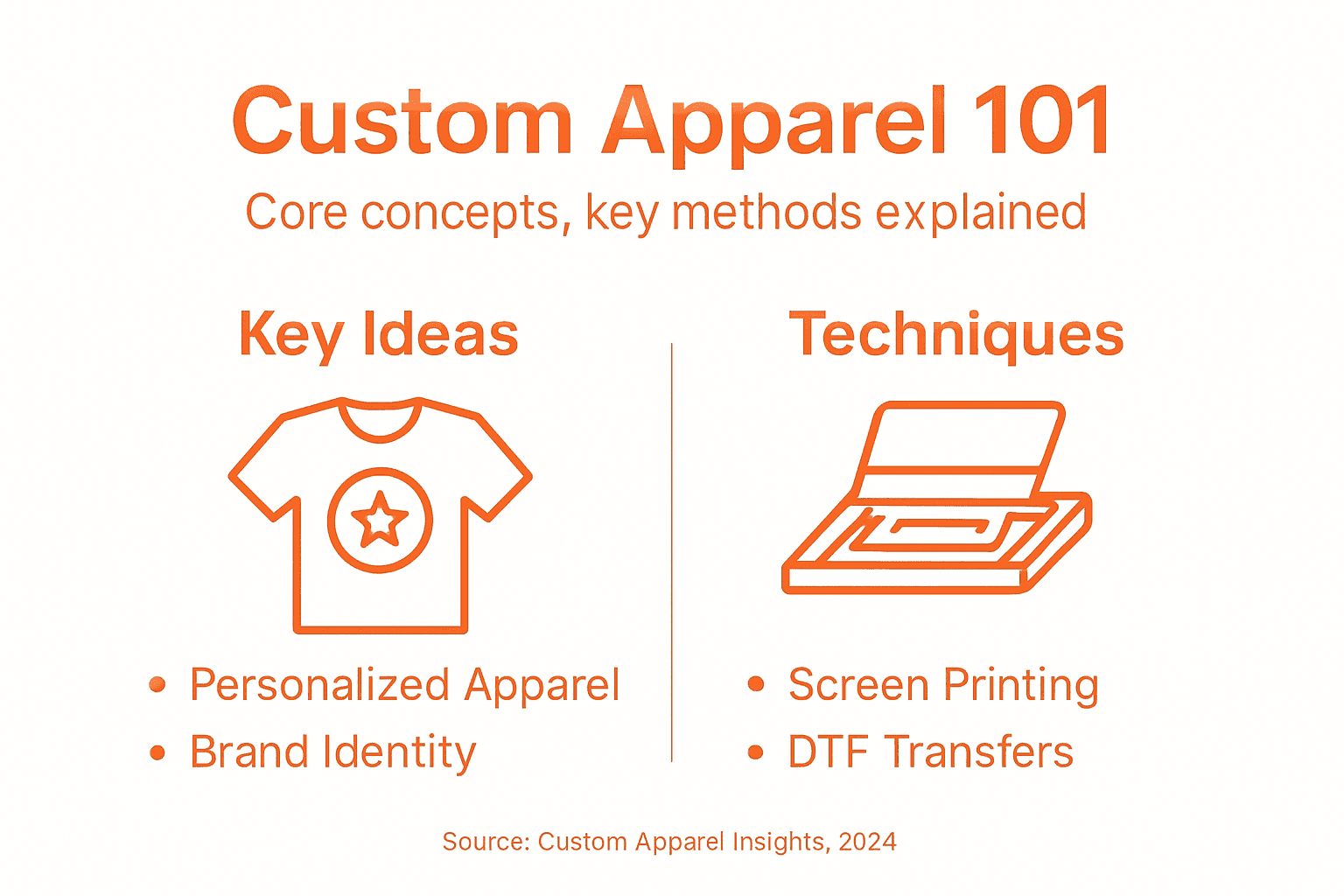
Custom apparel represents a sophisticated approach to garment design and production that goes far beyond basic personalization. Advanced manufacturing techniques have transformed how businesses and individuals create unique clothing pieces, challenging traditional perceptions of what custom apparel can be.
At its core, custom apparel involves creating garments tailored specifically to individual preferences, brand identities, or specific functional requirements. This isn’t simply about adding a name or basic logo - it’s a comprehensive process that integrates design, technology, and precise manufacturing techniques. Contrary to popular belief, custom apparel encompasses multiple sophisticated decoration methods:
- Screen printing for large, vibrant designs
- Heat transfer techniques for complex graphics
- Laser etching for precision detailing
- Embroidery for textured, professional branding
- Digital printing for photorealistic images
Many people mistakenly believe custom apparel is expensive or time-consuming. However, modern decoration techniques have dramatically streamlined the production process, making personalized clothing more accessible than ever before. Businesses and individual creators can now transform standard garments into unique, branded pieces with remarkable efficiency.
Pro tip: Research multiple decoration techniques before selecting your custom apparel production method to ensure you choose the most cost-effective and visually appealing option for your specific project.
Main Types Of Custom Apparel And Decoration Methods
Custom apparel decoration encompasses a diverse range of techniques that transform ordinary garments into unique, branded pieces. Comprehensive apparel decoration techniques offer businesses and creators multiple avenues for personalizing clothing with precision and creativity.
The most prevalent custom apparel decoration methods include:
- Screen Printing: Ideal for large, bold designs with vibrant colors
- Embroidery: Perfect for creating textured, professional logos and intricate details
- Heat Transfer: Allows for complex, photorealistic graphics with excellent durability
- Digital Direct-to-Garment (DTG) Printing: Enables high-resolution, full-color designs
- Appliqué: Provides dimensional layering and unique textural elements
- Rhinestone Application: Adds sparkle and glamour to garments
Each decoration technique offers unique advantages depending on the specific design requirements, fabric type, and intended use. Screen printing works best for large, simple designs on cotton fabrics, while digital printing excels at reproducing photographic images with incredible detail. Embroidery remains a top choice for professional branding, offering a sophisticated and textured approach to garment personalization.
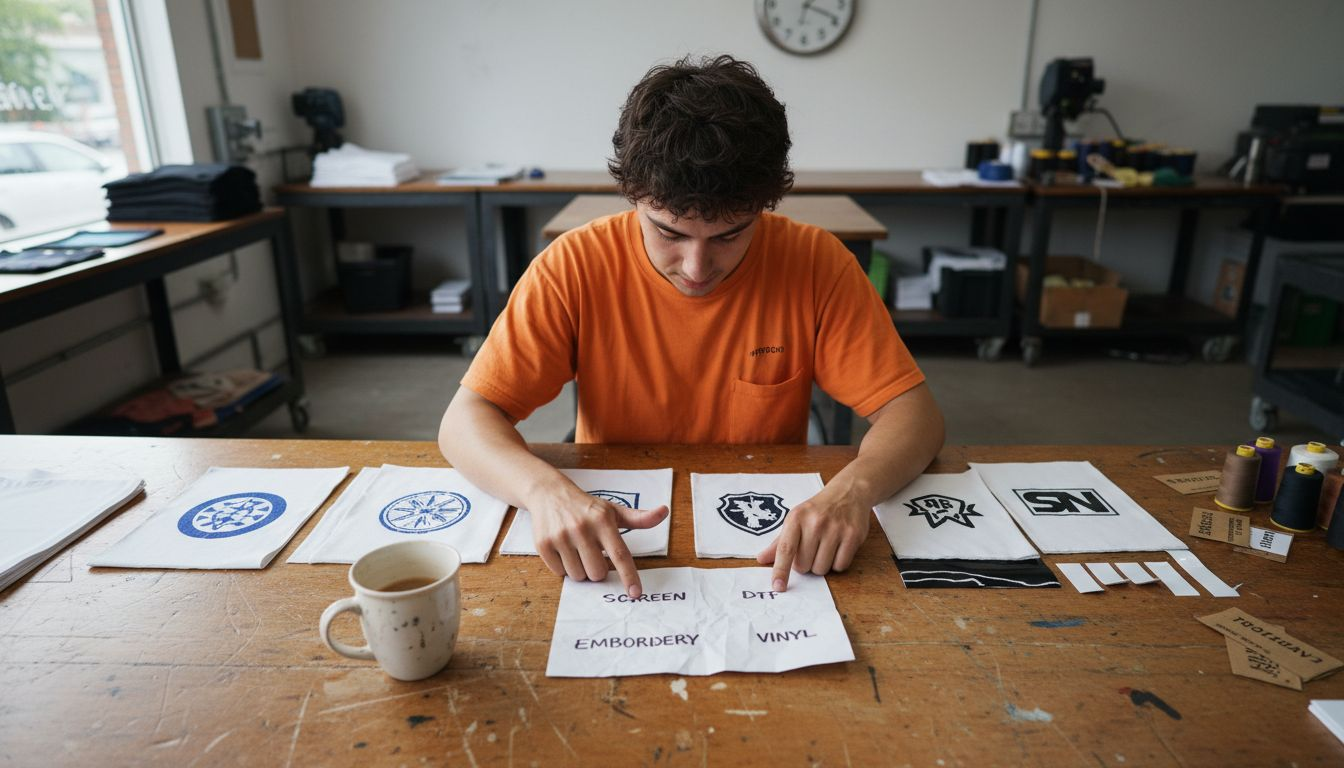
The selection of a decoration method involves carefully considering factors like design complexity, fabric composition, budget, and desired aesthetic. Some techniques work better for certain fabric types, and the quantity of items being produced can also influence the most cost-effective approach.
Pro tip: Always request sample prints or transfers on your specific fabric type to ensure the decoration method matches your exact design and quality expectations.
Here’s how the main custom apparel decoration methods differ by impact and suitability:
| Method | Best For | Durability Level |
|---|---|---|
| Screen Printing | Bold logos, large designs | High with proper care |
| Embroidery | Professional branding, texture | Very high, long-lasting |
| Heat Transfer | Photorealistic images, small runs | Good with quality films |
| DTG Printing | Detailed multi-color artwork | Moderate, vibrant colors |
| Appliqué | Textural variety, custom effects | High when stitched well |
| Rhinestone Application | Fashion accents, special events | Moderate, can lose stones |
How The Custom Apparel Process Works
Custom apparel manufacturing involves a sophisticated, multi-stage process that transforms creative concepts into finished garments. This intricate workflow requires careful coordination across design, production, and quality control stages to deliver exceptional results.
The custom apparel process typically follows these key stages:
- Design Conceptualization
- Develop initial design concept
- Create detailed technical specifications
- Align design with brand identity
- Material Sourcing
- Select appropriate fabrics
- Evaluate material quality and cost
- Confirm material compatibility with decoration techniques
- Pattern Making and Sampling
- Develop precise garment patterns
- Create initial prototype
- Test fit and design functionality
- Production
- Cut fabric according to approved patterns
- Apply chosen decoration method
- Stitch and assemble garments
- Quality Control
- Inspect individual garments
- Verify decoration accuracy
- Check overall product standards
Each stage requires meticulous attention to detail. Successful custom apparel production demands a seamless blend of creativity, technical expertise, and precise manufacturing techniques. Brands must carefully balance design vision with practical production constraints to create high-quality, personalized garments.
The complexity of custom apparel manufacturing means that even small variations in process can significantly impact final product quality. Experienced manufacturers understand how to navigate these intricate workflows, ensuring each garment meets exact specifications and brand standards.
Pro tip: Always maintain open communication between design and production teams to minimize potential errors and streamline the custom apparel creation process.
DTF Transfers: Transforming Custom Printing
DTF transfer technology represents a revolutionary approach to custom apparel printing, offering unprecedented flexibility and quality for businesses and creators. Direct-to-Film (DTF) transfers have quickly become a game-changing method for producing high-resolution, vibrant designs on virtually any fabric type.
The DTF transfer process involves several key technical advantages:
- Superior Color Reproduction: Capable of printing photorealistic images with incredible detail
- Fabric Versatility: Works on cotton, polyester, blends, dark and light garments
- Durability: Transfers withstand multiple wash cycles without significant degradation
- Cost-Effectiveness: Reduces production time and material waste compared to traditional methods
- Complex Design Potential: Handles intricate multi-color graphics with precision
Unlike traditional printing methods, DTF transfers create a film-based design that is heat-pressed directly onto the garment. This approach allows for more intricate design work, smoother color transitions, and a softer final print compared to screen printing or direct-to-garment techniques. The technology enables small businesses and individual creators to produce professional-grade custom apparel without massive upfront equipment investments.
The printing workflow involves printing the design onto a special transfer film, applying adhesive powder, and then heat-pressing the transfer onto the final garment. This method offers remarkable design flexibility, allowing for everything from corporate branded shirts to one-off artistic creations with equal ease and quality.
Pro tip: Invest in high-quality transfer films and practice precise heat-press temperature settings to ensure consistent, professional-looking custom apparel transfers.
Costs, Pitfalls, And Choosing A Reliable Partner
Choosing a reliable custom apparel manufacturing partner requires strategic evaluation beyond simple pricing considerations. The true cost of custom apparel production involves multiple complex factors that can significantly impact your brand’s success and bottom line.
Key criteria for selecting a trustworthy custom apparel partner include:
- Production Capacity: Ability to scale with your business growth
- Quality Control Standards: Consistent, rigorous inspection processes
- Communication Transparency: Clear, responsive interaction channels
- Technical Expertise: Advanced manufacturing capabilities
- Ethical Manufacturing Practices: Compliance with labor and environmental standards
- Turnaround Time: Consistent and predictable production schedules
Common pitfalls in partner selection often stem from over-emphasizing cost-cutting at the expense of quality and reliability. Many brands make critical mistakes by:
- Prioritizing the lowest price over proven track record
- Ignoring manufacturer’s technological capabilities
- Failing to verify quality control mechanisms
- Overlooking communication and responsiveness
- Not assessing long-term scalability potential
Successful partnerships require a holistic approach that balances cost efficiency with strategic manufacturing capabilities. Brands must conduct thorough due diligence, including reviewing portfolios, requesting sample productions, and verifying technical competencies before committing to a long-term relationship.
Use this table to anticipate challenges and select the right custom apparel partner:
| Selection Factor | Why It Matters | Potential Risk if Ignored |
|---|---|---|
| Quality Control | Ensures consistent product output | Frequent defects, brand damage |
| Communication | Prevents errors, streamlines process | Missed deadlines, misunderstandings |
| Production Capacity | Supports growth and larger orders | Delays, inability to scale |
| Ethical Practices | Protects your brand reputation | Negative publicity, compliance issues |
Pro tip: Request comprehensive sample runs and detailed production capability assessments before finalizing any manufacturing partnership to ensure alignment with your brand’s specific requirements.
Streamline Your Custom Apparel Production with Expert DTF Transfers
The article highlights key challenges in custom apparel creation such as balancing intricate design demands, maintaining high-quality decoration, and managing production efficiency. Pain points like durability concerns, cost-effectiveness, and complex printing processes can slow down your brand growth. If you want to avoid the hassle of owning and maintaining expensive DTF equipment while still enjoying vibrant, photorealistic designs on a variety of fabrics, there is an ideal solution.
DIY Printz offers a trusted high-volume DTF transfer printing service designed for businesses and creators aiming to simplify their workflow without compromising quality. Whether you are a print shop, merch brand, embroidery shop, or a DIY hobbyist, we handle the entire transfer production process so you can focus on pressing, fulfilling orders, and expanding your brand. Our ready-to-press transfers provide consistent color vibrancy and durability with a fast turnaround that keeps your projects on schedule.
Discover how seamless and profitable custom apparel production can be by partnering with DIY Printz. Visit our website today to get started with high-quality DTF transfers that elevate your creative vision and streamline your manufacturing process. Don’t let production bottlenecks hold your brand back. Take control with expert DTF solutions now.
Frequently Asked Questions
What is custom apparel?
Custom apparel refers to clothing that is tailored to individual preferences, brand identities, or specific functional requirements. It involves sophisticated design and decoration methods rather than just basic personalization.
What are the main decoration methods used in custom apparel?
Common decoration methods for custom apparel include screen printing, embroidery, heat transfer, direct-to-garment (DTG) printing, appliqué, and rhinestone application. Each method offers unique advantages based on the design and fabric type.
How does the custom apparel manufacturing process work?
The custom apparel process typically involves design conceptualization, material sourcing, pattern making, production, and quality control. Each stage is crucial for ensuring the final product meets specifications and quality standards.
What are the benefits of using DTF transfers for custom printing?
DTF transfers provide superior color reproduction, fabric versatility, durability, cost-effectiveness, and the potential for complex designs. This method allows for high-resolution images to be printed on various fabric types with ease.
Recommended
- 7 Inspiring Examples of Custom Apparel Designs for Brands – DIYPRINTZ
- 7 Practical Examples of DIY Apparel Printing for Brands – DIYPRINTZ
- DIY Transfers for Apparel – Why Invest Now – DIYPRINTZ
- BYO T‑Shirt Printing with DTF & DTG at DIY Printz – DIYPRINTZ
- 7 Types of Custom Clothing for Bold, Confident Women – Prima Dons & Donnas
- Why Creative Fashion Matters for Urban Youth – ELEDOasis
READY TO PRINT?
Send us your artwork and we'll dial in your DTF transfer, color, and same-day turnaround.


