

DTF Printing Explained: Boosting Apparel Production
DTF printing delivers vibrant, durable designs on diverse fabrics. Learn core processes, common myths, costs, alternatives, and workflow benefits.

Finding reliable, affordable ways to decorate apparel can feel overwhelming for creators running small brands or tackling DIY projects. Many worry about expensive equipment and limitations with traditional methods, especially when detail and durability matter. Direct-to-Film printing opens the door to vibrant designs on nearly any material without costly machinery or tedious fabric treatments. This guide explores how DTF printing works, which fabrics are compatible, and why outsourcing transfers helps you achieve high-quality results with minimal investment.
Table of Contents
- What Is DTF Printing And How It Works
- DTF Transfer Variations And Compatible Materials
- Core Steps In The DTF Printing Workflow
- Myths And Common Misconceptions About DTF
- Costs, Risks, And Comparing Alternatives
- Why Outsourcing DTF Printing Improves Efficiency
Key Takeaways
| Point | Details |
|---|---|
| DTF Printing Versatility | DTF printing works on various fabric types, including cotton and polyester, making it a flexible choice for small apparel brands. |
| Cost-Effectiveness | Compared to traditional methods, DTF requires minimal equipment investment and supports small to large production runs. |
| Professional Quality | Utilizing professional DTF services ensures high-quality transfers and mitigates the need for extensive technical training. |
| Debunking Myths | DTF printing can be applied to both light and dark fabrics, and modern technologies enhance durability and production capabilities. |
What Is DTF Printing and How It Works
Direct-to-Film (DTF) printing is a revolutionary textile decoration technique that enables small apparel brands and hobbyists to create vibrant, detailed designs across multiple fabric types. Unlike traditional printing methods, DTF offers unprecedented versatility and print quality.
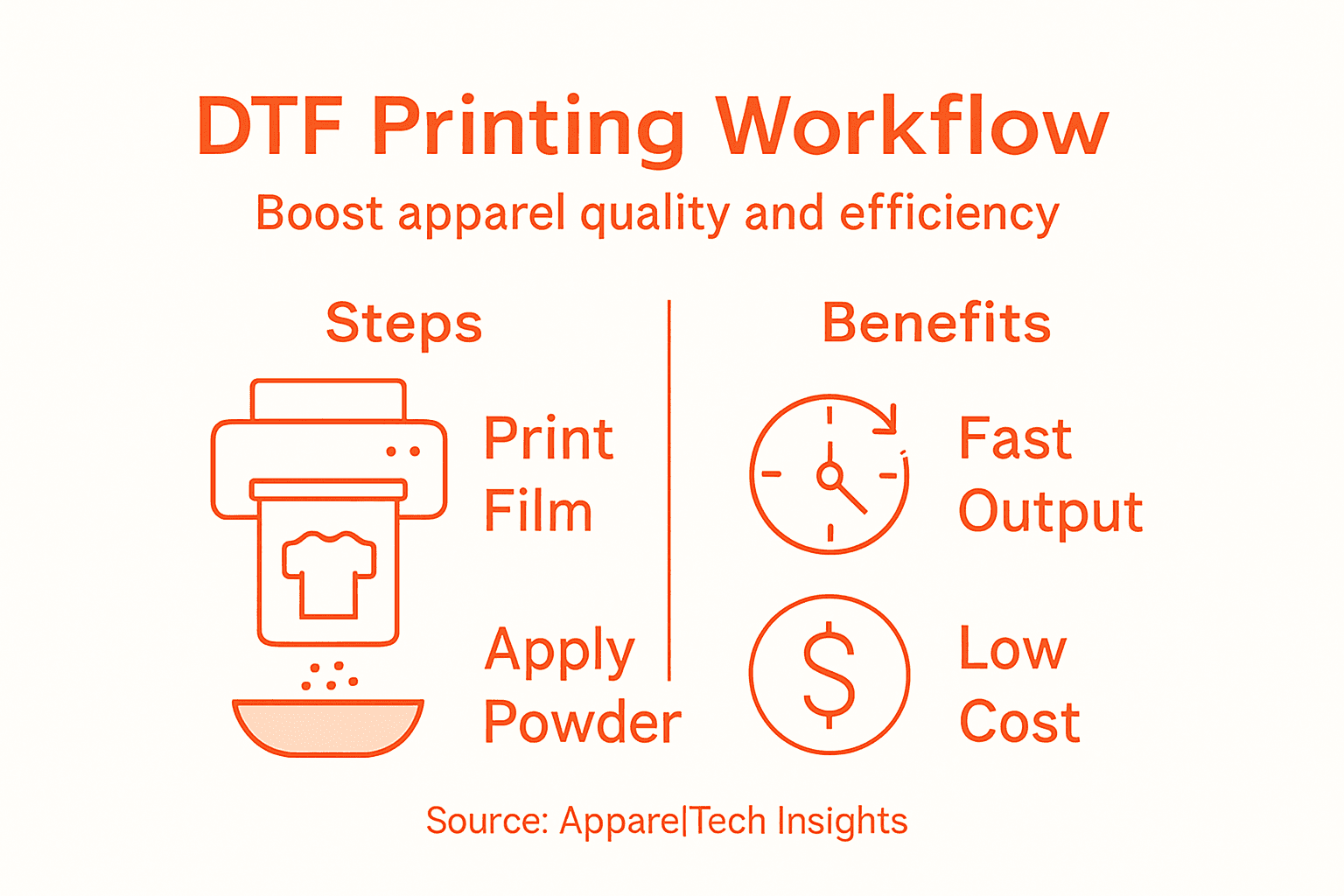
The DTF printing process involves several precise steps:
- Digitally printing designs onto specialized PET film
- Applying white ink as a base layer for opacity
- Spreading adhesive powder across the printed design
- Melting and curing the adhesive powder
- Heat pressing the transfer onto fabric
This method provides significant advantages over traditional techniques. Direct textile printing technologies allow entrepreneurs to produce high-quality transfers without expensive screen printing equipment or fabric-specific pre-treatments.
Key technical advantages of DTF printing include:
- Works on multiple fabric types (cotton, polyester, blends)
- Produces detailed, vibrant color designs
- Allows small and large production runs
- Requires minimal equipment investment
- Creates durable, wash-resistant transfers
The printing sequence requires specialized equipment like DTF printers, powder adhesive applicators, and heat presses. Professional services like DIY Printz handle these technical complexities, allowing creators to focus on design and sales.
Pro tip: Test different fabric types and heat press temperatures to optimize your DTF transfer quality and durability.
DTF Transfer Variations and Compatible Materials
DTF transfer printing offers remarkable flexibility across different fabric types, making it an attractive option for apparel creators seeking versatile decoration techniques. Unlike traditional printing methods, DTF transfers can adapt to various material compositions and textures.
The most compatible fabric types for DTF transfers include:
- 100% Cotton
- Polyester
- Cotton-Polyester Blends
- Performance Fabrics
- Synthetic Materials
- Light and Dark Colored Garments
- Leather and Leather-like Surfaces
Each fabric type requires specific considerations during the DTF transfer workflow to ensure optimal print quality and durability. The adhesive powder and heat press settings must be carefully adjusted based on the specific material characteristics.
Key factors influencing DTF transfer compatibility involve:
- Fabric Fiber Composition
- Surface Texture
- Color and Opacity
- Stretch and Elasticity
- Heat Resistance
- Moisture Absorption
Professional DTF transfer services understand these nuanced requirements and can recommend precise techniques for different fabric types. The ability to print on multiple materials without extensive pre-treatment gives DTF transfers a significant advantage over traditional screen printing or direct-to-garment methods.
Pro tip: Always conduct a small test transfer on a sample fabric to verify adhesion, color vibrancy, and washability before full production.
Core Steps in the DTF Printing Workflow
DTF printing requires a precise, multi-stage workflow that transforms digital designs into vibrant, durable fabric transfers. Understanding each step is crucial for achieving professional-quality results.
The core DTF printing workflow consists of several critical stages:
- Digital Design Preparation
- RIP Software Color Management
- Film Printing
- Adhesive Powder Application
- Powder Curing
- Heat Transfer
- Film Removal
DTF printing process begins with creating a high-resolution digital design using graphic design software. Designers must consider factors like color vibrancy, image complexity, and fabric compatibility when preparing artwork.
Key technical considerations during each workflow stage include:
- Color Depth and Saturation
- White Ink Underbase Precision
- Adhesive Powder Distribution
- Heat Press Temperature Control
- Transfer Film Tension
- Cooling and Peeling Techniques
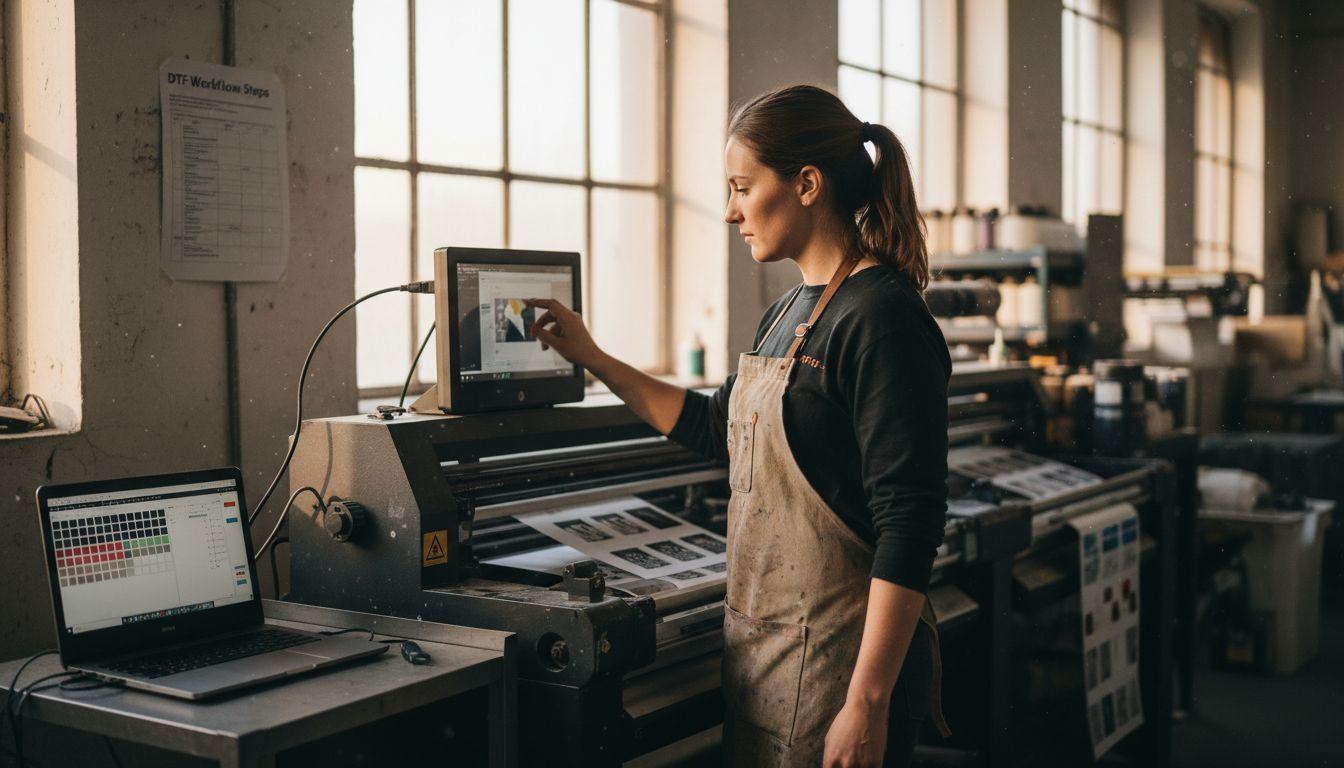
Professional DTF printing requires specialized equipment and technical expertise. The RIP software plays a critical role in managing color profiles, white ink layers, and overall print quality. Precise temperature, pressure, and timing during the heat transfer process determine the final print’s durability and appearance.
Pro tip: Invest in calibration tools to maintain consistent color reproduction and transfer quality across multiple print runs.
Myths and Common Misconceptions About DTF
DTF printing has rapidly evolved, yet numerous myths persist that can discourage potential users from exploring this versatile decoration technique. Understanding these misconceptions is crucial for making informed decisions about apparel production.
Common myths about DTF printing include:
- DTF transfers are only suitable for light-colored fabrics
- DTF printing is prohibitively expensive
- The transfers lack durability and wash resistance
- DTF requires specialized, expensive equipment
- Complex designs cannot be accurately reproduced
- DTF works only for small production runs
Many small apparel brands mistakenly believe DTF transfers are limited in application. In reality, modern DTF technology supports printing on diverse fabric types, including dark and synthetic materials, with remarkable color vibrancy and detail reproduction.
Key realities that debunk these misconceptions include:
- DTF transfers work on multiple fabric compositions
- Production costs have significantly decreased
- Transfers can withstand 50+ wash cycles
- Entry-level equipment is increasingly affordable
- High-resolution prints are achievable
- Scalable from small to large production volumes
Professional DTF transfer services have demonstrated that these techniques offer unprecedented flexibility for apparel creators. The technology continues to advance, making previous limitations increasingly irrelevant and opening new possibilities for creative design and efficient production.
Pro tip: Request sample transfers from professional providers to personally verify print quality and dispel lingering misconceptions about DTF printing capabilities.
Costs, Risks, and Comparing Alternatives
DTF printing represents a strategic investment for apparel brands seeking flexible, cost-effective decoration techniques. Understanding the financial landscape and potential risks is crucial for making informed production decisions.
Cost comparisons with alternative printing methods reveal several key insights:
- Screen Printing: High setup costs, minimum order requirements
- Direct-to-Garment (DTG): Limited fabric compatibility
- Sublimation: Restricted to polyester fabrics
- Heat Transfer Vinyl: Labor-intensive, less detailed designs
- DTF: Lower initial investment, versatile application
Cost comparison analysis demonstrates DTF printing’s economic advantages, particularly for small to medium-sized production runs. The technology offers significant flexibility without substantial equipment expenditure.
Here’s a quick comparison of popular textile printing methods and their business impact:
| Method | Ideal Production Size | Fabric Compatibility | Initial Investment |
|---|---|---|---|
| Screen Printing | Large batch orders | Cotton and blends | High setup costs |
| Direct-to-Garment (DTG) | Small custom runs | Cotton only | Moderate equipment cost |
| Sublimation | Athletic wear, sports gear | Polyester only | Low to moderate |
| Heat Transfer Vinyl | Single units, prototypes | Most fabrics | Low manual investment |
| DTF Printing | Small to large runs | All fabric types | Minimal equipment cost |
Potential risks and considerations for DTF printing include:
- Initial equipment investment
- Specialized consumable requirements
- Ventilation and workspace setup
- Learning curve for technique mastery
- Potential color consistency challenges
- Ongoing maintenance expenses
Professional DTF transfer services can mitigate many of these risks by handling technical complexities and providing expert-quality transfers. Small apparel brands can leverage these services to access high-quality printing without significant capital expenditure or technical training.
Below is a summary of potential risks and how outsourcing DTF printing can address them:
| Risk | In-House DTF Printing | Outsourced DTF Service |
|---|---|---|
| Technical expertise needed | Extensive training required | Handled by professionals |
| Maintenance costs | Ongoing expenses | No equipment maintenance |
| Production scalability | Limited by equipment capacity | Scalable with provider support |
| Quality consistency | Challenging for beginners | Consistent professional output |
Pro tip: Calculate your per-unit production costs across different printing methods to determine the most economically viable solution for your specific business model.
Why Outsourcing DTF Printing Improves Efficiency
DTF printing outsourcing offers small apparel brands a strategic approach to accessing high-quality transfers without significant capital investment or technical complexity. By leveraging professional transfer services, businesses can focus on design, marketing, and growth.
Key advantages of outsourcing DTF printing include:
- Elimination of equipment maintenance costs
- Access to professional-grade printing technology
- Reduced learning curve and training expenses
- Consistent high-quality transfer production
- Scalable printing solutions
- Immediate production capacity
- Zero upfront equipment investments
DTF printing strategies enable entrepreneurs to bypass substantial technical barriers. Professional services handle intricate workflow steps like color management, film printing, and adhesive application, allowing brands to concentrate on creative and sales-driven activities.
Efficiency gains from outsourcing DTF transfers manifest through:
- Faster turnaround times
- Predictable production schedules
- Reduced operational overhead
- Elimination of equipment downtime
- Streamlined quality control processes
- Immediate access to advanced printing capabilities
Small apparel creators can transform their production model by partnering with specialized DTF transfer providers. These services offer flexibility, expertise, and technological sophistication without requiring significant internal infrastructure or technical expertise.
Pro tip: Calculate your potential cost and time savings by comparing in-house printing expenses against professional DTF transfer service rates.
Unlock the Full Potential of DTF Printing with Professional Transfer Services
The article highlights common challenges like high equipment costs, complex printing workflows, and the steep learning curve of mastering DTF printing. If you want vibrant, durable transfers across all fabric types without the hassle of owning and maintaining specialized printers DIY Printz is the solution you need. We handle every step from precise color management to powder curing so you can focus on growing your brand and fulfilling orders.
Experience the freedom and efficiency of outsourcing your DTF transfer needs to a trusted partner. Discover how our high-volume DTF transfer printing services save you time and money while delivering consistent, professional quality. Don’t let equipment costs or technical challenges hold back your apparel production. Visit DIY Printz now to get started and see how easy it is to boost your apparel business with expert DTF printing solutions.
Frequently Asked Questions
What is DTF printing and how does it work?
DTF printing, or Direct-to-Film printing, is a textile decoration method that prints designs onto a specialized PET film before applying them to fabric. The process includes digitally printing designs, applying white ink as a base layer, adding adhesive powder, curing the adhesive, and then heat pressing the transfer onto the fabric.
What types of fabrics can DTF transfers be applied to?
DTF transfers are versatile and can be applied to various fabric types, including 100% cotton, polyester, cotton-polyester blends, performance fabrics, synthetic materials, and even leather-like surfaces, making it suitable for different apparel needs.
What are the main advantages of using DTF printing over traditional methods?
DTF printing offers significant benefits such as compatibility with multiple fabric types, the ability to produce vibrant, detailed designs, lower initial equipment costs, and minimal setup requirements compared to traditional methods like screen printing.
How do I ensure the best results when using DTF printing?
To achieve optimal results, test different fabric types and heat press temperatures, and conduct small test transfers to verify adhesion, color vibrancy, and washability before starting full production. Investing in calibration tools can also help maintain consistent color reproduction.
Recommended
READY TO PRINT?
Send us your artwork and we'll dial in your DTF transfer, color, and same-day turnaround.


