

Why choose custom transfers for your apparel business
Discover why custom DTF transfers help small apparel businesses reduce costs, eliminate equipment hassles, and scale production flexibly with outsourcing solutions.

Most small apparel businesses assume they need expensive printing equipment to compete, but that’s a costly misconception. The reality? Custom DTF transfers let you produce high-quality apparel without equipment investments, maintenance headaches, or minimum order nightmares. Whether you’re testing new designs or fulfilling small batches, outsourcing transfers gives you professional results while keeping overhead lean. This guide breaks down why custom transfers are transforming how smart apparel businesses operate, from cost comparisons to hybrid production strategies that maximize profit and flexibility.
Table of Contents
- Key takeaways
- Understanding custom DTF transfers and their benefits
- Why outsourcing custom transfers reduces operational hassle
- Cost, speed, and scalability: comparing custom transfers to screen printing
- Maximizing your apparel production: practical tips and hybrid strategies
- Streamline your custom transfer production with DIYPRINTZ
- FAQ
Key Takeaways
| Point | Details |
|---|---|
| Low setup costs | Custom DTF transfers require minimal upfront investment, letting you avoid buying and maintaining expensive printing equipment. |
| Small batch friendly | DTF supports testing designs and fulfilling small runs economically without minimum order requirements. |
| Full color versatility | DTF prints vibrant, photorealistic designs on a wide range of fabrics in a single pass. |
| Outsourcing efficiency | Outsourcing transfers eliminates equipment maintenance, consumables, and training, allowing you to focus on design and marketing. |
Understanding custom DTF transfers and their benefits
Custom DTF transfers revolutionize how you produce apparel by eliminating traditional printing barriers. The DTF process involves printing designs on PET film with a white underbase and CMYK inks, applying adhesive powder, curing the transfer, then heat pressing onto fabric at 300-320°F for 10-20 seconds with medium pressure. This method works beautifully on cotton, polyester, and blends, giving you incredible versatility.
Unlike screen printing that requires separate screens for each color, DTF handles full-color designs in one pass. You get vibrant prints with fine detail that traditional methods struggle to match. The transfers arrive ready to press, so your production workflow stays simple and predictable. No mixing inks, no washing screens, no setup time eating into your day.
The benefits stack up fast for small businesses:
- Works on virtually any fabric type including cotton, polyester, blends, and even challenging materials
- Produces photorealistic full-color prints with gradients and complex details screen printing can’t handle
- Requires minimal equipment investment since you only need a heat press, not printing machinery
- Supports small batch production economically, letting you test designs without committing to hundreds of units
- Delivers fast turnaround from order to finished product, keeping customers happy
DTF printing transforms apparel production by removing technical barriers. You don’t need to become a printing expert or manage complex equipment. Order your transfers, press them onto garments, and ship to customers. That simplicity lets you scale at your own pace without operational overwhelm.
Pro Tip: When selecting a DTF transfer provider, verify their curing consistency and adhesive quality through sample orders. Poor curing leads to transfers that crack or peel after washing, destroying your brand reputation and creating costly returns.
Why outsourcing custom transfers reduces operational hassle
Running your own DTF printing operation sounds appealing until you calculate the hidden costs. Equipment maintenance alone consumes hours weekly. Printheads clog, requiring cleaning protocols. Powder shakers need calibration. Heat presses demand temperature verification. Film and ink inventory requires climate-controlled storage. These operational realities drain time and money from your core business activities.
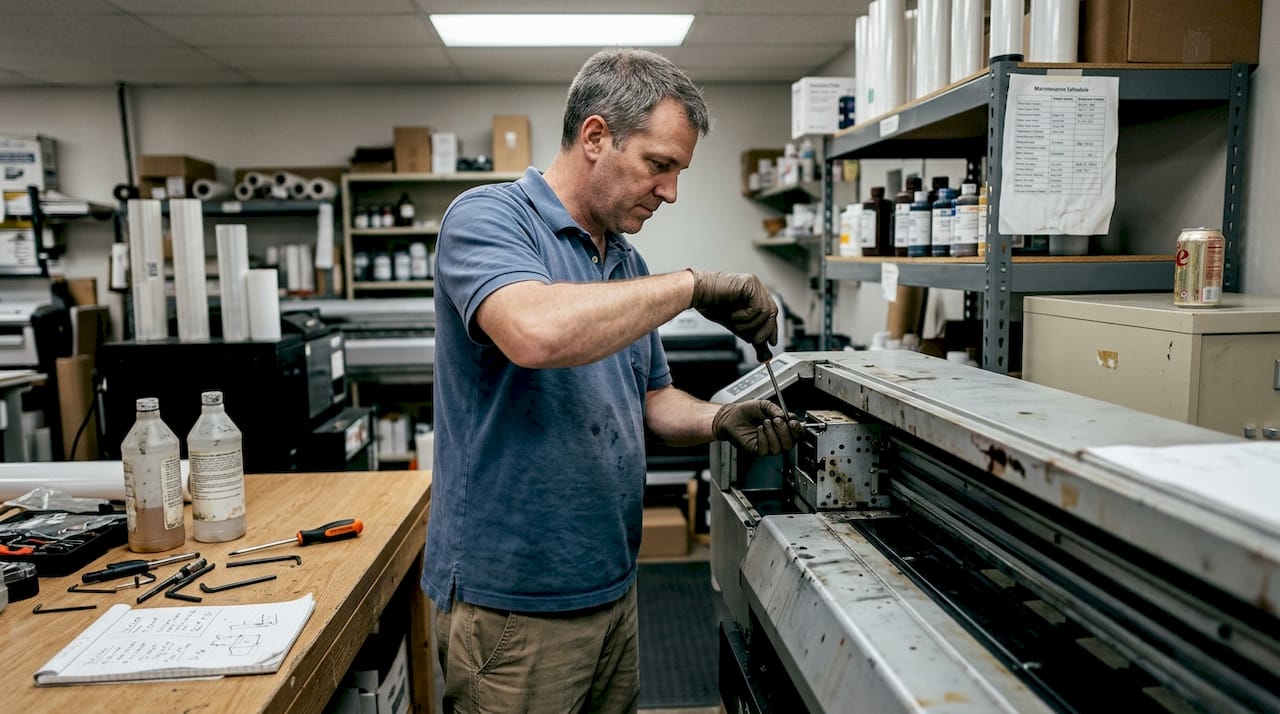
Outsourcing custom DTF transfers eliminates equipment maintenance, consumable inventory management, and technical training requirements. Your transfer partner handles production complexity while you concentrate on what actually grows revenue: creating designs customers love and marketing your brand. This division of labor makes financial sense when margins are tight and every hour counts.
Consider the operational burdens you avoid:
- No equipment purchases, repairs, or upgrades eating into capital
- Zero consumable inventory to track, store, or reorder
- No staff training on printing techniques or troubleshooting
- Eliminated waste from test prints and production errors
- No facility space dedicated to printing equipment and supplies
Small businesses operate on slim margins where mistakes hurt. Buying a DTF printer creates risk. What if demand doesn’t materialize? What if the equipment breaks during your busy season? Outsourcing to specialized DTF transfer suppliers converts fixed costs into variable costs. You pay only for what you produce, matching expenses to revenue naturally.
“The smartest apparel entrepreneurs recognize that owning every piece of production equipment spreads resources too thin. Outsourcing transfers lets you punch above your weight class, delivering professional quality without the operational anchor of in-house printing.”
Pro Tip: Start with small outsourced batches to test market demand before committing capital to inventory or equipment. This approach validates designs and pricing while keeping financial risk minimal, letting you pivot quickly based on real customer feedback.
Cost, speed, and scalability: comparing custom transfers to screen printing
Understanding when each printing method makes financial sense transforms how you approach production. The numbers tell a clear story. For 250 shirts with 4-color designs, DTF costs approximately $0.70 per shirt with 3.58 hours total production time, while screen printing runs $0.80 per shirt requiring 7 hours. The break-even point hits around 800 shirts, where screen printing’s per-unit cost drops below DTF.
| Factor | Custom DTF transfers | Screen printing |
|---|---|---|
| Cost per shirt (250 qty) | $0.70 | $0.80 |
| Total production time | 3.58 hours | 7 hours |
| Best for order size | 1-800 units | 800+ units |
| Setup requirements | Minimal (heat press only) | High (screens, inks, equipment) |
| Design complexity | Unlimited colors, photo quality | Limited colors, simpler designs |
| Scalability | Linear cost scaling | Economies of scale kick in at volume |
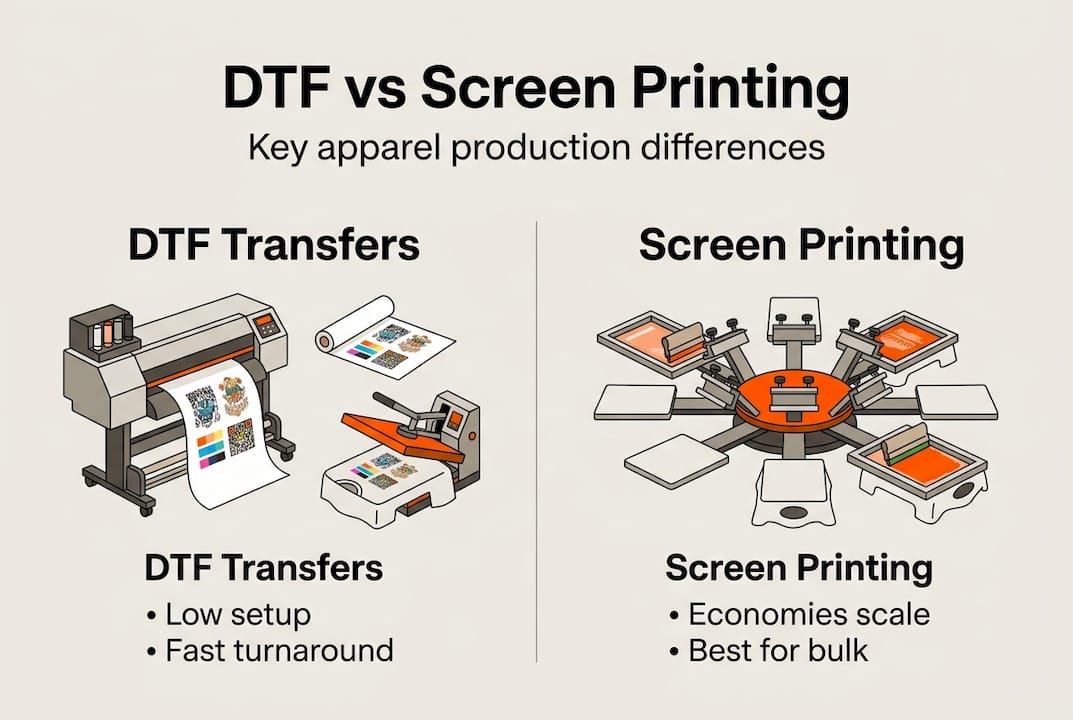
These metrics reveal strategic opportunities. DTF dominates for custom work, small batches, and complex designs. Screen printing wins for large standardized runs where setup costs amortize across hundreds of units. Desktop DTF operations can generate $500-1000 per hour profit potential, making speed a competitive advantage for businesses serving tight deadlines.
Key considerations for each method:
- DTF excels at on-demand production, eliminating inventory risk and storage costs
- Screen printing requires upfront investment in screens that only pay off at volume
- DTF handles design changes instantly without retooling or additional setup
- Screen printing delivers superior hand feel and durability for simple designs at scale
- DTF supports product testing and market validation before committing to bulk production
The comparison between DTF and screen printing isn’t about one method being universally better. Smart businesses use both strategically. Run custom orders and small batches through DTF. When a design proves popular and orders exceed 800 units, switch to screen printing for better margins. This hybrid approach optimizes every job based on its specific economics.
Maximizing your apparel production: practical tips and hybrid strategies
The most profitable apparel businesses don’t pick one printing method and stick with it religiously. They adapt based on order characteristics. A hybrid strategy combining outsourced DTF for custom and small runs with screen printing for bulk orders boosts production flexibility while cutting waste. This approach lets you say yes to more opportunities without overextending operationally.
Implementing a hybrid production workflow:
- Evaluate each order by quantity, design complexity, and turnaround requirements before selecting a printing method
- Route orders under 800 units or with full-color designs to your DTF transfer partner for fast, cost-effective production
- Send bulk orders exceeding 800 units with simple designs to screen printing for optimal per-unit economics
- Track performance metrics including cost per shirt, production time, and customer satisfaction by printing method
- Adjust your threshold between methods based on actual data from your business, not industry averages
- Build relationships with reliable partners for both DTF transfers and screen printing to ensure consistent quality
This strategy delivers multiple advantages beyond cost savings. You reduce waste by matching production method to order size. Environmental impact drops when you’re not overproducing inventory or scrapping failed print runs. Customer satisfaction improves because you can accept rush orders and custom requests competitors turn away.
Testing remains critical before scaling. Start small with custom DTF transfers to validate designs and gauge customer response. Once a design proves popular, you can confidently move to larger production runs. This approach protects capital while building market knowledge. You learn what sells before committing resources to bulk inventory.
Pro Tip: Review your order data quarterly to identify patterns in sizes, designs, and quantities. This analysis reveals opportunities to negotiate better rates with partners or adjust your hybrid strategy thresholds. Small businesses that track metrics consistently outperform those operating on intuition alone.
The benefits of DTF printing in 2026 extend beyond immediate cost savings. You gain production flexibility that lets you pivot quickly as market demands shift. When trends change, you’re not stuck with obsolete screen printing setups or excess inventory. You adapt, test new designs, and capture opportunities while competitors are still retooling their operations.
Streamline your custom transfer production with DIYPRINTZ
Running an apparel business demands focus on design, marketing, and customer relationships. Production complexity shouldn’t consume your energy. DIYPRINTZ delivers same day DTF transfers that keep your fulfillment pipeline moving without operational headaches. We handle hundreds to thousands of orders monthly with consistent quality and fast turnaround, so you can focus on growing your brand instead of troubleshooting printing equipment.
Our customers include print shops, merch brands, and DIY creators who want professional DTF quality without owning printers. From small test runs to bulk production, we deliver ready-to-press transfers that make your workflow cleaner and more profitable. Try our auto gang sheet builder tool to optimize your prints and see how outsourcing transforms your production efficiency.
FAQ
What are the minimum order quantities for custom DTF transfers?
Custom DTF transfers typically have low or no minimum order quantities, making them perfect for small batch production and design testing. Many providers let you order single transfers or small quantities without premium pricing. This flexibility allows businesses to avoid large inventory commitments and upfront costs while testing market demand for new designs before scaling production.
How does outsourcing DTF transfers save me money?
Outsourcing eliminates the high upfront investment in DTF printing equipment, which can cost thousands of dollars, plus ongoing maintenance expenses. You avoid spending on consumables like film, ink, powder, and replacement parts. Most importantly, outsourcing reduces risk by letting you start with small runs, only paying for what you actually produce rather than committing capital to equipment that might sit idle during slow periods.
Is custom DTF printing durable compared to screen printing?
DTF prints offer durability comparable to screen printing for most apparel applications when using quality materials and proper application techniques. The transfers withstand repeated washing and normal wear. However, DTF can feel slightly more plasticky than screen prints, and the longevity depends heavily on transfer quality and curing consistency. High-quality DTF transfers from reliable providers deliver excellent durability that satisfies most customers.
When is screen printing a better option than custom DTF transfers?
Screen printing becomes more cost-effective for large-scale orders exceeding approximately 800 units, where setup costs amortize across volume. It’s ideal for simple designs with limited colors on standardized products where you’re producing bulk quantities. Screen printing also delivers superior hand feel and durability for basic designs. If you’re running the same design repeatedly in large quantities, screen printing offers better per-unit economics and a softer print feel.
Recommended
READY TO PRINT?
Send us your artwork and we'll dial in your DTF transfer, color, and same-day turnaround.


