

DTF vs Screen Printing: Choosing for Your Business
DTF vs screen printing explained: Learn differences in process, durability, cost, and when outsourcing DTF transfers boosts productivity and profit.

Finding the right way to print designs on apparel can feel overwhelming for small businesses in the United States and Canada. Understanding the basics of DTF transfers and screen printing matters because it impacts how you deliver variety, quality, and speed for your customers without overspending on equipment. This article gives you a clear comparison so you can choose the most efficient production method and decide when outsourcing DTF transfers makes the most sense for your business model.
Table of Contents
- Dtf And Screen Printing Basics Explained
- Comparing Print Quality And Durability
- Production Speed, Versatility, And Limitations
- Cost, Setup, And Outsourcing Considerations
- When To Choose Dtf Over Screen Printing
Key Takeaways
| Point | Details |
|---|---|
| Screen Printing | Best suited for high-volume orders of simple designs with fewer colors due to setup costs. |
| DTF Printing | Ideal for small orders and complex designs, offering unlimited colors without setup hassle. |
| Production Speed | DTF allows for quick turnarounds without lengthy setup times, making it better for rush orders. |
| Cost Efficiency | DTF outsourcing is cost-effective for small runs, while screen printing is more economical for large quantities. |
DTF and Screen Printing Basics Explained
Before choosing between DTF transfers and screen printing for your apparel business, understand how each technology actually works. Both methods get designs onto fabric, but they operate on completely different principles.
How Screen Printing Works
Screen printing is the older, more established technology. It uses a mesh screen with a stencil to push ink directly through onto your garment. Here’s the basic process:
- Create a separate screen for each color in your design
- Align each screen on your press
- Push ink through the mesh using a squeegee
- Cure the ink with heat
Each color requires its own screen. A five-color design means five setups. This is why screen printing works best for high-volume, simple designs with fewer colors.
Screen printing excels at producing bulk orders of identical designs, but the upfront screen setup cost makes small runs expensive.
How DTF Printing Works
DTF printing (Direct-to-Film) follows a completely different path. Instead of pushing ink through screens, DTF prints your full-color design onto special film using inkjet technology. Here’s what happens:
- Print your full-color design directly onto polyester film
- Apply adhesive powder to the wet ink
- Cure the powder in an oven
- Heat-press the film transfer onto your garment
- Peel away the film, leaving the design on the shirt
This process handles unlimited colors without needing multiple setups. A complex, photo-realistic design with 50 colors costs the same to produce as a simple two-color design—just different film and powder.
Key Differences at a Glance
Understanding the fundamental principles of screen printing and DTF printing helps you see why they suit different business situations.
- Screen printing: One color per screen, high setup time, best for bulk runs
- DTF transfers: Unlimited colors, zero setup between designs, ideal for variety and small orders
- Screen printing: Ink sits on top of fabric, thicker hand-feel
- DTF transfers: Ink bonds directly to fibers, softer feel
- Screen printing: Lower cost per unit at 100+ quantities
- DTF transfers: Lower cost per unit at small quantities
Small apparel businesses often choose DTF because you avoid the screen investment and setup hassle. Your costs stay low whether printing one shirt or ten.
Here’s a quick comparison of DTF and screen printing business fit:
| Business Scenario | Screen Printing Advantage | DTF Transfer Advantage |
|---|---|---|
| High-volume, simple designs | Yes, lowest cost at scale | Less efficient, higher unit cost |
| Small custom orders | Expensive setup per order | Cost-effective, no setup hassle |
| Rush deadlines | Long prep due to setup | Immediate print, fast delivery |
| Complex or photo designs | Difficult, costly | Unlimited color, high detail |
| Frequent design changes | Inefficient, re-setup required | Fast adaptation, on-demand printing |
Pro tip: If your orders vary in design and quantity, DTF eliminates the complexity of screen setup—you just receive ready-to-press transfers and focus on selling and fulfilling orders.
Comparing Print Quality and Durability
Print quality and durability matter when choosing between DTF and screen printing. Your choice directly impacts how customers perceive your products and whether designs last through multiple washes.
Print Quality: What You Actually Get
Screen printing creates bold, vibrant colors with excellent opacity. The ink sits on top of the fabric, producing that classic, saturated look customers recognize and love. Colors pop immediately off the garment.
DTF printing excels at photorealistic detail and color complexity. You can print photographs, gradients, and designs with hundreds of colors without any screen setup. Fine details stay sharp and clear.
- Screen printing: Solid colors, limited gradients, maximum vibrancy
- DTF transfers: Photorealistic images, unlimited colors, detailed artwork
- Screen printing: Best for bold, simple logos
- DTF transfers: Best for photos, complex designs, artwork
Durability: How Long Designs Last
Durability depends on several factors including ink types, curing methods, and fabric compatibility. Screen printing typically outlasts DTF in extreme conditions because ink bonds directly into fabric fibers over time.
Screen-printed designs resist fading and abrasion better after 50+ washes. The ink becomes part of the garment. Heavy work apparel and high-volume commercial use favor screen printing.
DTF transfers hold up well under normal wear—typically 20 to 40+ washes depending on care. The design stays soft and flexible, feeling natural against skin. For everyday apparel and fashion items, durability meets customer expectations.
Screen printing wins for longevity in harsh conditions, while DTF handles standard customer use without compromise.
Real-World Durability Factors
Both methods survive normal laundering when produced correctly. Your results depend on:
- Fabric type and quality (natural fibers perform differently)
- Wash temperature (cold water extends life)
- Dryer heat (air drying beats machine drying)
- Customer care (following instructions matters)
- Production quality (proper curing is critical)
Small apparel businesses often choose DTF because durability meets customer expectations for everyday wear, and you avoid screen maintenance that affects print longevity.
The following table summarizes real-world durability considerations for both methods:
| Factor | Screen Printing | DTF Transfers |
|---|---|---|
| Wash durability | 50+ washes, low fading | 20–40+ washes, good lifespan |
| Best use case | Workwear, heavy use apparel | Fashion, casual wear |
| Care instruction need | Important for longevity | Critical for max durability |
| Fabric compatibility | Most fabric types | Best on cotton/blends |
Pro tip: Include care instructions with every order—customers who air-dry and wash cold get significantly longer design life, making your DTF transfers look durable and increasing repeat purchases.
Production Speed, Versatility, and Limitations
Speed and versatility separate these two methods dramatically. Your production timeline and design variety directly impact which method makes sense for your business model.
Screen Printing Speed Reality
Screen printing moves slowly when you factor in setup. Creating screens takes time—typically 30 minutes to an hour per color before your first shirt prints. A five-color design means five separate setups.
Once screens are ready, printing speed accelerates. You’ll produce dozens of identical shirts quickly. But this speed only works when you’re printing the same design repeatedly.
Screen printing shines for bulk orders of identical designs. One-hundred shirts with one design? Fast and affordable per unit. Twenty different designs? You’ll lose days to setup alone.
DTF Printing Speed Advantage
DTF printing eliminates setup delays. You go from design file to first finished shirt in minutes. No screen creation. No alignment. No waiting.
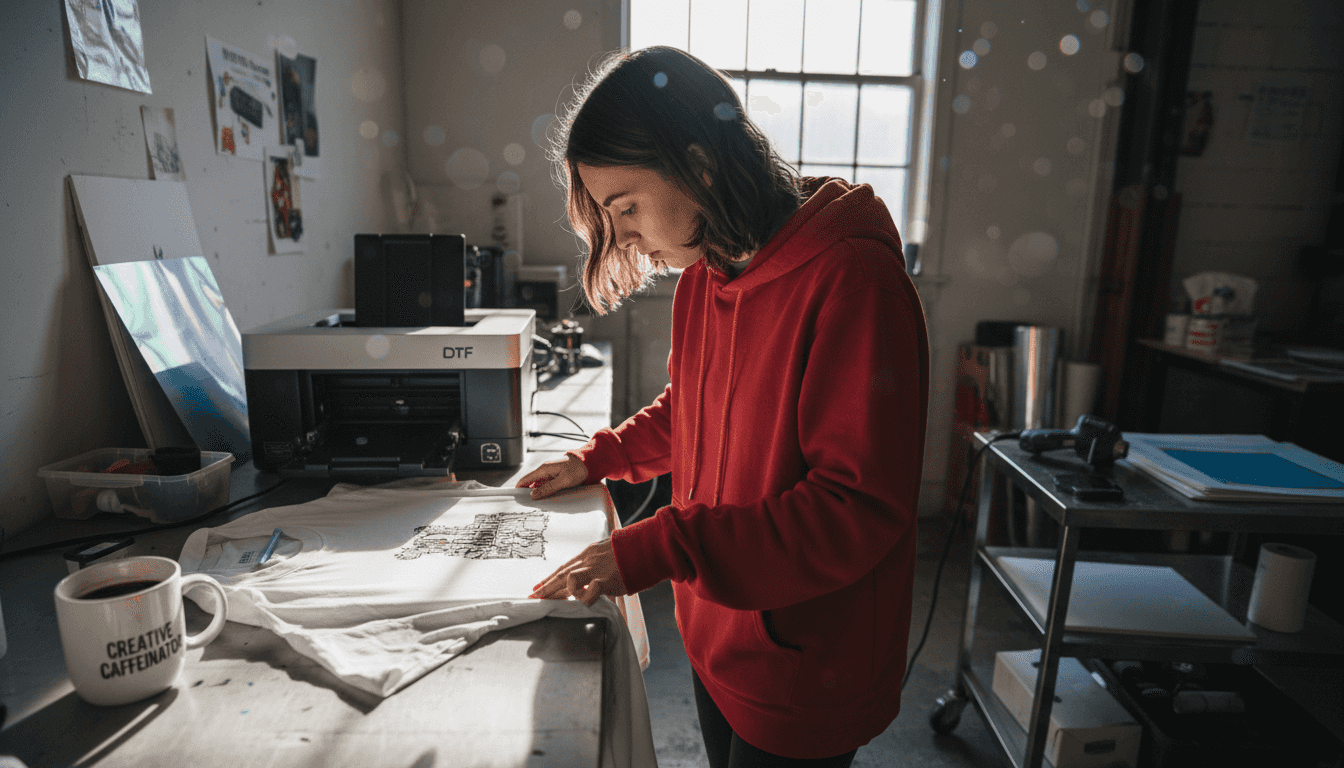
This speed matters for small orders and design variety. Your production time stays consistent whether printing one shirt or one hundred, as long as designs differ. Setup time doesn’t increase.
Screen printing requires more time due to screen setup per color, while DTF handles unlimited colors in a single pass without additional setup overhead.
Versatility Comparison
Screen printing limits your design complexity. You’re restricted by color count and detail level. Simple logos and solid colors work perfectly. Photorealistic images or gradients become challenging and expensive.
DTF printing handles any design you throw at it:
- Unlimited colors in one production pass
- Photorealistic images and detailed artwork
- Gradients and color blends without extra setup
- Complex designs identical price to simple ones
- No design restrictions based on color count
DTF’s versatility means you never turn down a custom order because the design is too complex—a huge advantage for apparel businesses selling customized products.
Real Limitations to Know
DTF isn’t perfect. Understand these constraints before committing:
- Maximum transfer size: Typically 11" x 16" or similar (varies by provider)
- Fabric compatibility: Works best on cotton and cotton-blend garments
- Design placement: Limited to heat-press accessible areas
- Setup requirements: Still need a heat press to apply transfers
- Fabric pretreatment: Some specialty fabrics need preparation
Screen printing has its own limits—color complexity drives costs up fast, and setup time kills profitability on small runs or varied designs.
Pro tip: Outsource DTF transfer production to handle design variety and rush orders without equipment investment, then use screen printing for high-volume, simple-design orders where per-unit costs matter most.
Cost, Setup, and Outsourcing Considerations
Costs determine whether you can scale profitably. Understanding upfront investment, per-unit expenses, and outsourcing models helps you make the right choice for your business.
Screen Printing Initial Investment
Screen printing demands significant upfront capital. You’ll spend $3,000 to $15,000+ on a basic press setup, depending on equipment quality. Add screens, inks, and workspace, and costs climb higher.
This investment only makes sense if you’re printing high volumes consistently. The per-unit cost drops dramatically at 100+ shirt runs—sometimes to $2-$4 per shirt for ink and screen time.
Small runs become expensive. Printing 20 shirts with a custom design costs nearly as much as printing 200 because screen creation dominates your expenses.
DTF Equipment and Costs
DTF printers range from $5,000 to $25,000+ for quality machines that handle production volume. Then add ongoing costs: film, powder, ink, maintenance, and learning curve frustration.
Outsourcing DTF transfers eliminates this entirely. You receive ready-to-press transfers for $2-$6 per shirt depending on complexity. No equipment. No maintenance. No downtime.
The Math: Volume Breakeven Points
Screen printing wins when printing 500+ identical shirts. Per-unit costs drop below DTF outsourcing significantly at high volumes.
DTF outsourcing wins for:
- Custom orders and small runs (1-50 shirts)
- Design variety within orders
- Rush orders without setup delays
- Avoiding equipment investment entirely
- Reducing inventory risk
Screen printing becomes cost-effective at large volumes, while DTF’s flexibility brings cost savings in small orders and variable jobs.
Outsourcing Economics
Outsourcing DTF transfers changes your business model entirely. You trade equipment ownership for per-unit flexibility.
Outsourcing transfers means no capital investment, no equipment maintenance, and zero setup time between different designs—ideal for growing apparel brands.
Your costs shift from fixed to variable:
- Fixed costs disappear (no equipment payment, no facility space for presses)
- Variable costs increase slightly per unit
- Profitability improves on smaller orders
- Cash flow improves (you only pay for what you produce)
- Scalability becomes easier
Small apparel businesses thrive with outsourced DTF because you avoid $10,000+ equipment investment and focus your capital on marketing, inventory, and growth.
Pro tip: Calculate your average order size—if most orders are under 50 shirts, outsourced DTF transfers give you better margins than owning a printer, plus you free up cash for inventory and marketing.
When to Choose DTF Over Screen Printing
Choosing between these methods comes down to your business model, order patterns, and growth goals. DTF works best for specific situations where screen printing struggles.
You’re Printing Small Orders and Customization
DTF shines when customers want one-off custom designs or small runs of 5-50 shirts. Setup costs don’t apply—you’re printing different designs frequently without any time penalty.
Screen printing becomes expensive for small quantities. The screen creation cost gets spread across fewer shirts, killing your margins. DTF eliminates this problem entirely.
Customization-focused businesses thrive with DTF. Personalized names, dates, and unique artwork don’t cost more to produce than simple designs.
You Need Fast Turnaround Times
Rush orders destroy screen printing profitability. Creating screens adds 2-4 hours before printing starts. DTF prints within minutes of receiving your design file.
If customers frequently need designs by tomorrow or next-day delivery, DTF is your answer. You can promise quick turnarounds without stress.
Your Designs Are Complex or Photo-Based
Select DTF printing when you require quick turnaround with vibrant, intricate designs and short runs. Photorealistic images, detailed artwork, and gradient blends are expensive nightmares with screen printing but simple with DTF.
A customer wants their dog’s photo printed on a shirt? DTF handles it perfectly. Screen printing would cost $200+ and require multiple screens.
Your Product Mix Changes Frequently
If you sell diverse product types or designs shift seasonally, screen printing requires painful repositioning. DTF transfers apply to any garment—t-shirts, hoodies, jackets, hats.
Your inventory stays flexible:
- Stock blank garments instead of pre-printed inventory
- Print designs on-demand as orders arrive
- Test new designs without bulk printing risk
- Reduce dead inventory from unsold pre-prints
- Respond to trends faster than competitors
DTF’s flexibility means you can print any design on any garment without worrying about screen compatibility or setup complications.
You Want to Avoid Equipment Investment
Starting a print shop without $10,000+ equipment investment changes everything. Outsourcing DTF transfers lets you focus capital on marketing and inventory instead of machinery.
No presses to maintain. No learning curve. No technical problems at 2 a.m. when an order is due tomorrow.
Your Business Model Values Speed Over Unit Cost
DTF wins when you prioritize flexibility, speed, and variety over absolute lowest per-unit pricing. If most orders are under 100 shirts or involve design customization, DTF delivers better profit margins.
Screen printing only wins if you consistently print 500+ identical shirts repeatedly.
Pro tip: If you’re unsure whether DTF fits your business, analyze your last 50 orders—calculate average order size, design variations, and rush requests. If most orders are under 100 shirts or require different designs, outsourced DTF transfers will improve your profitability and customer satisfaction immediately.
Simplify Your Apparel Business with Expert DTF Transfer Solutions
Choosing between DTF transfers and screen printing can feel overwhelming when you weigh setup costs, print quality, and order flexibility. The article highlights the challenges of screen printing high setup times and high costs with small or varied orders while showing how DTF printing offers unmatched speed and versatility without upfront equipment investment. If you face issues like lengthy screen setup, expensive bulk requirements, or complex design demands, you understand the pain of balancing quality, durability, and fast turnaround.
DIY Printz is here to resolve those challenges. As a trusted high-volume DTF transfer printing service provider, we remove the hassle of owning and maintaining DTF printers so you can focus on growing your brand. Whether you need small runs, large orders, or complex photo-realistic designs, we deliver ready-to-press transfers with consistent quality and lightning-fast service every time. Avoid costly screen setups and invest your resources where they matter most.
Make your production faster, your costs predictable, and your designs limitless. Discover how outsourcing DTF transfers can transform your workflow at DIY Printz today.
Ready to cut down setup time and expand your design possibilities? Partner with DIY Printz, the perfect complement to your printing business whether you are a print shop, merch brand, or hobbyist. Visit DIY Printz now to get started and see how easy and profitable DTF transfers can be. Empower your apparel printing with expertise you can rely on.
Find out more about the direct benefits of DTF printing and how it beats traditional screen printing for your unique business needs. Let DIY Printz be your go-to service for flawless, quick, and cost-effective transfers.
Frequently Asked Questions
What are the main differences between DTF printing and screen printing?
DTF printing allows for unlimited colors and is ideal for small, custom orders without setup time, whereas screen printing is best suited for high-volume, simple designs with a lower per-unit cost at larger quantities.
Which printing method offers better print quality and durability?
Screen printing typically provides bold, vibrant colors and greater durability, lasting over 50 washes, making it suitable for heavy-use apparel. DTF excels at photorealistic detail with softer prints, lasting around 20-40 washes for casual wear.
When should I choose DTF printing over screen printing for my business?
Choose DTF printing when you frequently have small orders, require fast turnaround times, or need to print complex or photo-based designs. It’s also beneficial if you want to avoid equipment investment and maintain flexibility in your product offerings.
What are the initial costs and ongoing expenses associated with DTF and screen printing?
Screen printing requires a substantial initial investment in equipment, ranging from $3,000 to $15,000+, whereas DTF printers start around $5,000 and can be outsourced for $2-$6 per shirt, eliminating the need for significant upfront costs.
Recommended
- DTF Printing Explained: Boosting Apparel Production – DIYPRINTZ
- 7 Essential Steps for a Complete DTF Printing Checklist – DIYPRINTZ
- Wholesale DTF Transfers for Screen Printers | DIY Printz – DIYPRINTZ
- DTF Kingz Hybrid DTF Techniques in Davie, FL | DIY Printz – DIYPRINTZ
- Apparel/ Clothing - My Next Promo
READY TO PRINT?
Send us your artwork and we'll dial in your DTF transfer, color, and same-day turnaround.


