

Transfer printing in embroidery: 2026 guide for small apparel businesses
Discover how transfer printing enhances embroidery accuracy and efficiency for small apparel businesses in 2026, without requiring DTF printer ownership.

Many apparel businesses mistakenly view transfer printing as purely decorative. In reality, its primary function is pattern transfer, acting as a precise guide for embroidery placement. For small apparel businesses and hobbyists, transfer printing enhances efficiency without requiring expensive DTF printer ownership. This guide clarifies transfer printing’s actual role and shows how it streamlines embroidery workflows, reduces errors, and improves production consistency. You’ll discover which methods suit different fabrics, how to apply transfers effectively, and practical tips for maximizing accuracy while keeping costs low.
Table of Contents
- Understanding The Core Role Of Transfer Printing In Embroidery
- Comparing Transfer Printing Methods For Embroidery
- How Transfer Printing Enhances Embroidery Workflows And Efficiency
- Practical Tips For Choosing And Applying Transfer Printing In Embroidery
- Explore Efficient DTF Transfer Solutions At DIYPRINTZ
- Frequently Asked Questions
Key takeaways
| Point | Details |
|---|---|
| Pattern transfer function | Transfer printing primarily guides embroidery placement rather than serving as decoration, improving accuracy for small operations. |
| Efficiency without ownership | Small businesses gain DTF transfer benefits without investing in printers, maintenance, or technical learning curves. |
| Method selection matters | Iron-on transfers excel for speed and simplicity, while alternatives handle fine details and dark fabrics better. |
| Workflow improvements | Using transfer printing reduces setup time, minimizes stitching errors, and increases consistency across production runs. |
| Cost and time savings | Outsourcing transfers eliminates equipment costs and allows focus on core business activities like sales and fulfillment. |
Understanding the core role of transfer printing in embroidery
Transfer printing functions as a pattern transfer guide, not standalone decoration. This distinction matters significantly for small apparel businesses. When you apply a transfer to fabric before embroidering, you create a visible roadmap that shows exactly where each stitch should go. This precision prevents costly mistakes and speeds up production.
Small businesses face unique challenges. Owning a DTF printer requires substantial capital investment, ongoing maintenance, and technical expertise. Transfer printing offers an alternative path. You can order ready-made transfers and focus your energy on embroidery itself, customer service, and business growth.
The workflow advantages are substantial:
- Accurate design placement eliminates guesswork and reduces material waste
- Faster setup means you can complete more orders per day
- Consistent results across multiple pieces improve customer satisfaction
- No printer maintenance interrupts your production schedule
Transfer printing particularly benefits businesses handling complex designs or multi-color embroidery. Without a clear pattern guide, aligning intricate details becomes time-consuming and error-prone. A transfer provides that visual reference instantly.
“Transfer printing serves as your embroidery blueprint, transforming complex designs into manageable, accurate production tasks without the overhead of printer ownership.”
For hobbyists transitioning to small business operations, transfer printing represents a smart scaling strategy. You gain professional-quality pattern accuracy without the financial risk of expensive equipment. This approach lets you test market demand, refine your processes, and grow revenue before considering major capital investments.
The cost savings extend beyond equipment. Custom transfers eliminate ink costs, printhead replacements, and troubleshooting time. You pay only for what you need, when you need it. This flexibility proves especially valuable for seasonal businesses or those testing new product lines.
Transfer printing also supports quality control. When every piece starts with the same accurate pattern guide, your embroidery output becomes more predictable. Customers receive consistent products, building trust and encouraging repeat orders.
Comparing transfer printing methods for embroidery
Different transfer printing methods serve distinct purposes in embroidery workflows. Understanding their strengths and limitations helps you choose the right approach for each project.
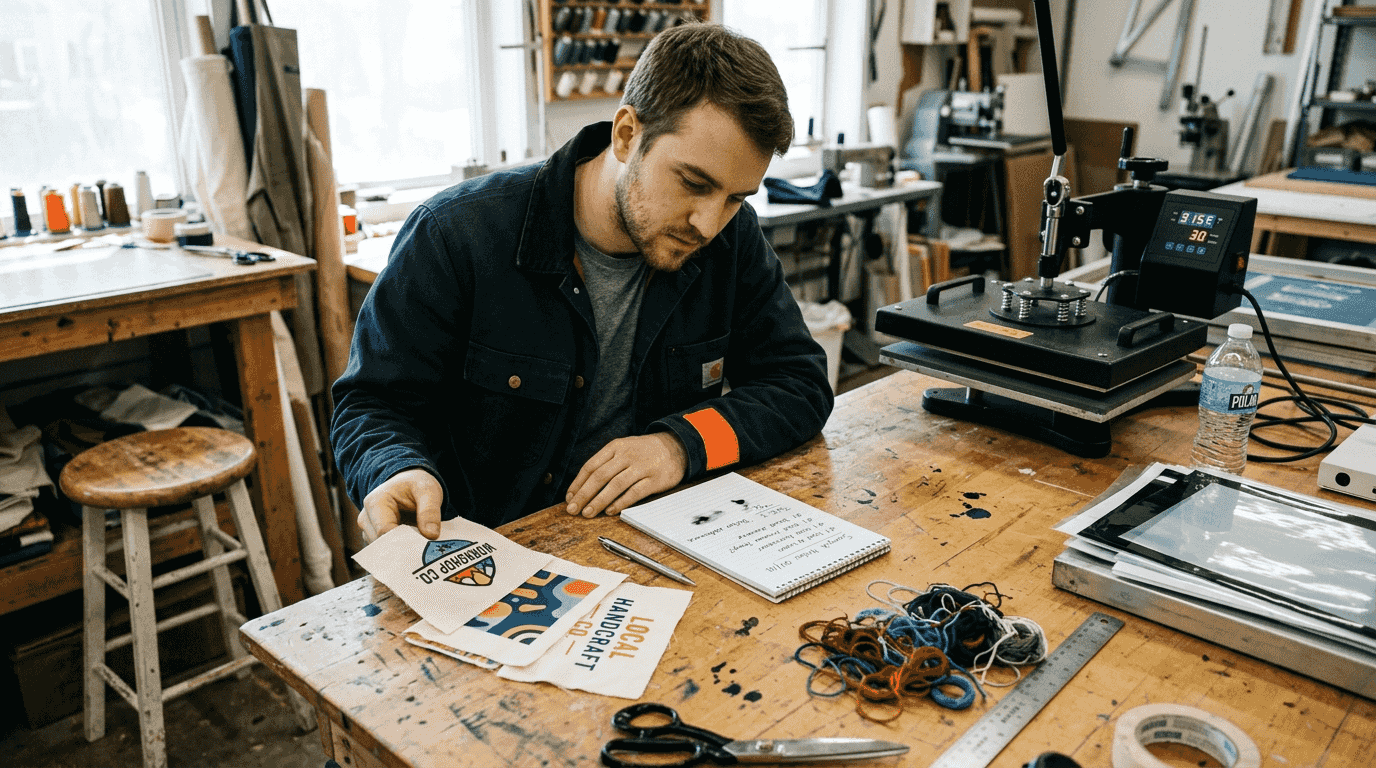
Iron-on transfers dominate small business embroidery for good reason. They’re fast and simple, requiring only heat and pressure. You position the transfer, apply your iron or heat press, and the pattern adheres to fabric in seconds. This speed makes iron-on transfers ideal for high-volume production.
However, iron-on transfers have limitations. Dark fabrics can make light-colored transfer patterns difficult to see. Fine details sometimes blur or fade during application. Complex multi-color designs may require alternative methods for optimal clarity.
| Transfer Method | Best For | Limitations | Typical Cost |
|---|---|---|---|
| Iron-on | Simple designs, light fabrics, speed | Poor visibility on dark fabrics, detail loss | Lowest |
| Water-slide | Fine details, precise lines, delicate work | Slower application, requires water | Moderate |
| Laser | Dark fabrics, high contrast needs | Equipment cost, learning curve | Higher |
| Sublimation | Polyester fabrics, vibrant colors | Limited to synthetic materials | Moderate |
Water-slide transfers excel when detail matters most. These transfers require water activation, which takes slightly longer than iron-on application. The payoff comes in crisp, clear pattern lines that guide even the most intricate embroidery work. Water-slide transfers work well on both light and dark fabrics.
Laser transfers solve the dark fabric challenge. They create high-contrast patterns visible on any color background. The laser printing process produces sharp edges and fine details. However, laser transfers typically cost more and may require specialized equipment or outsourcing.
Pro Tip: Match your transfer method to your most common fabric colors and design complexity. If you primarily work with light cotton and simple logos, iron-on transfers maximize efficiency. Switch to water-slide or laser for detailed work or dark materials.
Your choice also depends on production volume. DTF transfer options from service providers let you mix methods without owning multiple printer types. Order iron-on transfers for bulk simple designs and water-slide transfers for detailed custom work.
Application technique varies by method. Iron-on transfers need consistent heat and pressure across the entire design. Water-slide transfers require even moisture distribution and careful positioning. Each method has a learning curve, but all become routine with practice.
Consider fabric compatibility carefully. Some transfers work better with natural fibers, others with synthetics. Testing transfers on your specific fabric types before committing to large orders prevents disappointing results. Most transfer suppliers provide sample packs for this purpose.
The application process affects final embroidery quality. Properly applied transfers stay in place during stitching, maintaining pattern accuracy. Poorly applied transfers may shift or peel, causing alignment errors that waste time and materials.
How transfer printing enhances embroidery workflows and efficiency
Transfer printing transforms embroidery production from a time-intensive craft into an efficient business operation. The improvements touch every aspect of your workflow.
Setup time drops dramatically. Without transfers, you spend minutes positioning hoops, checking alignment, and marking reference points manually. With transfers, your pattern appears instantly on fabric. You load the hoop, verify the transfer placement, and start stitching. This time savings compounds across dozens or hundreds of pieces.
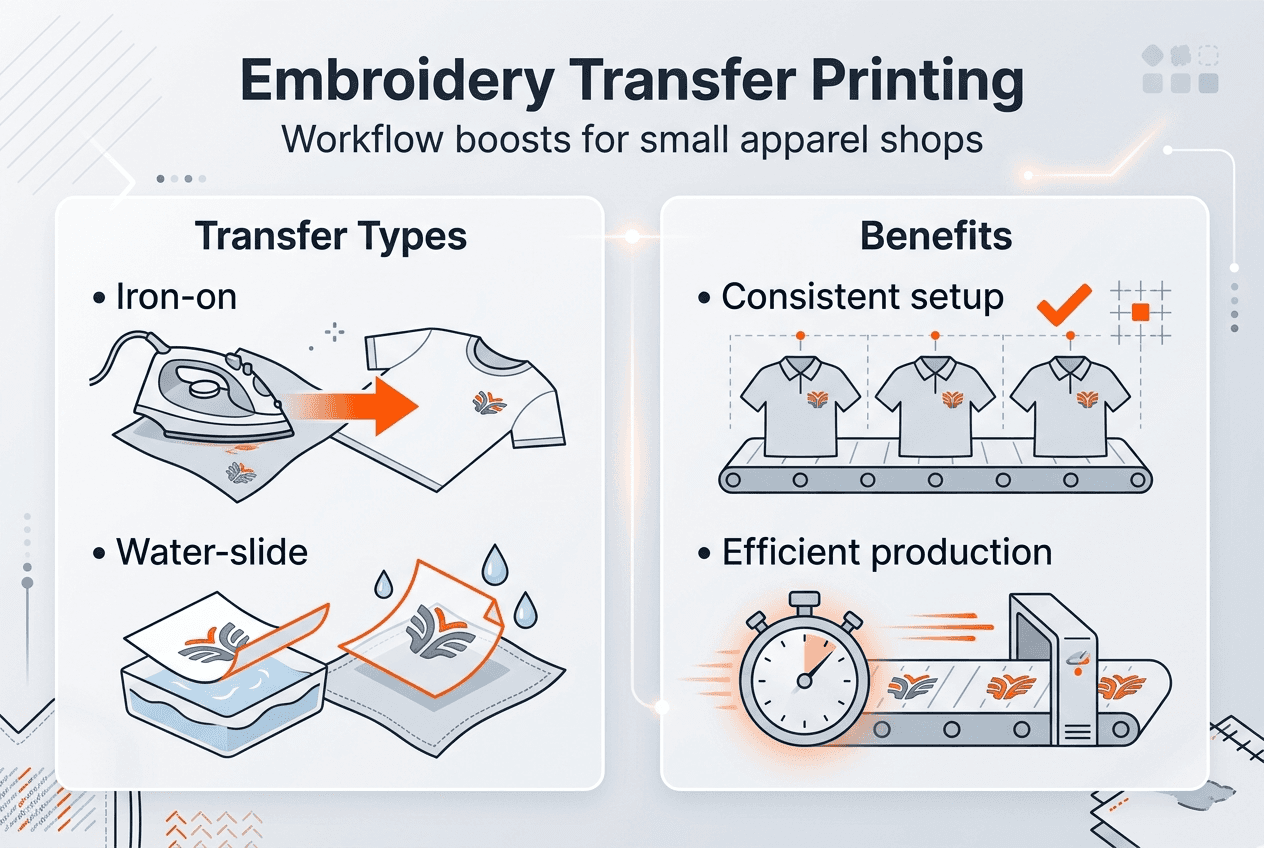
Error reduction represents perhaps the biggest efficiency gain. Misaligned embroidery ruins garments and wastes materials. When you follow a clear pattern guide, alignment errors become rare. Your success rate climbs, reducing costly rework.
Key workflow improvements include:
- Consistent design placement across multiple garments in production runs
- Faster training for new employees or assistants
- Reduced material waste from positioning mistakes
- Ability to handle complex designs without extensive experience
- Predictable production times for better scheduling
Small businesses benefit enormously from avoiding DTF printer ownership. A quality DTF printer costs thousands of dollars upfront. Add ink, maintenance, printhead replacements, and learning time. These costs drain capital that could fund inventory, marketing, or equipment that directly generates revenue.
Transfer printing services eliminate these barriers. You outsource transfer production and receive ready-to-use patterns. Your workspace stays cleaner without ink and printer supplies. Your focus remains on embroidery excellence and customer relationships.
Pro Tip: Calculate your monthly transfer needs and compare service costs to printer ownership over two years. Most small businesses find outsourcing more cost-effective until they exceed 500-1000 transfers monthly.
Production consistency improves measurably. When every piece starts with an identical transfer pattern, your embroidery output becomes uniform. Customers ordering team uniforms or branded merchandise receive matching products. This consistency builds your reputation and encourages referrals.
Order fulfillment accelerates significantly. Faster setup and fewer errors mean you complete more orders daily. This increased throughput improves cash flow and allows you to accept more work without hiring additional staff. Your per-unit labor cost decreases as efficiency rises.
The flexibility of transfer printing supports business experimentation. Testing new designs or products becomes low-risk. Order small transfer batches, produce sample pieces, and gauge customer interest. Scale up only proven designs, minimizing inventory risk.
Multi-piece jobs become manageable. Production runs of 50 or 100 identical items intimidate many small businesses. Transfer printing makes these jobs straightforward. Apply transfers to all pieces first, then embroider systematically. The pattern consistency ensures every item matches perfectly.
Quality control simplifies when transfers guide your work. You can quickly spot when embroidery deviates from the transfer pattern. This immediate feedback helps you correct issues before completing entire production runs. Your reject rate drops, protecting profit margins.
Practical tips for choosing and applying transfer printing in embroidery
Selecting and applying the right transfer method requires understanding your specific needs and following proven techniques. These practical steps help you optimize results.
-
Assess your fabric types first. Light-colored cotton works beautifully with standard iron-on transfers. Dark fabrics need laser or high-contrast transfers for visibility. Synthetic materials may require sublimation or specialized transfer types.
-
Evaluate design complexity honestly. Simple logos and text suit iron-on transfers perfectly. Designs with fine lines, small text, or intricate details benefit from water-slide or laser transfers that maintain clarity.
-
Consider your production volume. High-volume operations need the fastest transfer method that meets quality standards. Lower-volume custom work can justify slower methods that deliver superior detail.
-
Test before committing to large orders. Order sample transfers of each type you’re considering. Apply them to your actual fabrics and embroider test pieces. This hands-on evaluation reveals which method works best for your specific situation.
-
Calculate total costs including time. The cheapest transfer per unit may not be the most economical choice if application takes twice as long or produces more errors.
Application best practices maximize pattern accuracy and embroidery success. Start with proper surface preparation. Fabric should be clean, dry, and wrinkle-free. Pre-press if needed to remove moisture and smooth the surface.
Position transfers carefully before applying heat or moisture. Use alignment marks or measurements to ensure consistent placement across multiple pieces. Taking an extra 30 seconds for precise positioning saves minutes of embroidery correction later.
Pro Tip: Create simple positioning templates for frequently embroidered items. Mark center points and key measurements on cardboard or plastic sheets. These templates speed up transfer placement while maintaining accuracy.
Heat application requires attention to three variables: temperature, pressure, and time. Follow transfer manufacturer specifications exactly. Too little heat leaves transfers partially adhered. Excessive heat can damage transfers or fabric. Consistent pressure ensures even adhesion across the entire design.
For iron-on transfers, use protective sheets between the iron and transfer. This prevents direct contact that might smudge or damage the pattern. Apply firm, even pressure and avoid sliding the iron, which can shift the transfer.
Water-slide transfers need thorough but gentle moisture application. Soak the transfer completely, then carefully position it on fabric. Smooth out air bubbles and wrinkles before the adhesive sets. Allow adequate drying time before embroidering.
Common troubleshooting scenarios have straightforward solutions. Peeling transfers usually indicate insufficient heat or pressure during application. Reapply heat to problem areas. Faint or unclear patterns often result from using the wrong transfer type for your fabric color. Switch to higher-contrast options for dark materials.
Transfers that shift during embroidery suggest inadequate adhesion or fabric movement in the hoop. Ensure proper hooping tension and consider using temporary adhesive spray for extra stability on slippery fabrics.
Maintaining transfer supplies properly extends their usability. Store transfers in cool, dry locations away from direct sunlight. Heat and moisture can degrade adhesive properties before application. Keep different transfer types separated and clearly labeled.
Track which transfer methods work best for different projects. Maintain simple records noting fabric type, transfer method, and results. This documentation helps you make faster, more confident decisions on future orders.
Build relationships with reliable transfer suppliers. Consistent quality matters enormously in production environments. Quality transfer services become valuable business partners, understanding your needs and delivering predictable results.
Scale your transfer printing approach as your business grows. Start with basic iron-on transfers for simple projects. Add water-slide or laser capabilities as you take on more complex work. This gradual expansion matches investment to revenue growth.
Explore efficient DTF transfer solutions at DIYPRINTZ
Small apparel businesses and hobbyists can streamline embroidery workflows without the complexity of owning DTF printers. DIYPRINTZ specializes in ready-to-use DTF transfers that arrive prepared for immediate application. Their Same Day DTF Transfers Auto Gang Sheet builder simplifies ordering multiple designs efficiently, perfect for production runs or varied custom orders.
The service handles the entire transfer printing process, from design optimization to quality control. You focus on pressing transfers and embroidering, not troubleshooting printers or managing ink supplies. This approach proves especially valuable for businesses testing new markets or scaling operations without major capital investment. DIYPRINTZ delivers consistent quality across hundreds of monthly orders, supporting everything from small hobbyist projects to commercial production volumes. Their educational resources, including guides on why transfer printing benefits apparel businesses, help you maximize results. Explore solutions at DIYPRINTZ and discover how outsourcing transfer production enhances your embroidery efficiency.
Frequently asked questions
What types of transfers work best for embroidery patterns?
Iron-on transfers excel for speed and simple designs on light fabrics, making them ideal for high-volume production. Water-slide transfers deliver superior detail for intricate patterns and work well on any fabric color. Laser transfers provide high contrast on dark materials where visibility matters most. Your choice depends on fabric color, design complexity, and production speed requirements. Many businesses use multiple transfer types for different projects, matching method to specific needs.
Can I use transfer printing without owning a DTF printer?
You absolutely can use transfer printing without printer ownership. Services like DIYPRINTZ produce ready-to-apply transfers that arrive prepared for immediate use. This approach eliminates equipment costs, maintenance headaches, and technical learning curves. You simply order transfers for your specific designs, apply them to fabric, and proceed with embroidery. This outsourcing model proves particularly cost-effective for small businesses and hobbyists, allowing professional-quality results without capital investment. Order same day transfers and focus your resources on core embroidery work.
How does transfer printing improve embroidery accuracy?
Transfer printing provides a precise visual guide showing exactly where each stitch should go, eliminating guesswork in design placement. This clear roadmap reduces alignment errors that waste materials and time. When you follow a transfer pattern, your embroidery consistently matches the intended design across all pieces in a production run. This accuracy proves especially valuable for complex multi-color designs or detailed logos. The pattern consistency helps maintain quality standards and reduces rework, directly improving profitability. Small businesses benefit from predictable results that build customer trust and encourage repeat orders.
What are common challenges with iron-on transfers and how to fix them?
Peeling or faint images commonly occur on dark fabrics where iron-on transfers lack sufficient contrast. Using protective sheets during application and adjusting heat time helps, but switching to laser or water-slide transfers often provides better results on dark materials. Transfers that shift during embroidery indicate inadequate adhesion or improper hooping tension. Reapply heat to problem areas and ensure consistent pressure across the entire design. For fine detail work, consider alternative transfer methods that maintain clarity better than standard iron-on options. Testing different approaches on your specific fabrics identifies the most reliable solution. Learn more about optimizing transfer selection for various project requirements.
Recommended
READY TO PRINT?
Send us your artwork and we'll dial in your DTF transfer, color, and same-day turnaround.


