

Why choose transfer printing for apparel in 2026
Discover why 70% of apparel shops choose transfer printing in 2026. Learn cost-effective methods, outsourcing benefits, and how to start without heavy equipment investment.

Nearly 70% of custom apparel shops in the United States rely on transfer printing because it delivers professional results without the massive equipment investments required for traditional screen printing. If you’re a small business owner or creator hesitating to enter the custom apparel market due to cost concerns, transfer printing offers an accessible path forward. This guide explains why transfer printing remains the smartest choice for small businesses in 2026, covering methods, costs, and practical strategies to scale your operation efficiently.
Table of Contents
- What Is Transfer Printing And How Does It Work?
- Why Transfer Printing Is Ideal For Small Businesses And Short Runs
- Outsourcing DTF Transfers: Affordable Access Without Heavy Equipment
- Choosing Transfer Printing: Cost, Quality, And Production Flexibility Compared
- Explore Same Day DTF Transfers To Boost Your Apparel Business
- FAQ
Key takeaways
| Point | Details |
|---|---|
| Cost efficiency | Transfer printing eliminates expensive setup fees and equipment costs, making it ideal for small batch production and testing new designs. |
| Versatile methods | Heat transfer vinyl (HTV), sublimation, plastisol transfers, and DTF printing each serve different fabric types and design requirements. |
| Outsourcing advantages | Partnering with DTF transfer providers eliminates the $15,000 to $50,000 equipment investment while maintaining professional quality and fast turnaround. |
| Production flexibility | Transfer printing scales easily from single custom pieces to medium runs, adapting to your business growth without large capital commitments. |
What is transfer printing and how does it work?
Heat transfer printing uses controlled heat and pressure to customize apparel and hard goods with professional results. The process bonds designs to fabric through thermal transfer, creating durable prints that withstand regular washing and wear. This method has become a cornerstone for small apparel businesses seeking quality without complexity.
Transfer printing encompasses several distinct methods, each suited to specific applications:
- Sublimation printing uses heat to turn solid dye into gas, which permanently bonds with polyester fabrics
- Heat transfer vinyl (HTV) involves cutting designs from vinyl sheets and applying heat transfers with pressure
- Plastisol transfers are screen printed designs that transfer to garments using heat presses
- Direct-to-film (DTF) printing prints full color designs onto special film with adhesive powder for transfer to various fabrics
HTV stands out as particularly popular for customization because it works on cotton, polyester blends, and specialty fabrics. The process requires minimal equipment: a heat press, vinyl sheets, and a cutting machine for intricate designs. You position the cut vinyl on your garment, apply heat at the correct temperature (typically 305 to 320 degrees Fahrenheit), and press for 10 to 15 seconds.
Proper heat press equipment ensures your prints remain vibrant and intact through dozens of wash cycles. Temperature control and even pressure distribution make the difference between professional results and peeling, cracked designs. Most small businesses start with a basic clamshell heat press costing $200 to $500, which handles the majority of apparel applications effectively.
Why transfer printing is ideal for small businesses and short runs
Transfer printing setup requires significantly less investment than screen printing operations. Screen printing demands screens, emulsion, exposure units, and wash stations, with setup costs starting around $3,000 before producing a single item. Transfer printing lets you start with a heat press and materials, eliminating setup fees entirely for each new design.
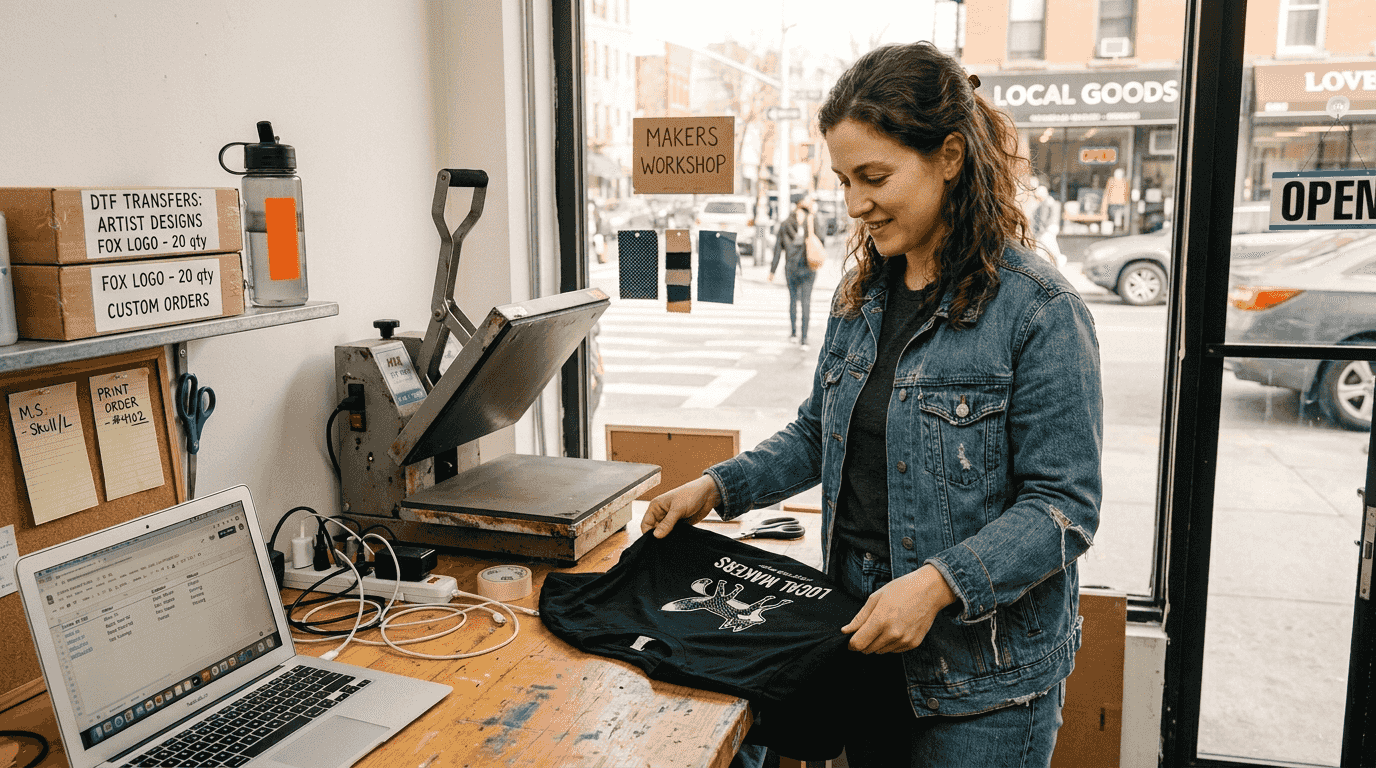
Nearly 70% of custom apparel shops offer heat transfer printing because it provides cost-effective solutions for short runs and custom designs. This accessibility matters enormously for creators testing new product lines or fulfilling small custom orders. You can produce one shirt as economically as ten, giving you flexibility that traditional methods cannot match.
The benefits extend beyond initial costs:
- No minimum order quantities let you fulfill single custom requests profitably
- Quick design changes happen in minutes rather than requiring new screen setups
- Diverse product offerings become feasible without investing in specialized equipment for each substrate type
- Lower inventory risk since you can print on demand rather than maintaining stock
HTV delivers durable, washable prints that maintain their appearance through regular garment care. Quality vinyl withstands 50 or more wash cycles without significant degradation when applied correctly. This durability meets customer expectations for custom apparel, whether you’re producing team uniforms, promotional merchandise, or small batch fashion items.
Pro Tip: Start with a few high-quality HTV colors in matte and gloss finishes to serve 80% of custom requests, then expand your vinyl inventory based on actual customer demand patterns.
Small businesses testing market response for new designs benefit enormously from transfer printing’s low barrier to entry. You can validate a design concept with minimal financial risk, then scale production if demand justifies it. This approach protects your capital while you build your customer base and refine your product offerings based on real feedback.
Outsourcing DTF transfers: affordable access without heavy equipment
DTF equipment costs create a substantial barrier for small businesses entering custom apparel production. Professional DTF printers range from $15,000 for entry level machines to $50,000 for commercial grade systems. These figures don’t include ongoing expenses for film, powder, ink, and regular maintenance that add thousands annually to your operating costs.
Outsourcing DTF transfers allows small businesses to enter the market with minimal upfront investment, focusing on design and sales rather than equipment and maintenance. This strategy shifts your business model from manufacturing to fulfillment, letting you concentrate on customer relationships and brand building. You design, order transfers, and press them onto garments without managing complex printing equipment.
The operational advantages of outsourcing extend beyond capital preservation:
- Zero maintenance costs since your supplier handles equipment upkeep and repairs
- No consumables inventory eliminates managing film, powder, and ink supplies
- Consistent quality from experienced operators using calibrated commercial equipment
- Scalability that adjusts to demand fluctuations without equipment capacity constraints
Turnaround times from reputable DTF transfer suppliers typically range from 2 to 5 business days for standard orders. This timeline balances production efficiency with shipping logistics, giving you predictable delivery schedules for customer commitments. Some suppliers offer expedited services for rush orders, though premium pricing applies for faster turnaround.
| Factor | In-House DTF | Outsourced DTF |
|---|---|---|
| Initial investment | $15,000 to $50,000+ | $0 to $500 (heat press only) |
| Ongoing costs | Film, powder, ink, maintenance | Per transfer pricing |
| Turnaround | Same day possible | 2 to 5 business days typical |
| Quality control | Your responsibility | Supplier managed |
| Scalability | Limited by equipment capacity | Nearly unlimited |
Pro Tip: Calculate your break-even point by dividing total equipment and supply costs by your per transfer savings from in-house production, typically this requires producing 5,000 to 10,000 transfers annually to justify equipment investment.
Outsourcing provides flexibility to test DTF transfer efficiency without financial commitment. You can experiment with different design styles, color combinations, and product types while your supplier handles the technical aspects of transfer production. This low-risk approach helps you identify profitable niches before making larger investments in equipment or inventory.
Choosing transfer printing: cost, quality, and production flexibility compared
Screen printing excels for large production runs where setup costs distribute across hundreds or thousands of pieces. A single color screen setup costs $25 to $50, with additional fees for each color in your design. This pricing structure makes screen printing economical only when producing 50 or more identical items, limiting its usefulness for custom and small batch work.
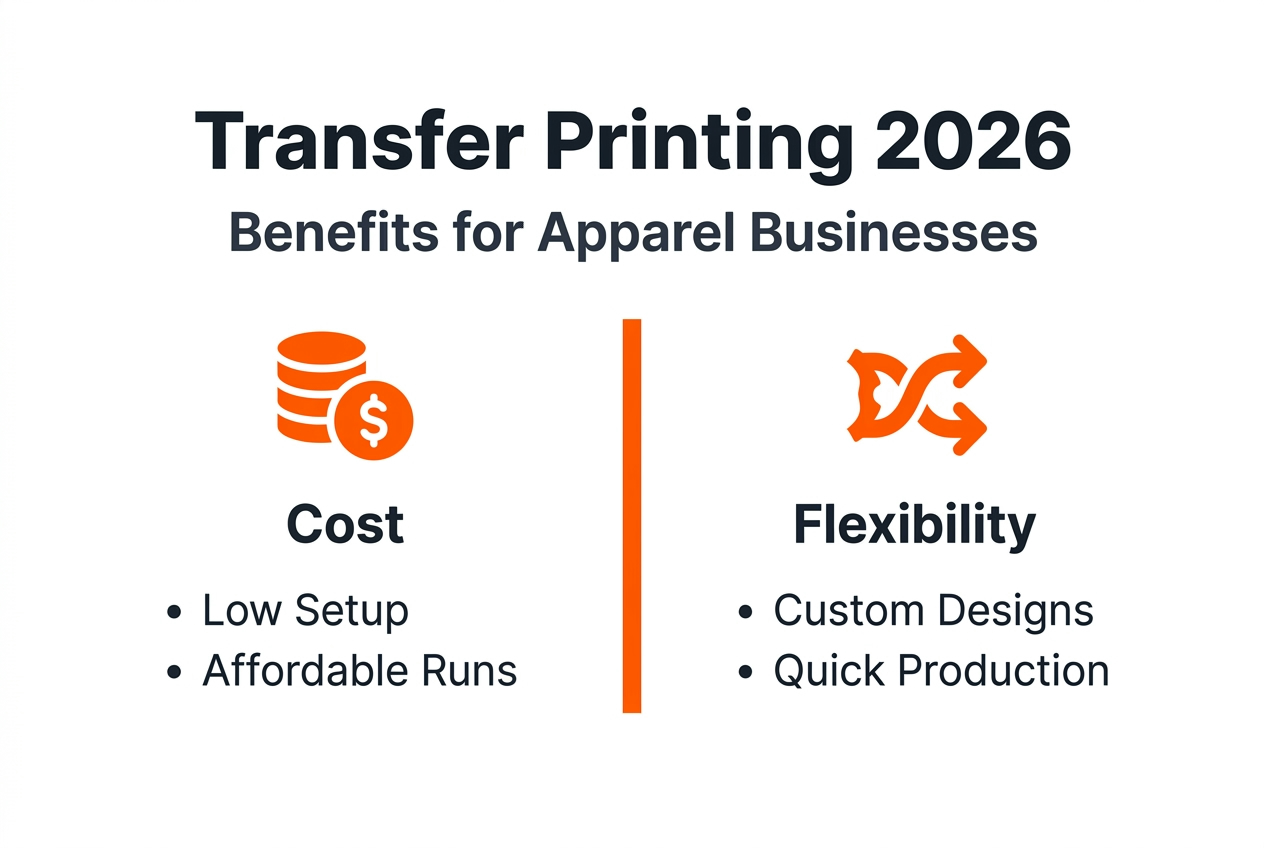
Heat transfer printing proves more accessible and cost effective for short runs compared to screen printing, while outsourcing DTF transfers offers scalability with quality control by suppliers. These methods eliminate the break-even calculations that constrain screen printing operations, giving you pricing flexibility that attracts customers seeking personalization.
| Method | Best for | Cost per unit | Setup complexity | Design flexibility |
|---|---|---|---|---|
| Screen printing | 100+ identical pieces | $3 to $8 | High (screens, registration) | Limited to spot colors |
| HTV | 1 to 50 pieces | $2 to $6 | Low (cut and press) | Good for simple designs |
| Outsourced DTF | 1 to 500 pieces | $1.50 to $4 | Minimal (design and press) | Excellent for full color |
| In-house DTF | 50+ pieces daily | $0.75 to $2 | Very high (equipment) | Excellent for full color |
Quality and durability depend heavily on proper equipment and materials rather than printing method alone. A poorly applied screen print fails just as quickly as an incorrectly pressed transfer. The key factors affecting longevity include cure temperature, pressure application, fabric preparation, and ink or adhesive quality.
Production speed varies significantly across methods:
- Screen printing processes dozens of shirts per hour once setup completes, ideal for large identical runs
- HTV application takes 30 to 90 seconds per piece including positioning and pressing
- DTF transfers press in 10 to 20 seconds but require ordering lead time from suppliers
- Sublimation works quickly but limits you to polyester fabrics and light colored substrates
Margin considerations shift when outsourcing transfers versus producing in-house. Outsourced transfers cost more per piece but eliminate equipment depreciation, maintenance, labor for printing, and inventory carrying costs. Your effective margin depends on your sales volume, product mix, and whether you value capital preservation over per-unit savings.
Pro Tip: Track your actual transfer application time including setup and cleanup to calculate true labor costs, most businesses underestimate these hidden expenses by 40% or more.
Understanding DTF printing terminology helps you communicate effectively with suppliers and make informed decisions about transfer specifications. Terms like “white underbase,” “powder application,” and “cure temperature” directly impact your final product quality and durability.
Explore same day DTF transfers to boost your apparel business
Ready to start producing custom apparel without the equipment investment? DIY Printz offers same day DTF transfers that let you fulfill urgent orders while maintaining professional quality standards.
Our service eliminates the complexity of transfer production so you can focus on design, sales, and customer relationships. Whether you’re testing a new product line or scaling an established brand, outsourcing with DIY Printz reduces upfront costs while providing the flexibility to adjust production with demand. We handle the technical aspects of DTF printing while you build your business.
Learn how becoming a DTF transfer supplier for small businesses partner can streamline your operations and improve your margins without equipment ownership.
FAQ
What is the difference between heat transfer vinyl and DTF printing?
Heat transfer vinyl uses pre-cut vinyl designs applied to fabric with heat and pressure, ideal for simple graphics and text. DTF printing creates full color designs on special film that transfers to fabric with adhesive powder, offering photographic quality and detail. Both methods produce durable results but DTF handles complex, multi-color designs more efficiently than cutting and layering multiple vinyl colors.
How long does outsourcing DTF transfers usually take?
Most outsourcing providers deliver transfers within 2 to 5 business days, balancing production efficiency with shipping logistics. In-house production offers same day turnaround but requires equipment investment and dedicated staff. Rush services from suppliers can reduce turnaround to 24 to 48 hours for premium pricing when urgent deadlines demand faster delivery.
Is transfer printing suitable for all fabric types?
HTV allows customization on various substrates, including cotton, polyester blends, and specialty fabrics, offering durability and washability across materials. Some transfer methods like sublimation require polyester content and work best on light colored substrates. DTF transfers work on cotton, polyester, blends, and even some non-fabric surfaces. Choosing the correct transfer method for your specific fabric ensures optimal adhesion and longevity through regular washing.
What equipment do I need to start with transfer printing?
You need a heat press (clamshell or swing-away style), a flat pressing surface, and protective sheets to prevent scorching. For HTV, add a cutting machine and transfer tape. For DTF transfers, you only need the heat press since suppliers provide ready-to-press transfers. A basic setup costs $200 to $500, making transfer printing accessible for small businesses and home-based operations starting in custom apparel production.
Recommended
READY TO PRINT?
Send us your artwork and we'll dial in your DTF transfer, color, and same-day turnaround.


