

What Is Heat Press? Key Benefits for Apparel Brands
Learn what a heat press is, how it works in apparel production, key types, costs, safety tips, and why it’s vital for efficient, high-quality DTF transfers.

Finding reliable ways to customize apparel can be overwhelming for both startup brands and dedicated hobbyists. Misconceptions about heat presses often keep owners guessing, from temperature myths to confusion over fabric compatibility. Understanding the principles of temperature, pressure, and time makes a real difference in getting flawless DTF transfers that last. This guide clarifies common mistakes and explores how outsourcing lets your apparel business focus on production without the hassle of technical setbacks.
Table of Contents
- Heat Press Basics And Common Myths
- Types Of Heat Press Machines Explained
- How The Heat Press Process Works
- Real-World Uses In Apparel Printing
- Risks, Costs, And Smarter Alternatives
Key Takeaways
| Point | Details |
|---|---|
| Heat Press Mechanics | Successful transfers depend on precise temperature, pressure, and time settings. Neglecting any of these factors could lead to poor results. |
| Common Myths | Many misconceptions about heat transfers can hinder small brands; understanding the truth can improve quality and durability. |
| Outsourcing Benefits | Partnering with a professional transfer service reduces equipment expenses and minimizes the risk of costly mistakes. |
| Real Costs of Ownership | Owning a heat press involves hidden costs beyond the purchase price, including maintenance, training, and material waste, which can add up significantly. |
Heat Press Basics and Common Myths
A heat press is a machine that applies heat and pressure to transfer designs onto fabrics. It’s not just about throwing a shirt on a hot plate—there’s genuine mechanics at work. Understanding how it actually works separates successful apparel brands from frustrated DIYers.
Most heat presses work by combining three key factors:
- Temperature control determines how the adhesive on your transfer melts and bonds
- Pressure settings ensure even contact between the transfer and fabric
- Time precision allows the heat to fully set without damaging your material
These three elements must work together. Skip one, and your transfers won’t stick properly.
Separating Fact From Fiction
The apparel world is full of half-truths about heat presses. Let’s clear them up. Common misconceptions about heat transfers persist because people judge based on old technology or one bad experience.
Here are the biggest myths that hurt small brands:
- Myth: Higher temperature always means better results. Wrong. Too much heat damages fabrics and reduces transfer lifespan.
- Myth: All heat presses work the same way. Not true. Different transfer types require different settings and machines.
- Myth: Heat transfers won’t last long. Modern transfers are just as durable as screen printing when applied correctly.
- Myth: You can only print on cotton. False. Quality transfers work on polyester, blends, and specialty fabrics.
High-quality heat transfers can match or exceed the durability of traditional printing methods when you use the correct temperature, pressure, and time settings.
The real issue? Most people guess at settings instead of testing. Your first run should always include temperature tests on scrap fabric.
Why DIY Printz Handles This For You
You don’t need to own a heat press or master these settings. That’s where outsourcing your transfer production makes sense. When you partner with DTF transfer application best practices, you skip the equipment investment and learning curve entirely.
We’ve already dialed in the exact settings for each transfer type. Your job becomes simple: receive ready-to-press transfers and apply them confidently to your apparel.
Small brands benefit most from this approach because you avoid costly mistakes and equipment downtime.
Pro tip: Always test your heat press settings on a scrap piece of fabric matching your final garment—different materials respond differently to heat and pressure.
Types of Heat Press Machines Explained
Not all heat presses are created equal. The machine you choose directly impacts your production speed, transfer quality, and profit margins. Understanding the main types helps you pick the right tool for your apparel business.
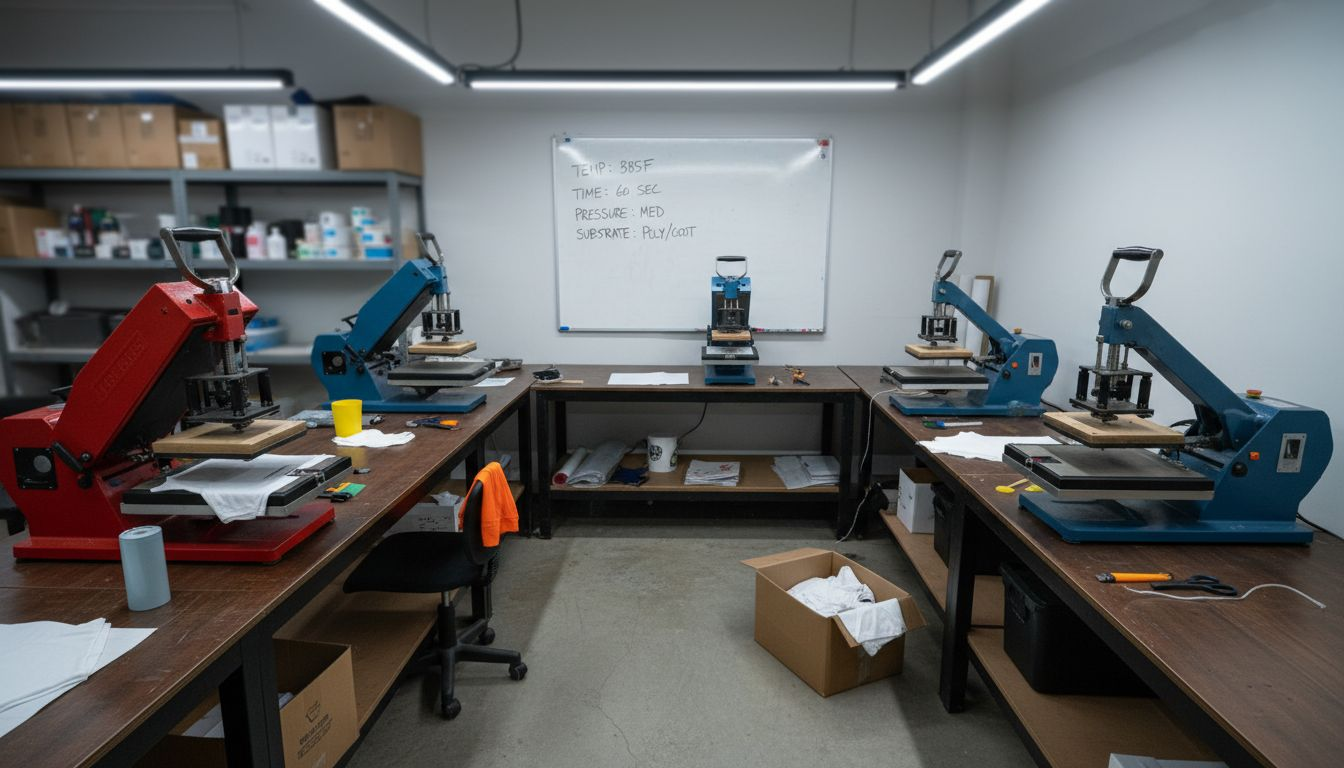
Different heat press designs serve different purposes. Some excel at high-volume production, while others work better for specialty items. Your choice depends on what you’re actually printing.
Common Heat Press Configurations
Different heat press machine types range from simple to specialized. Here are the most popular designs for apparel brands:
- Clamshell presses feature a hinged design where the heating element swings down. They’re affordable and work well for small production runs.
- Swing-away presses have the heating element swing to the side, giving you better access to your garment. This reduces wrist strain and improves efficiency.
- Draw/slide presses feature a sliding heating element that moves horizontally. They offer precise control and work great for high-volume orders.
- Pneumatic presses use compressed air for pressure adjustment. They reduce operator fatigue and deliver consistent results across every press.
Small brands often start with clamshell or swing-away models because they’re budget-friendly and reliable for standard apparel.
Here’s a quick comparison of common heat press machine types and their ideal uses:
| Heat Press Type | Best For | Key Benefit | Typical Drawback |
|---|---|---|---|
| Clamshell | Beginners, small shops | Compact size, affordable | Limited access for loading |
| Swing-away | Medium production | Ergonomic, safer to operate | More space required |
| Draw/Slide | High volume production | Precise control, faster setup | Higher cost |
| Pneumatic | Consistent large runs | Even pressure, less fatigue | Needs air compressor |
Power and Pressure Differences
The way a press applies pressure matters more than you might think. Hydraulic and pneumatic systems deliver pressure differently, affecting both quality and speed.
The right heat press type depends on your production volume, garment types, and budget—not just what’s popular.
Hydraulic machines use fluid pressure and excel at consistent, heavy-duty pressing. Pneumatic systems use compressed air and allow easier adjustments between runs. For small to mid-sized brands doing varied projects, pneumatic offers more flexibility.
Why Most Brands Don’t Own One
Here’s the honest truth: owning a heat press means equipment costs, maintenance headaches, and storage space. You also need to dial in settings for each transfer type. Most successful apparel brands outsource this step entirely.
When you use ready-to-press DTF transfers, you skip the machine investment. We’ve already tested and optimized every setting. You receive transfers ready for your press—whether that’s borrowed equipment, a cheap clamshell, or a commercial machine.
This approach frees up your capital for marketing and inventory instead of equipment you’ll use a few hours weekly.
Pro tip: If you do invest in a heat press, choose swing-away or draw models over clamshell—the ergonomic benefits pay off fast when pressing multiple garments daily.
How the Heat Press Process Works
A heat press isn’t magic—it’s physics. Understanding what happens inside the machine helps you troubleshoot problems and achieve consistent results. Three elements work together to bond your transfer permanently to fabric.
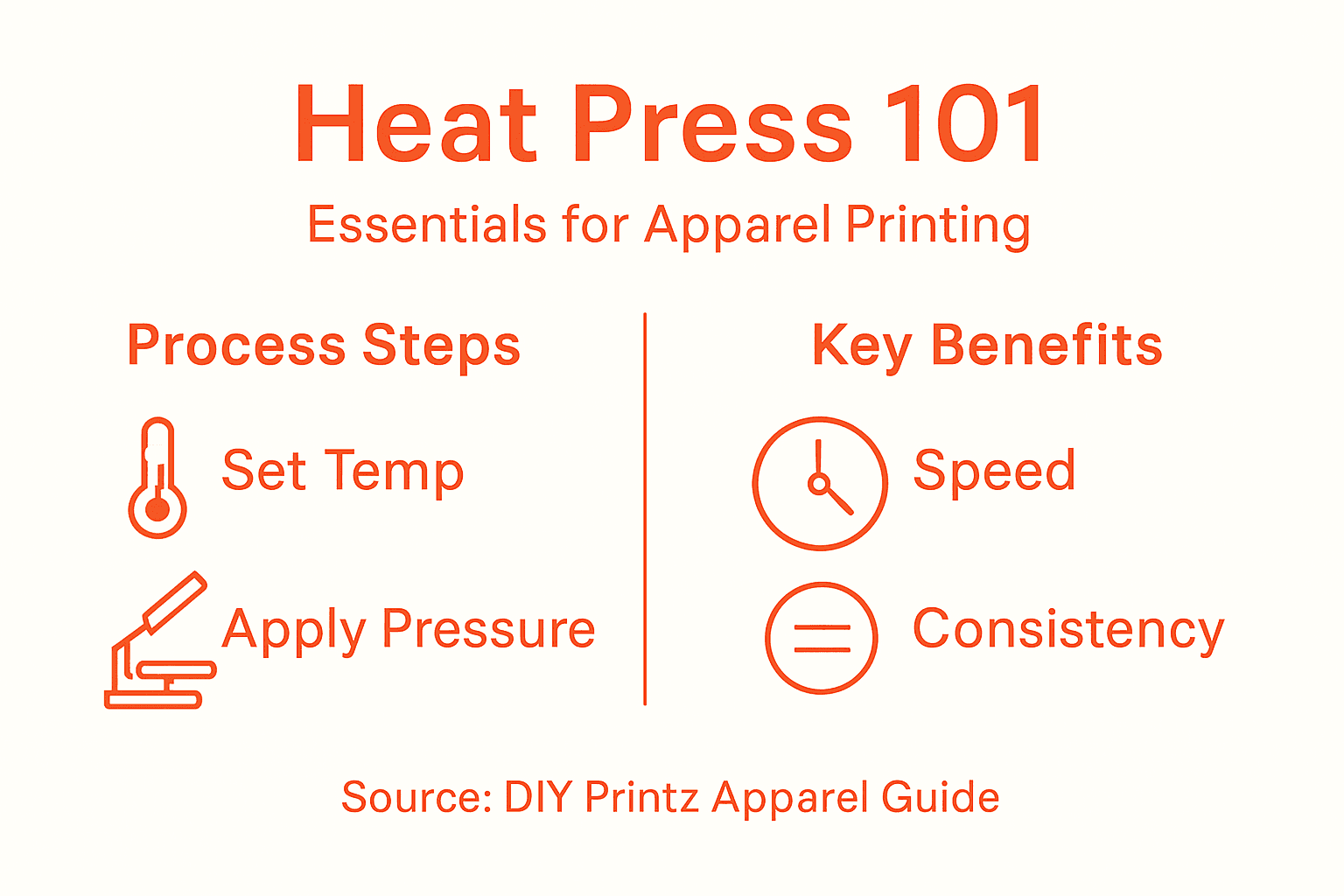
Every successful press relies on the same fundamental interaction: heat activates adhesives, pressure ensures contact, and time allows bonding to occur. Skip one element, and your transfer fails.
The Three Core Principles
Temperature, pressure, and time work as an interconnected system. Adjust one, and you must recalibrate the others.
Temperature melts the adhesive layer on your transfer. Too low and the adhesive stays inactive. Too high and you scorch the fabric or damage the ink. Most transfers require 300-330 degrees Fahrenheit, but this varies by material.
Pressure pushes the transfer flat against your garment. It eliminates air gaps and ensures the adhesive contacts every fiber. Without adequate pressure, you get patchy transfers that peel after a few washes.
Time allows the adhesive to fully cure. Rushing this step leaves weak bonds. Most presses need 10-15 seconds of contact time, depending on fabric density.
Getting these three elements right is the difference between transfers lasting months and transfers lasting years.
The Step-by-Step Process
Here’s what actually happens when you close the press:
- Preheat the machine to your target temperature (usually 10-15 minutes)
- Prepare your garment by removing wrinkles and laying it flat
- Position your transfer precisely on the garment
- Press down and let the machine run for the set time
- Lift the heated platen away from your work
- Cool the transfer by waiting 5-10 seconds before peeling
- Peel slowly and at a cool temperature for best adhesion
That cooling step is critical. Many DIYers peel immediately while the transfer is hot, causing weak bonds.
Why Outsourcing Makes Sense
Mastering these variables takes experimentation. Every fabric behaves differently. Cotton needs different settings than polyester blends. And specialty fabrics? Forget about it.
When you outsource to experienced transfer application professionals, they’ve already solved this problem. Your job becomes simple: apply pre-optimized transfers to your garments.
Pro tip: Always do a test press on a scrap piece before running your full batch—this catches temperature or pressure mistakes before they cost you inventory.
Real-World Uses in Apparel Printing
Heat presses aren’t limited to one type of garment or production scenario. From side hustles to commercial operations, they’re the backbone of modern apparel customization. Understanding where they fit in your workflow helps you decide whether to invest or outsource.
The real power of heat pressing is flexibility. You can print on t-shirts one hour and hats the next. This versatility makes heat presses valuable across countless business models.
Common Apparel Applications
Heat press machines support numerous real-world uses across the apparel industry. Here’s where they shine:
- Custom t-shirt printing for personal orders, bands, or local events
- Corporate merchandise featuring company logos and branding
- Sports team apparel with names, numbers, and team logos
- Personalized gifts like custom hoodies, caps, and jackets
- Merch drop fulfillment for small creators and online brands
- Print shop operations handling bulk orders with consistent quality
Each application has different volume and speed requirements. A one-person merch brand needs different capabilities than a commercial print shop.
Who Actually Uses Heat Presses Daily
Small to mid-sized apparel brands dominate the heat press market. They need production flexibility without factory-level overhead. Screen printers use them to complement their services and expand into transfer printing.
Embroidery shops often add heat pressing to their service menu. Print shops use them for rush orders and specialty fabrics that don’t work with screen printing. DIY hobbyists use them for side income or personal projects.
Heat presses solve the problem of small-batch customization at reasonable cost—a gap that traditional manufacturing can’t fill.
The Hidden Cost Most Brands Overlook
Owning a heat press means you’re also responsible for maintenance, troubleshooting, and operator training. Equipment breakdowns cost you deadlines and revenue. One miscalibrated setting ruins an entire batch.
This is why many successful brands skip ownership entirely. When you use ready-to-press DTF transfers, you eliminate these headaches. We’ve already dialed in settings for every transfer type and fabric combination.
You focus on selling and fulfilling orders. We handle the technical complexity and equipment responsibility.
Pro tip: If you’re testing whether to invest in a heat press, start by outsourcing transfers for a few months—you’ll quickly see if the volume justifies the equipment cost.
Risks, Costs, and Smarter Alternatives
Owning a heat press looks simple on paper. In reality, it comes with hidden costs and operational risks that catch most brands off guard. Before you invest thousands in equipment, understand what actually goes wrong.
The equipment itself is just the beginning. Training, maintenance, troubleshooting, and material waste add up fast. Many brands discover too late that outsourcing was the smarter financial decision.
The Real Costs of Ownership
A quality heat press runs $1,500 to $5,000 upfront. But equipment cost is only 30% of total ownership expense.
Hidden costs include:
- Operator training time before anyone produces usable transfers
- Material waste from failed tests and learning-curve mistakes
- Equipment maintenance and occasional repairs
- Machine downtime when something breaks mid-order
- Space requirements for equipment storage and workflow
- Electricity costs for preheating and continuous operation
- Software or settings management for different transfer types
Add these up over a year, and many small brands spend $4,000 to $8,000 beyond the machine purchase. That’s capital that could fund marketing or inventory instead.
To understand the full cost of heat press ownership, compare these major expense categories:
| Cost Area | Description | Example Amount |
|---|---|---|
| Equipment Purchase | Initial investment in the machine | $1,500 - $5,000 |
| Yearly Maintenance | Repairs, part replacements, routine service | $300 - $1,200/year |
| Training & Waste | Learning curve material loss and time | $500 - $2,000/year |
| Space & Utilities | Shop space, electricity usage for operation | $200 - $800/year |
Common Operational Risks
Incorrect temperature and pressure settings destroy batches instantly. One degree too hot scorches fabric. One second too long damages the ink. One PSI too much ruins the transfer bond.
Other risks damage your reputation:
- Transfers peeling after two washes
- Inconsistent color results between batches
- Damaged garments that must be replaced
- Missed deadlines during equipment failures
- Poor quality that costs you repeat customers
Every batch that fails costs you twice—once for wasted materials and once for customer refunds or replacements.
Why Outsourcing Wins
When you outsource transfers, you transfer the risk to a partner with experience. We’ve already made every mistake possible and learned from it. Our equipment runs 24/7 under professional maintenance. Our operators know exactly which settings work for each fabric type.
You receive consistently perfect transfers. No learning curve. No equipment investment. No batch failures. You press garments with confidence.
For most small to mid-sized brands, outsourcing costs less and produces better results than ownership. The math is simple: our per-transfer cost is lower than your total cost of ownership.
Pro tip: Calculate your true equipment cost by adding purchase price plus annual maintenance, training time, and average material waste—most brands are shocked by the real number.
Simplify Your Apparel Printing with Expert DTF Transfers
Understanding the complexity behind heat presses can be overwhelming. The challenge of mastering precise temperature, pressure, and timing settings often leads to wasted materials, costly equipment, and frustrating trial and error. If you want to avoid the hidden costs and risks of owning and operating a heat press, you are not alone. Many apparel brands face the same struggles of balancing quality with efficiency while growing their business.
DIY Printz offers a smart solution by handling your Direct-to-Film (DTF) transfer production with professional expertise. We deliver ready-to-press transfers that have been optimized for consistent adhesion and durability. This means you skip the guesswork, avoid equipment maintenance headaches, and focus on what truly matters - selling, pressing, and expanding your brand successfully.
Take control of your production without owning a heat press. Explore how our service can transform your apparel printing workflow today.
Ready to reduce your costs and boost your print quality? Visit DIY Printz now to start receiving high-volume, reliable DTF transfers that make heat pressing simple and profitable. Learn more about our DTF transfer application best practices and discover why so many businesses trust us to handle their transfer needs while they focus on growth.
Frequently Asked Questions
What is a heat press and how does it work?
A heat press is a machine that applies heat and pressure to transfer designs onto fabrics. It involves three key components: temperature, pressure, and time, working together to ensure that transfers adhere properly to the material.
What are the main benefits of using a heat press for apparel printing?
Using a heat press allows for high-quality branding on various fabrics, the ability to work with different transfer types, and consistent results that can match or exceed traditional printing methods. It also offers flexibility for customization.
Why is temperature control important when using a heat press?
Temperature control is crucial because it determines how the adhesive on the transfer melts and bonds to the fabric. Too high a temperature can damage the fabric, while too low may result in poor adhesion.
Can I use a heat press on any type of fabric?
Yes, heat presses can work on a variety of fabrics, including cotton, polyester, and blends. However, different fabrics may require specific temperature and pressure settings for optimal results.
Recommended
- Why Use DTF Transfers for Apparel Success – DIYPRINTZ
- 7 Practical Examples of DIY Apparel Printing for Brands – DIYPRINTZ
- What Is Custom Apparel? Streamlining Brand Success – DIYPRINTZ
- 7 Essential Types of DTF Transfers for Apparel Brands – DIYPRINTZ
- 7 Essential Tips for Using a Dye Sublimation Service – Bettermockups
- What Is Vinyl Printing? 2025 Guide for London Businesses - PromoSigns.co.uk
READY TO PRINT?
Send us your artwork and we'll dial in your DTF transfer, color, and same-day turnaround.


