

Innovative examples of custom garment prints for 2026
Discover innovative examples of custom garment prints including DTF, DTG, and screen printing. Compare methods, costs, and durability to choose the best option for your apparel business in 2026.

Choosing the right custom garment print style can make or break your apparel business. With so many techniques available, from vibrant DTF transfers to classic screen printing, finding the perfect match for your brand and budget feels overwhelming. This guide walks you through innovative examples of custom garment prints, comparing popular methods and helping you select options that maximize quality, profitability, and customer satisfaction. Whether you run a print shop, merch brand, or custom clothing business, you’ll discover actionable insights to elevate your product offerings and stand out in competitive markets.
Table of Contents
- Key takeaways
- Criteria for selecting custom garment prints
- Examples of popular custom garment print types
- Comparison of custom garment print types
- Choosing the best custom print option for your business
- Enhance your apparel business with expert print solutions
- FAQ
Key Takeaways
| Point | Details |
|---|---|
| Cost and pricing | Costs vary by method, with screen printing cheapest per unit for large runs but high setup costs, while DTG and DTF offer flexibility for small batches. |
| Run size considerations | For large orders of identical shirts, screen printing delivers the best value, while DTG and DTF are better for small orders or designs that change often, and always request sample prints on your actual garment stock before committing to large production runs. |
| Design complexity | Screen printing requires a separate color for each layer, making highly detailed or gradient artwork costly, whereas DTG handles many colors easily and DTF sits between. |
| Fabric compatibility | Cotton and blends work well across methods, while polyester responds best to DTF and stretchy fabrics may need specialized processes. |
| Turnaround speed | Turnaround speed varies by method with DTF and DTG offering fast production and screen printing requiring more time for setup and curing. |
Criteria for selecting custom garment prints
Selecting the right print method requires balancing multiple factors that directly impact your bottom line and customer satisfaction. Choosing a print method depends on cost, turnaround, garment type, and design complexity, so understanding these criteria helps you make informed decisions.
Cost per print varies dramatically across methods. Screen printing offers the lowest per-unit cost for large runs but requires expensive setup fees that make small batches uneconomical. DTF transfers eliminate setup costs entirely, making them ideal for testing new designs or fulfilling custom orders. Heat transfers fall somewhere in between, offering moderate pricing for medium-sized runs.
Run size fundamentally shapes which method makes financial sense. If you’re producing 500 identical shirts, screen printing delivers unbeatable value. For orders under 50 units or designs requiring frequent changes, DTF and DTG provide flexibility without wasting resources on screens you’ll only use once.
Design complexity and color count create technical constraints. Screen printing requires a separate screen for each color, making intricate designs with gradients or photographic elements prohibitively expensive. DTG handles unlimited colors effortlessly, reproducing complex artwork with photographic accuracy. DTF strikes a middle ground, delivering vibrant multi-color prints without the per-color cost penalties of screen printing.
Garment fabric affects how well prints adhere and last through washing cycles. Cotton works beautifully with nearly every method, while polyester blends perform best with DTF due to superior adhesion on synthetic fibers. Stretchy fabrics like spandex require specialized techniques to prevent cracking during movement.
Turnaround time requirements matter when fulfilling rush orders or capitalizing on trending designs. DTF transfers can be produced and pressed within hours, perfect for fast merch demands. Screen printing requires days for screen preparation and curing, making it unsuitable for urgent projects despite its cost advantages on large runs.
Pro Tip: Always request sample prints on your actual garment stock before committing to large production runs. What looks perfect on a test swatch may behave differently on your preferred fabric blend.
Examples of popular custom garment print types
Understanding the specific characteristics of each print method helps you match techniques to your business needs and design goals. Here are the most popular options transforming the custom apparel industry.
Direct-to-garment (DTG) printing works like a giant inkjet printer for fabric, spraying water-based inks directly onto garments. This method excels at reproducing photographic images, intricate illustrations, and designs with unlimited colors. DTG shines for on-demand printing since it requires no setup beyond loading the design file. The prints feel soft because ink absorbs into fabric fibers rather than sitting on top. However, DTG works best on 100% cotton and requires pretreatment chemicals that add production time.
DTF printing allows vibrant, durable prints with fast turnaround and gang sheet usage, making it a game changer for apparel businesses. DTF creates transfers by printing designs onto special film, applying powder adhesive, then heat-curing the combination. You press these transfers onto garments using a heat press, bonding the design permanently. DTF works on cotton, polyester, blends, and even challenging materials like nylon and leather. The colors pop with exceptional vibrancy, and the process allows efficient gang sheet printing where multiple designs share one sheet.
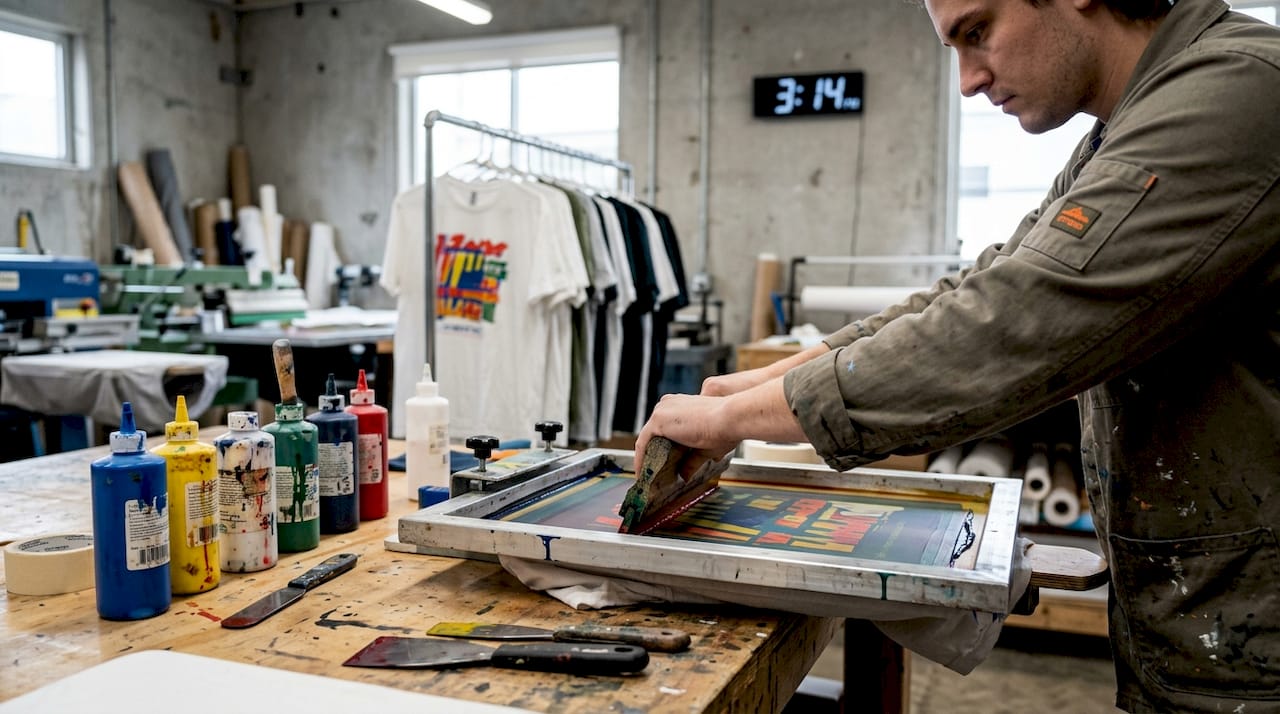
Screen printing provides cost efficiency and vibrant colors for large runs. This traditional method pushes ink through mesh screens onto fabric, with each color requiring a separate screen. Screen printing delivers the most durable prints that withstand hundreds of wash cycles without fading. The thick ink layer creates bold, opaque colors that stand out beautifully on dark garments. Setup costs make screen printing economical only for orders exceeding 50-100 units, but per-unit costs drop dramatically as quantities increase.
Heat transfer methods encompass several techniques including vinyl cutting and sublimation. Vinyl transfers work by cutting designs from colored sheets, then heat-pressing them onto garments. This approach suits simple graphics, text, and logos with solid colors. Sublimation transfers dye directly into polyester fibers using heat, creating prints that never crack or peel because they become part of the fabric itself. Sublimation only works on white or light-colored polyester but produces incredibly soft, breathable results.
Embroidery adds a premium texture and lasting quality that other methods cannot match. Computerized machines stitch designs directly into fabric using colored threads, creating a raised, three-dimensional effect. Embroidery conveys professionalism and durability, making it popular for corporate apparel, hats, and polo shirts. The technique works best for simpler designs since excessive detail becomes muddy at small sizes. Thread count and stitch density affect both appearance and cost.
Pro Tip: Combine multiple print methods on single garments for unique effects. Try DTF for detailed front graphics with embroidered logos on sleeves to maximize visual impact while controlling costs.
Comparison of custom garment print types
This comparison table breaks down the key differences between major print methods to help you evaluate which techniques align with your business priorities.
| Print Method | Cost per Unit | Best Run Size | Detail Quality | Turnaround Time | Wash Durability |
|---|---|---|---|---|---|
| Screen Printing | Low (bulk) | 100+ units | Good for simple designs | 5-7 days | Excellent (500+ washes) |
| DTF Transfer | Moderate | 1-500 units | Excellent for complex art | 1-3 days | Very good (50+ washes) |
| DTG Printing | Moderate-High | 1-100 units | Excellent for photos | 2-4 days | Good (30-40 washes) |
| Heat Transfer Vinyl | Moderate | 1-50 units | Good for simple graphics | 1-2 days | Good (30-50 washes) |
| Embroidery | High | Any size | Limited detail | 3-5 days | Excellent (500+ washes) |
| Sublimation | Low-Moderate | 25+ units | Excellent for full color | 2-3 days | Excellent (no fading) |
Comparison of custom print methods includes cost-efficiency, quality, and flexibility factors that directly impact your production strategy and profit margins. Screen printing dominates large orders where per-unit cost matters most, but the high setup investment makes it impractical for small batches or frequently changing designs.
DTF transfers occupy the sweet spot for businesses needing flexibility without sacrificing quality. The ability to print multiple designs on gang sheets maximizes efficiency, while the lack of setup costs keeps small runs profitable. DTF’s compatibility with diverse fabrics makes it versatile enough to handle varied inventory.
DTG appeals to print-on-demand businesses and artists selling unique designs since it requires zero setup and handles unlimited colors effortlessly. The higher per-unit cost becomes justified when you avoid inventory risk by printing only confirmed orders.
Heat transfer vinyl works perfectly for personalization businesses adding names, numbers, or simple logos to garments. The quick turnaround and minimal equipment investment make it accessible for startups, though design limitations restrict creative possibilities.
Embroidery commands premium pricing that customers willingly pay for corporate wear, team uniforms, and high-end branded merchandise. The tactile quality and perceived value justify the higher cost despite slower production speeds.
Sublimation creates the softest prints imaginable since dye becomes part of the fabric rather than a surface layer. The restriction to polyester limits applications, but for athletic wear and all-over prints, nothing beats sublimation’s breathability and durability.
Choosing the best custom print option for your business
Selecting the optimal print method requires analyzing your specific business model, target market, and growth goals. Follow these steps to make decisions that maximize profitability while delivering quality your customers love.
-
Define your typical order profile by tracking run sizes over the past quarter. If 80% of orders fall under 50 units, investing in screen printing equipment makes little sense. DTF or DTG better serves businesses with diverse, smaller orders.
-
Analyze your design complexity requirements by reviewing your best-selling products. Simple text and logo designs suit screen printing or vinyl, while artistic illustrations and photographic prints demand DTF or DTG capabilities.
-
Calculate true production costs including labor, materials, equipment maintenance, and rejected prints. The cheapest method per print often becomes expensive when you factor in setup time, waste, and learning curve inefficiencies.
-
Evaluate fabric diversity in your product line. If you print exclusively on cotton tees, DTG works wonderfully. Businesses offering polyester performance wear, cotton blends, and specialty fabrics need DTF’s universal compatibility.
-
Consider your turnaround time commitments carefully. Fast turnaround prints and small runs can yield big margins when chosen wisely, especially when capitalizing on trending designs or rush orders that command premium pricing.
-
Test multiple methods with identical designs before committing to equipment purchases or outsourcing partnerships. Press samples through 20 wash cycles to verify durability claims match your quality standards.
-
Factor in scalability when choosing between in-house production and outsourcing. Owning equipment provides control but requires maintenance, supplies, and skilled operators. Outsourcing to reliable partners eliminates overhead while maintaining flexibility.
Pro Tip: Start by outsourcing print production to test market demand for different styles before investing in expensive equipment. This approach minimizes risk while you refine your product offerings and identify which print methods your customers prefer.
“The most profitable apparel businesses match print methods to order characteristics rather than forcing every design through one technique. Flexibility beats specialization in today’s fast-moving custom merch market.”
Your customer base influences which print qualities matter most. Selling to corporations demanding professional appearance and longevity? Embroidery and screen printing deliver the durability and prestige they expect. Targeting creative individuals who value unique, detailed artwork? DTF and DTG reproduce intricate designs that express personal style.
Budget constraints require honest assessment of startup costs versus ongoing expenses. Screen printing demands significant upfront investment in screens, inks, and curing equipment, but per-unit costs drop below competitors at volume. DTF requires a heat press and transfer purchases, with moderate ongoing costs that remain consistent regardless of order size.
Production space availability matters more than many entrepreneurs realize. DTG printers and screen printing setups consume substantial floor space and require ventilation for fumes and humidity control. DTF transfers need only a heat press and storage for transfer sheets, making them ideal for home-based businesses or shops with limited square footage.
Enhance your apparel business with expert print solutions
After exploring various custom garment print options, you might wonder how to implement these techniques without the hassle of equipment ownership and maintenance. DIY Printz specializes in producing high-quality DTF transfers that combine the vibrant colors and design flexibility you need with the fast turnaround your business demands.
Our same day DTF transfers eliminate the learning curve, equipment costs, and production headaches that come with in-house printing. We handle everything from gang sheet optimization to quality control, delivering ready-to-press transfers that make your workflow cleaner and more profitable. Whether you’re fulfilling small custom orders or scaling up for bulk production, our proven process ensures consistent results that keep customers coming back. Focus on growing your brand and closing sales while we handle the technical printing details. Visit DIY Printz to discover how outsourcing your transfer production frees you to do what you do best.
FAQ
What are the most durable custom print types?
Screen printing and embroidery offer the highest durability, withstanding 500 or more wash cycles without significant fading or deterioration. DTF transfers also provide excellent durability for vibrant prints, typically lasting 50 or more washes when properly applied. For athletic wear and performance fabrics, sublimation creates permanent prints that never crack or peel since the dye becomes part of the polyester fibers.
Which print method is best for small batch runs?
DTF and DTG printing excel for small batch production, offering flexibility with fast turnaround and zero screen setup costs. These methods remain profitable even for single-unit orders since you only pay for what you produce. Heat transfer vinyl also suits small batches well, particularly for simple text and logo applications where design complexity stays minimal.
How does print complexity affect method choice?
DTG excels with complex, multi-color designs including photographic images and intricate illustrations since it handles unlimited colors without additional costs. Screen printing works better for simpler designs with limited colors due to the expense and time required to create separate screens for each color. DTF strikes a balance, reproducing detailed artwork with vibrant colors while maintaining cost efficiency that makes it practical for varied design complexity.
Can I combine different print methods on one garment?
Absolutely, combining print methods creates unique visual effects while optimizing costs. Many businesses use DTF for detailed front graphics paired with embroidered logos on sleeves or chest areas. This approach delivers the intricate artwork customers love while adding the premium texture and perceived value that embroidery provides. Just ensure your heat press temperatures and timing accommodate both techniques without damaging either application.
Recommended
READY TO PRINT?
Send us your artwork and we'll dial in your DTF transfer, color, and same-day turnaround.


