

DIY fabric printing: cost-effective guide for apparel
Learn cost-effective DIY fabric printing with DTF transfers. Complete guide covering materials, workflow, troubleshooting, and safety for custom apparel businesses.

Small apparel businesses and hobbyists often struggle to find fabric printing methods that balance affordability, quality, and simplicity. Many fear that achieving professional results requires expensive industrial equipment or outsourcing that erodes profit margins. Direct-to-Film (DTF) printing offers a versatile, cost-effective solution that delivers vibrant, durable prints on various fabrics without the complexities of owning large printers. This guide covers everything you need to start DIY fabric printing, from materials and workflow to troubleshooting and safety.
Table of Contents
- Introduction To DIY Fabric Printing And DTF Benefits
- Prerequisites: Essential Materials, Equipment, And Workspace Setup
- Step-By-Step DIY Fabric Printing Process
- Common Mistakes And Troubleshooting Tips
- Comparison Of Fabric Printing Methods For Small Businesses
- Expected Results And Performance Benchmarks
- Safety Considerations And Best Practices
- Alternative Approaches: Outsourcing Vs DIY Fabric Printing
- Explore DIY Printz’s Same Day DTF Transfer Services
- FAQ
Key takeaways
| Point | Details |
|---|---|
| DTF printing delivers durable, vibrant prints on various fabrics with minimal upfront investment | Ideal for small batches and custom apparel without industrial equipment costs |
| Workspace setup and correct materials are critical foundations for consistent print success | Proper ventilation, compatible inks, and films prevent common quality issues |
| Precise heat press settings for temperature, pressure, and timing determine print longevity | Following recommended parameters prevents adhesion failures and fabric damage |
| Screen printing and sublimation offer alternatives with distinct cost and fabric compatibility tradeoffs | Each method suits different production scales and fabric types |
| Safety protocols around ink handling and ventilation protect long-term health | Proper protective gear and workspace airflow reduce chemical exposure risks |
Introduction to DIY fabric printing and DTF benefits
Fabric printing technology has evolved dramatically, making professional-quality custom apparel accessible to small-scale producers. Understanding your options helps you choose methods that match your budget, production volume, and technical comfort level.
DTF printing stands out as a cost-efficient, versatile method for small apparel businesses. Unlike traditional screen printing that requires separate screens for each color and design, DTF transfers print full-color graphics directly onto special film. You then heat press these transfers onto garments, creating vibrant prints with excellent wash durability. This approach eliminates the need for expensive screen setup costs and makes single-item customization economically viable.
Key advantages of DTF for DIY producers include:
- Works on cotton, polyester, blends, and even difficult fabrics like nylon
- No minimum order quantities, perfect for testing designs or small batches
- Full-color graphics with photographic detail without color limitations
- Faster learning curve compared to screen printing or direct-to-garment methods
- Lower startup costs than purchasing industrial printing equipment
Many newcomers assume quality fabric printing requires $20,000+ machines or years of training. This misconception keeps talented designers from entering custom apparel markets. DTF technology breaks down these barriers. A basic heat press ($300-800) and compatible transfer materials let you produce prints comparable to commercial shops.
Compared to traditional screen printing, DTF offers distinct advantages for small operations. Screen printing excels at high-volume runs of simple designs but requires significant upfront investment in screens, inks, and curing equipment. Each new design adds setup costs. DTF eliminates these barriers, making it perfect for entrepreneurs testing product ideas or offering personalized merchandise. You can learn why direct to film transfers have become the preferred choice for thousands of small apparel businesses.
The key is matching your printing method to your business model. If you produce 500 identical shirts monthly, screen printing might prove more economical. For varied designs, small batches, or on-demand production, DTF delivers unmatched flexibility and cost efficiency.
Prerequisites: essential materials, equipment, and workspace setup
Successful DIY fabric printing starts with proper preparation. Gathering the right tools and creating an appropriate workspace prevents frustration and wasted materials.
Essential equipment for DTF fabric printing includes:
- Heat press machine with adjustable temperature, pressure, and timer (15x15 inch minimum platen size recommended)
- Computer with graphic design software (Adobe Photoshop, Illustrator, or free alternatives like GIMP)
- DTF-compatible transfer films and adhesive powder
- Quality DTF inks formulated for fabric adhesion
- Protective gear including heat-resistant gloves and safety glasses
- Parchment or Teflon sheets to protect heat press surfaces
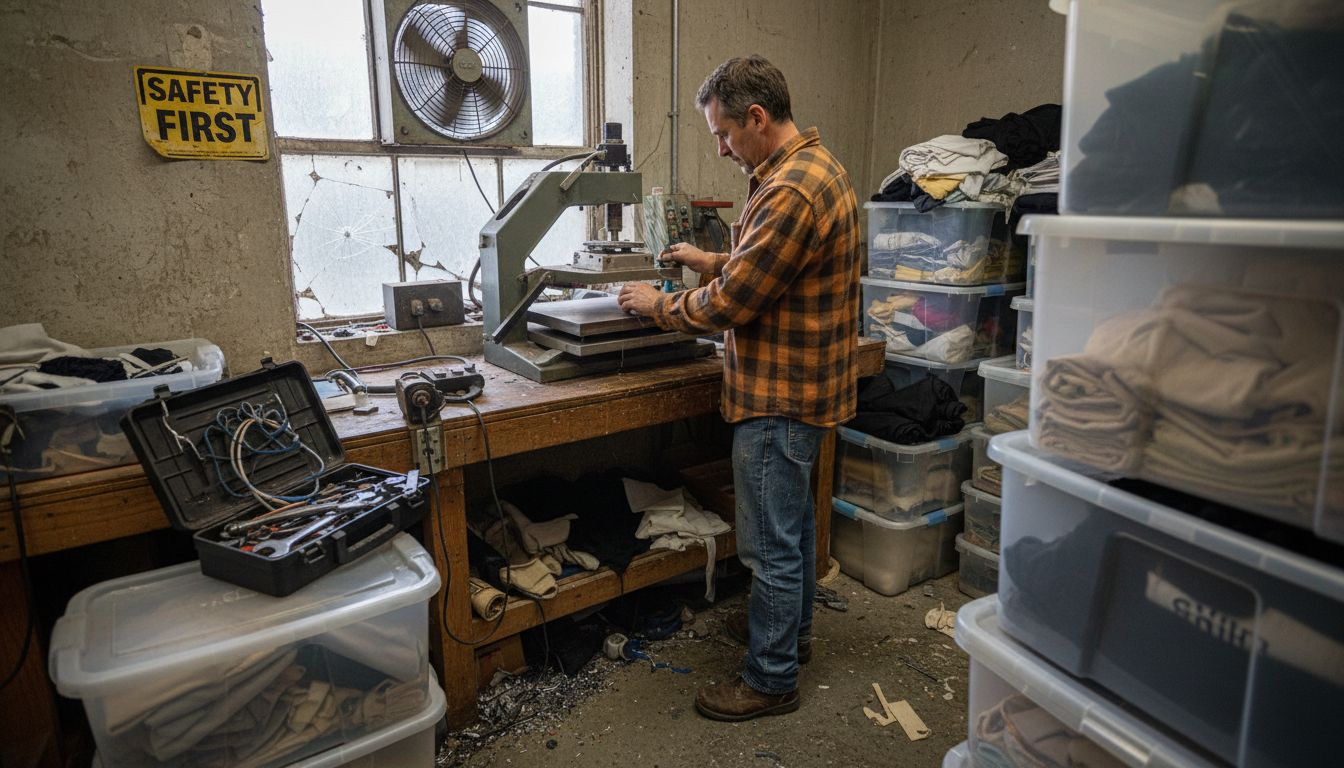
Your workspace significantly impacts print quality and safety. Choose a well-ventilated area, ideally with windows or exhaust fans. Inks and adhesive powders release fumes during heating that require proper airflow. A dedicated space prevents cross-contamination with food or living areas. Keep surfaces clean and organized to avoid dust particles that can ruin prints.
Ink and film compatibility matters more than many beginners realize. Not all DTF films work with every ink formulation. Mismatched materials cause poor adhesion, color shifting, or premature peeling. Purchase starter kits from reputable suppliers to ensure compatibility, then expand your inventory once you understand the relationships between materials.
You will also need basic knowledge of heat press operation and fabric properties. Different materials require different temperature and pressure settings. Cotton tolerates higher heat than delicate synthetics. Blended fabrics fall somewhere in between. The DTF transfer application guide provides detailed specifications for common fabric types.
Pro Tip: Maintain a workspace log tracking temperature, humidity, and ventilation conditions. Print quality varies with environmental factors. Recording conditions when problems occur helps identify patterns and solutions faster than troubleshooting blindly.
Before starting production, review the DTF printing checklist essential steps to ensure you have not missed critical setup requirements. Proper preparation prevents most common beginner mistakes.
Step-by-step DIY fabric printing process
Mastering the DTF printing workflow transforms raw materials into finished custom apparel. Each step requires attention to detail, but the process becomes routine with practice.
-
Prepare your digital design and print the transfer film. Create or import your artwork in design software, ensuring images are high resolution (300 DPI minimum). Mirror the design horizontally before printing, as it transfers in reverse. Print onto DTF film using compatible inks, then immediately apply adhesive powder while the ink remains wet. Shake off excess powder and cure the transfer according to manufacturer specifications.
-
Set correct heat press parameters. Preheat your heat press to the recommended temperature for your fabric type (typically 300-320°F for cotton). Position the garment flat on the lower platen, smoothing any wrinkles. Place the transfer face-down on the fabric, cover with parchment paper, and close the press. Apply firm, even pressure for the specified duration (usually 10-15 seconds for the initial press).
-
Complete the curing process for durable adhesion. After the initial press, carefully peel away the carrier film. Some transfers require hot peel (immediate removal), while others need cold peel (wait until cooled). Apply a second press with parchment paper for 5-10 seconds to fully bond the adhesive. This step significantly improves wash durability.
-
Inspect prints and troubleshoot issues. Examine the finished print for complete adhesion, color accuracy, and detail sharpness. Common problems include incomplete transfer (insufficient pressure or time), scorching (excessive heat), and peeling edges (inadequate adhesive or wrong peel temperature). Address issues immediately before they become patterns.
-
Maintain equipment and workspace for consistency. Clean heat press platens after each session to prevent adhesive buildup. Store unused transfer films in cool, dry conditions away from direct sunlight. Keep design software and color profiles calibrated to ensure accurate color reproduction batch after batch.
Critical parameters for common fabrics:
- 100% cotton: 315-320°F, medium-heavy pressure, 12-15 seconds
- Cotton/polyester blends: 300-310°F, medium pressure, 10-12 seconds
- 100% polyester: 285-300°F, light-medium pressure, 8-10 seconds
- Nylon and technical fabrics: 270-290°F, light pressure, 8-10 seconds
Pro Tip: Always run test prints on scrap fabric before pressing expensive garments. Material variations between manufacturers can require slight parameter adjustments. A $2 test shirt saves you from ruining a $20 premium garment.
The DTF transfer workflow guide provides visual step-by-step instructions for each stage. Additionally, the custom apparel printing guide offers advanced techniques for challenging fabrics and complex designs. For the latest optimization strategies, check DTF printing tips 2026 covering recent innovations in transfer technology.
Common mistakes and troubleshooting tips
Even experienced printers encounter occasional failures. Recognizing common errors and knowing quick fixes minimizes wasted materials and downtime.
Temperature and pressure mistakes cause the majority of DTF printing problems. Setting heat too high scorches fabrics and causes color shifting, especially on polyester that can sublimate and bleed. Insufficient heat prevents complete adhesive activation, leading to premature peeling. Uneven pressure creates partial transfers with strong centers but weak edges.
Timing errors produce similar symptoms but require different solutions. Pressing too briefly leaves adhesive incompletely bonded. The print may look perfect initially but fail after the first wash. Excessive press time can damage delicate fabrics or cause the transfer to bond too aggressively, making garments stiff and uncomfortable.
Incompatible material combinations frustrate many beginners. Using standard inkjet inks instead of DTF-formulated varieties produces dull colors and poor wash resistance. Mismatched adhesive powders may not activate properly at standard temperatures. Always verify material compatibility before purchasing large quantities.
Calibration and testing prevent these issues. Start each session with a test print on scrap material. If results differ from previous sessions, check for environmental changes (temperature, humidity) or equipment drift (heat press calibration, pressure mechanism wear). Consistent testing catches problems before they ruin production runs.
Pro Tip: Keep a detailed troubleshooting log documenting each failed print. Record the fabric type, transfer parameters, environmental conditions, and specific failure mode (peeling, cracking, incomplete transfer, color issues). Patterns emerge quickly, revealing whether problems stem from equipment, materials, or technique. This log becomes invaluable when training new staff or switching suppliers.
The DTF printing troubleshooting guide provides comprehensive solutions for dozens of specific problems, complete with photos showing failure modes and corrective actions.
Comparison of fabric printing methods for small businesses
Choosing the right printing method impacts your costs, capabilities, and competitive position. Understanding how DTF compares to alternatives helps you make informed decisions.
Three primary methods dominate small-scale fabric printing: DTF, screen printing, and sublimation. Each offers distinct advantages depending on your production needs and target markets.
Screen printing offers superior color vibrancy but involves higher costs and expertise. Each design requires creating separate screens for every color layer. This makes screen printing economical only for large runs of identical designs. Setup costs ($50-200 per design) get distributed across hundreds of units. For runs under 50 pieces, per-unit costs often exceed DTF pricing.
DTF printing excels at short runs, complex designs, and product variety. No setup costs beyond creating digital files means single-item production remains profitable. Full-color photographic images print as easily as simple logos. The tradeoff is slightly higher per-unit material costs and potentially less vibrant colors than screen printing on dark fabrics.
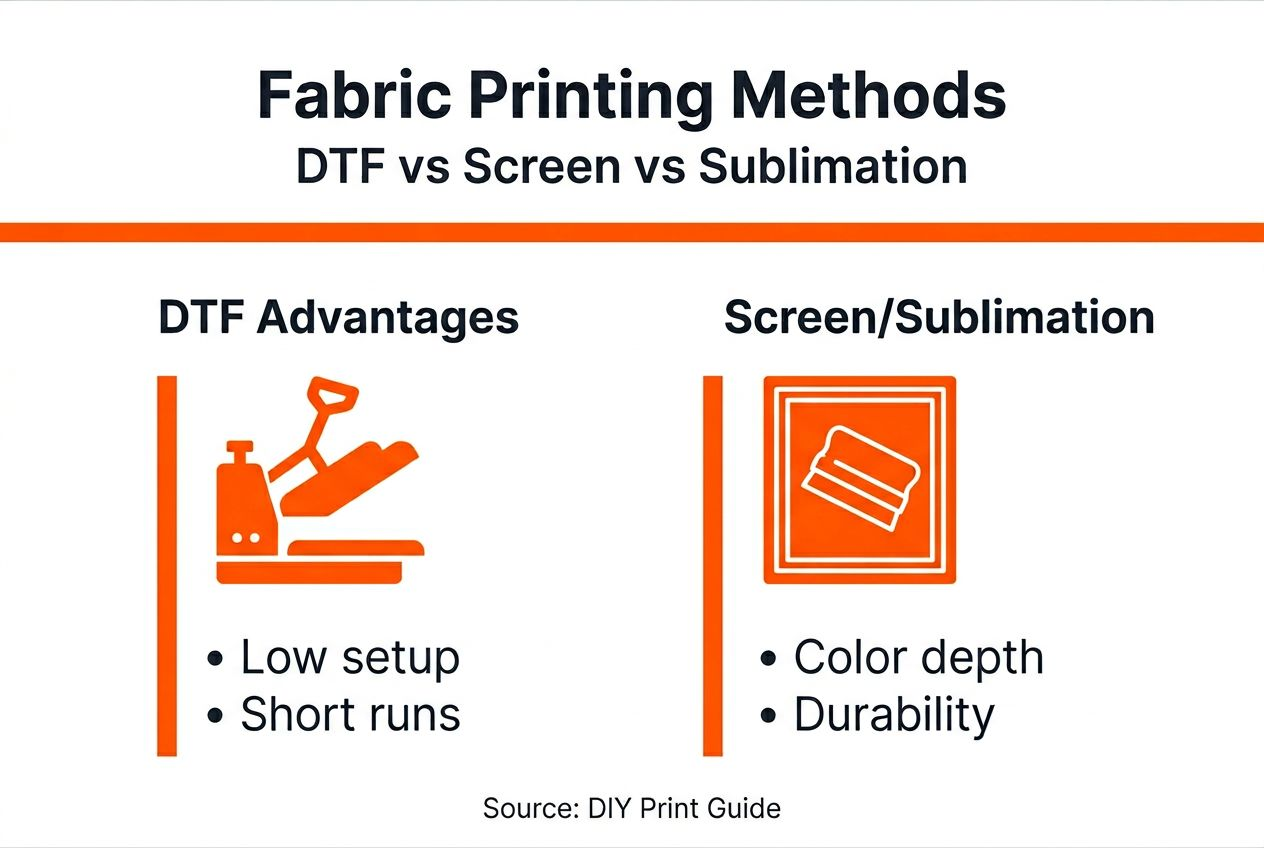
Sublimation printing produces the most durable, softest-feeling prints but only works on polyester and polymer-coated materials. The dye becomes part of the fabric rather than sitting on top. This makes sublimation ideal for athletic wear and all-over print designs. However, it cannot print on cotton or natural fibers, limiting market applications.
| Feature | DTF Printing | Screen Printing | Sublimation |
|---|---|---|---|
| Fabric compatibility | Cotton, polyester, blends, nylon | Most fabrics | Polyester only |
| Setup cost per design | None (digital) | $50-200 | None (digital) |
| Best for batch size | 1-100 units | 100+ units | 1-100 units |
| Color limitations | Full color | Limited by screens | Full color |
| Print feel | Slight texture | Can be thick | No texture |
| Wash durability | 50+ cycles | 100+ cycles | 200+ cycles |
| Learning curve | Moderate | Steep | Moderate |
| Equipment investment | $500-2000 | $3000-10000 | $800-3000 |
Cost analysis reveals DTF as the most accessible entry point. A quality heat press and starter materials cost under $1000. Screen printing requires screens, inks, emulsion, exposure units, and curing equipment totaling $3000 minimum. Sublimation needs specialized printers and heat presses, plus coating equipment if working with cotton.
Print durability varies by method and application quality. Properly applied DTF transfers withstand 50+ wash cycles before noticeable fading. Screen prints can exceed 100 cycles with premium inks. Sublimation prints essentially last the lifetime of the garment since dye permeates the fabric. For most small businesses, DTF durability proves more than adequate for customer satisfaction.
The DTF vs screen printing comparison provides deeper analysis including workflow differences and quality comparisons with sample images.
Expected results and performance benchmarks
Setting realistic expectations prevents disappointment and helps you communicate accurate timelines to customers. Understanding typical performance metrics guides goal-setting and process improvement.
Fabric printing with DTF transfers typically achieves wash durability of over 50 home laundry cycles before significant fading occurs. Premium transfers with proper application can exceed 75 cycles. This durability satisfies most customers who replace apparel for style reasons long before prints deteriorate.
Average turnaround times for small batch DTF production range from 15 minutes to 2 hours depending on complexity. Simple single-color designs on pre-cut transfers take 5-10 minutes per garment including setup and cooling. Complex multi-layer designs with precise placement require 20-30 minutes each. Production efficiency improves dramatically with practice and workflow optimization.
Material costs for DIY DTF printing typically run $0.50-2.00 per transfer depending on size and complexity. An 8x10 inch full-color transfer costs approximately $1.20 in materials. Add garment costs ($3-15) and you can produce custom shirts for $4.20-17 total. Retail prices of $20-40 deliver healthy profit margins even on single-unit orders.
Performance benchmarks compared to commercial methods:
| Metric | DIY DTF | Commercial DTF Service | Screen Printing |
|---|---|---|---|
| Wash cycles before fading | 50-75 | 60-80 | 80-120 |
| Print detail quality | High (300 DPI) | High (600 DPI) | Medium (line art) |
| Color accuracy | Good | Excellent | Excellent |
| Turnaround per unit | 15-30 min | 1-3 days | 7-14 days |
| Cost per 8x10 print | $1.20 materials | $3-5 total | $2-4 (100+ qty) |
| Setup time per design | None | None | 30-60 min |
These benchmarks assume proper technique and quality materials. Shortcuts like inadequate pressing time or cheap transfer films significantly reduce durability and quality. Investing in proven materials and following best practices ensures results that compete with commercial operations.
Productivity improvements come from workflow refinement rather than rushing individual steps. Batching similar designs, pre-positioning garments, and maintaining organized workspaces reduce wasted motion. Experienced operators can double their output compared to beginners without sacrificing quality.
Safety considerations and best practices
Protecting your health and workspace ensures sustainable long-term production. DTF printing involves chemicals and heat that require proper handling.
Ventilation represents the most critical safety consideration. DTF inks and adhesive powders release volatile organic compounds (VOCs) when heated. Prolonged exposure causes headaches, respiratory irritation, and potential long-term health effects. Work in areas with active airflow, preferably with exhaust fans pulling fumes away from your breathing zone. Open windows provide passive ventilation but may not suffice for extended production sessions.
Safe handling and storage of inks and chemicals prevents accidents and material degradation. Store inks in sealed containers away from direct sunlight and temperature extremes. Many DTF inks remain liquid down to freezing but can separate or thicken in very cold conditions. Keep adhesive powders dry and sealed, as moisture exposure causes clumping and reduced effectiveness. Always reseal containers immediately after use.
Equipment maintenance prevents malfunctions and safety hazards. Inspect heat press electrical cords regularly for damage. Clean heating elements to prevent adhesive buildup that can cause hotspots or fires. Never leave heat presses unattended when powered on. Install smoke detectors in your workspace as a backup safety measure.
Protective gear recommendations:
- Heat-resistant gloves when handling hot transfers or garments
- Safety glasses to protect against adhesive powder and ink splashes
- Dust mask or respirator when applying adhesive powder in enclosed spaces
- Apron or dedicated work clothing to prevent ink stains on personal clothing
- First aid kit with burn treatment supplies readily accessible
Inadequate ventilation and improper ink handling create invisible health risks that accumulate over time. Many home-based printers underestimate VOC exposure until symptoms appear. Investing in proper ventilation and protective equipment costs far less than treating respiratory problems or chronic headaches. Your long-term health depends on taking these precautions seriously from day one.
Establish clear safety protocols before problems occur. Know the location of fire extinguishers and first aid supplies. Keep emergency contact numbers visible. If working with assistants or family members, ensure everyone understands safety procedures before participating in production.
Alternative approaches: outsourcing vs DIY fabric printing
Not every small business benefits from complete in-house production. Evaluating outsourcing options helps you optimize your workflow and resource allocation.
Time and cost comparisons between DIY and outsourcing reveal distinct tradeoffs. Producing your own transfers requires equipment investment ($500-2000), material costs ($1-2 per transfer), and your labor time (15-30 minutes per garment). Outsourcing transfers costs $3-5 per print but eliminates equipment maintenance, material management, and production time. For businesses producing under 20 prints weekly, outsourcing often proves more economical when you factor in your hourly value.
Print quality and consistency differences favor professional services for critical applications. Commercial DTF providers use industrial printers producing higher resolution (600+ DPI) and more consistent color matching than entry-level equipment. They also batch similar jobs for efficiency, reducing per-unit costs on larger orders. DIY production gives you complete control and faster turnaround for rush orders but requires developing expertise through trial and error.
Learning curve and maintenance effort vary dramatically. Becoming proficient at DTF printing takes 20-40 hours of practice with inevitable material waste during learning. Heat press maintenance, troubleshooting print failures, and managing inventory add ongoing time commitments. Outsourcing eliminates this learning investment, letting you focus on design, marketing, and customer service.
Consider outsourcing when:
- Your production volume stays under 50 prints monthly
- Design complexity exceeds your current skill level
- You lack space for dedicated printing equipment
- Customer demand fluctuates seasonally, making equipment idle much of the year
- Your time is better spent on high-value activities like design or sales
Many successful small apparel businesses combine approaches. They outsource transfer production to services like same day DTF transfers and handle heat pressing in-house. This hybrid model minimizes equipment investment while maintaining control over final quality and turnaround times. You skip the messy powder application and curing steps while still offering same-day fulfillment to customers.
The decision ultimately depends on your business model, growth trajectory, and personal preferences. Some entrepreneurs love the hands-on production process. Others prefer focusing on creative and business development aspects while outsourcing technical execution.
Explore DIY Printz’s same day DTF transfer services
If you want DTF quality without the equipment investment and learning curve, ready-made transfers offer an ideal middle ground. You maintain creative control and fast turnaround while skipping the technical complexities of transfer production.
DIY Printz specializes in same day DTF transfers for small businesses and hobbyists who value speed and reliability. Upload your designs, select sizes, and receive ready-to-press transfers shipped quickly. This approach eliminates powder mess, curing equipment needs, and the trial-and-error phase of learning transfer production. You focus on what you do best while we handle the technical printing process.
Using professional transfer services reduces your startup costs from $1500-2000 (heat press plus materials) to just $300-500 for a quality heat press. Material waste during learning disappears since you only pay for finished, tested transfers. Many customers find this approach lets them test product ideas and build customer bases before committing to full in-house production equipment.
Whether you are starting your first custom apparel line or scaling an existing operation, explore how DIY Printz can simplify your workflow. Our transfer quality matches or exceeds what most small operations can produce in-house, delivered faster than you can create them yourself. Visit our site to see pricing, upload designs, and discover why thousands of small businesses trust us for their transfer printing needs.
FAQ
What is the main advantage of DTF fabric printing for small businesses?
DTF printing provides affordable, versatile, and durable fabric prints without needing expensive industrial equipment. It works well on many fabric types, making it ideal for small batch and custom apparel producers. The lack of setup costs per design means even single-item orders remain profitable, unlike screen printing that requires minimum quantities to justify screen creation expenses.
How do I ensure my DIY fabric prints are durable and vibrant?
Calibrate heat press temperature, pressure, and timing precisely for your specific fabric type. Use compatible inks and transfer films from reputable suppliers rather than mixing brands randomly. Follow recommended curing processes including the often-overlooked second press after peeling. Test prints on scrap fabric regularly to catch parameter drift before it affects customer orders. The DTF transfer application guide provides detailed specifications for optimal results across fabric types.
Can I use DTF printing on all fabric types?
DTF printing works exceptionally well on cotton and cotton blends, offering broad compatibility across most common apparel fabrics. It also adheres successfully to polyester, nylon, and technical fabrics with appropriate temperature adjustments. Some methods like sublimation restrict you to polyester or specially coated materials. Choosing the right printing method depends on your target fabric types and design complexity requirements.
Is outsourcing DTF transfers more cost-effective than DIY printing?
Outsourcing reduces upfront equipment investment and eliminates maintenance expenses but adds per-print costs. DIY offers full control and lower per-unit costs at higher volumes but requires significant time investment for learning and equipment operation. Many small businesses combine outsourcing transfer production through services like same day DTF transfers with in-house heat pressing for optimal flexibility. This hybrid approach minimizes capital requirements while maintaining quick turnaround capabilities.
Recommended
READY TO PRINT?
Send us your artwork and we'll dial in your DTF transfer, color, and same-day turnaround.


