

Why Direct-to-Film Transfers Elevate Apparel Brands
Why direct-to-film transfers are preferred: discover core benefits, process advantages, cost savings, risks, and DTF vs. other methods for businesses.

Producing standout apparel designs on a tight budget often feels like a balancing act for small business owners and creative DIYers. The rise of Direct-to-Film transfers offers a cost-effective way to achieve photo-quality prints without the hassle of traditional methods. Thanks to the strong color vibrancy and broad fabric compatibility outlined in recent industry research, businesses now have practical options for outsourcing premium transfers that keep production nimble and risk low.
Table of Contents
- Direct-to-Film Transfers Defined and Debunked
- Core Advantages of DTF Transfers for Apparel
- How DTF Transfers Streamline Production
- Comparing DTF to Screen Printing and DTG
- Cost Factors, Common Pitfalls, and Outsourcing Tips
Key Takeaways
| Point | Details |
|---|---|
| Versatile Technology | Direct-to-Film (DTF) transfers enable high-quality graphics on various fabrics without extensive equipment investments. |
| Cost-Effective Production | DTF reduces upfront costs and operational complexity, making it ideal for small and medium-sized businesses. |
| Rapid Iteration | The streamlined production process allows for quick design revisions and on-demand manufacturing, enhancing market responsiveness. |
| Outsourcing Benefits | Partnering with professional DTF providers minimizes risks and upfront costs while ensuring consistent, high-quality results. |
Direct-to-Film Transfers Defined and Debunked
Direct-to-Film (DTF) transfers represent a revolutionary printing technique transforming custom apparel production. Unlike traditional methods, DTF involves printing designs onto specialized transfer films that can be applied to virtually any fabric surface using a heat press. This versatile technology enables small apparel brands and DIY creators to produce high-quality, detailed graphics with minimal equipment investment.
The DTF process breaks down into several key stages that distinguish it from screen printing or vinyl transfer methods:
- Design Preparation: Creating digital artwork optimized for DTF printing
- Film Printing: Using specialized DTF printers to output designs onto transfer films
- Powder Application: Adding adhesive powder to ensure design transferability
- Curing: Melting the adhesive powder to create a permanent bond
- Heat Transfer: Applying design to fabric using precise heat and pressure
Brands adopting DTF transfer workflows can achieve remarkable benefits compared to traditional decoration techniques. The method allows for complex, multicolor designs without screen setup costs, supports printing on diverse fabric types, and enables small batch or on-demand production with minimal waste.
Contrary to some misconceptions, DTF transfers are not complicated or prohibitively expensive. Modern print services have democratized access, allowing even small apparel businesses to leverage professional-grade transfer technology without massive equipment investments. The technique supports intricate graphics, vibrant colors, and exceptional durability across different fabric compositions.
Pro Tip: Test multiple fabric types and transfer temperatures to optimize your DTF printing results and understand how different materials respond to heat and pressure.
Core Advantages of DTF Transfers for Apparel
Direct-to-Film (DTF) transfers have rapidly emerged as a game-changing technology for apparel brands seeking flexible, cost-effective decoration methods. DTF transfers offer unparalleled versatility that traditional printing techniques simply cannot match, revolutionizing how small and medium-sized businesses approach custom apparel production.
The core advantages of DTF transfers span multiple critical areas for apparel brands:
- Design Flexibility: Unlimited color options without additional setup costs
- Fabric Compatibility: Prints work on cotton, polyester, blends, and dark fabrics
- Production Scalability: Supports both small batches and larger runs efficiently
- Cost Effectiveness: Minimal equipment investment required
- Quality Durability: Prints resist cracking, peeling, and fading
Brands leveraging DTF technology can dramatically reduce inventory risks while maintaining exceptional print quality. The method allows for photo-realistic graphics with vibrant colors that maintain their integrity through multiple wash cycles. Unlike screen printing, which requires separate screens for each color, DTF enables complex multicolor designs to be printed in a single pass.
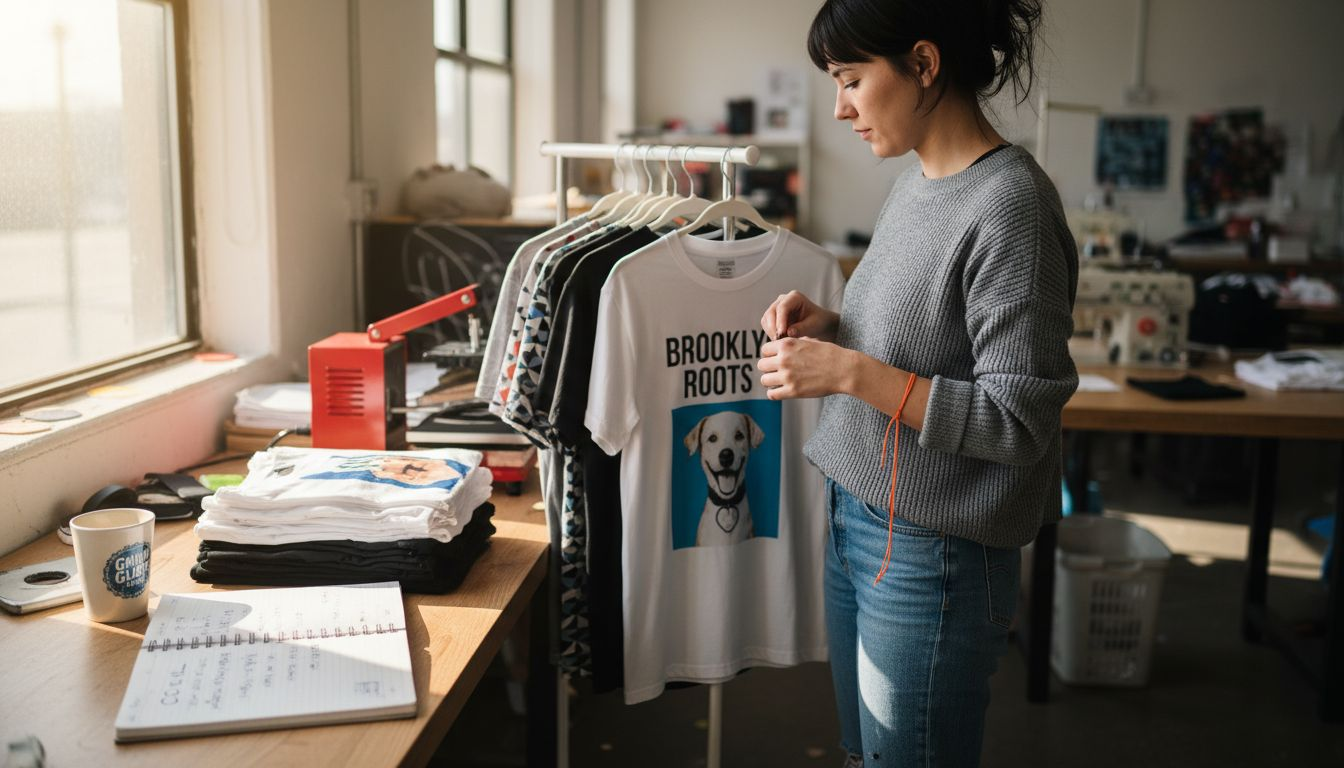
Moreover, DTF transfers democratize custom apparel production by lowering traditional barriers to entry. Small businesses and individual creators can now produce professional-grade merchandise without massive upfront investments in specialized equipment or extensive training. The technology supports rapid design iterations, enabling brands to quickly respond to market trends and customer preferences.
Pro Tip: Invest in high-quality transfer films and practice consistent heat press techniques to maximize the longevity and visual appeal of your DTF printed apparel.
How DTF Transfers Streamline Production
Direct-to-Film (DTF) transfers represent a transformative solution for apparel production, dramatically simplifying traditional manufacturing workflows. By eliminating multiple complex steps associated with conventional printing methods, DTF technology enables businesses to accelerate their production cycles and reduce operational complexity.
The streamlined DTF production process involves several key efficiency-enhancing stages:
- Rapid Design Integration: Digital artwork can be quickly converted and printed
- Minimal Setup Time: No screen preparation or color separation required
- Instant Color Reproduction: Full-color designs printed in single pass
- Reduced Material Waste: Precise transfer film usage minimizes excess materials
- Quick Turnaround: Designs can be transferred within minutes
Traditional apparel decoration methods often require extensive preparation, multiple equipment setups, and specialized skills. DTF transfers eliminate these barriers by consolidating complex processes into a straightforward, repeatable workflow. Businesses can now transition from digital design to finished product with unprecedented speed and minimal technical expertise.
The technological simplification extends beyond initial production. DTF transfers support on-demand manufacturing models, allowing brands to produce small batches or individual items without significant upfront investments. This flexibility enables faster market responsiveness, reduced inventory costs, and the ability to experiment with designs without financial risk.
Pro Tip: Develop a standardized workflow template for your DTF transfer process to ensure consistent quality and maximize production efficiency.
Comparing DTF to Screen Printing and DTG
DTF printing technology offers significant advantages over traditional apparel decoration methods, presenting a versatile solution that addresses key limitations of screen printing and direct-to-garment (DTG) techniques. Each method brings unique characteristics to custom apparel production, but DTF stands out for its remarkable flexibility and efficiency.
Key comparative characteristics include:
-
Screen Printing:
- Best for large volume orders
- Highly durable prints
- Limited multi-color complexity
- Requires separate screens for each color
-
Direct-to-Garment (DTG):
- Excellent for cotton fabrics
- Soft hand feel
- Requires fabric pretreatment
- Limited polyester compatibility
-
Direct-to-Film (DTF):
- Works on multiple fabric types
- Vibrant, full-color designs
- No fabric pretreatment needed
- Suitable for small and large runs
Where screen printing demands extensive setup and DTG struggles with fabric diversity, DTF transfers provide a more adaptable approach. The technology eliminates the need for multiple screens, reduces labor-intensive preparation, and delivers consistently high-quality prints across cotton, polyester, and blended materials. This versatility makes DTF particularly attractive for businesses seeking efficient, cost-effective decoration methods.
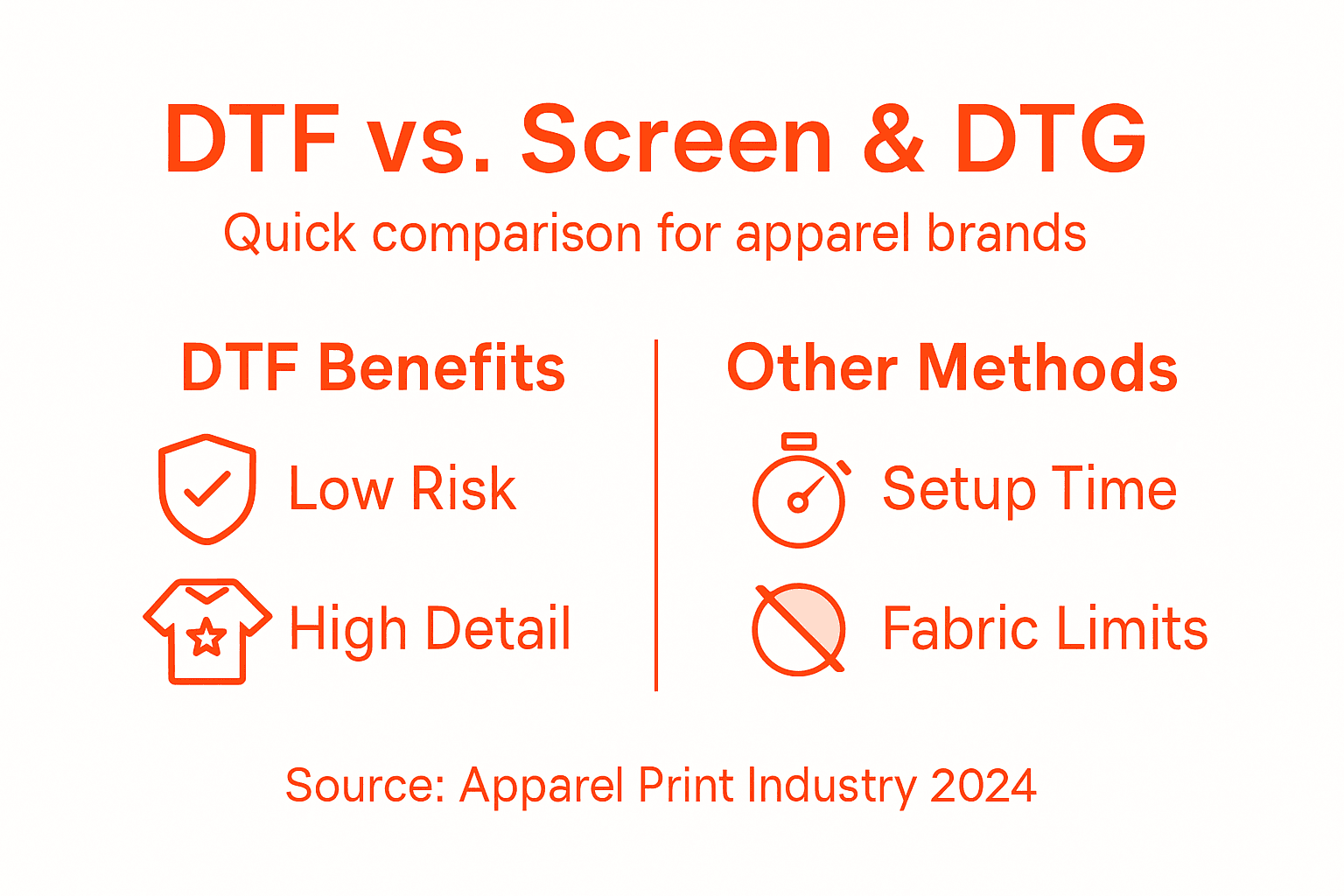
Here is a concise comparison of DTF, Screen Printing, and DTG methods to help select the right technology for your business:
| Technology | Best For | Notable Limitation | Fabric Compatibility |
|---|---|---|---|
| DTF | Small and large runs | Requires special transfer film | Cotton, polyester, blends, dark colors |
| Screen Printing | High-volume orders | High setup time for multicolor | Mostly cotton and blends |
| DTG | Intricate cotton prints | Not ideal for polyester | Primarily cotton fabrics |
The economic implications are substantial. DTF transfers reduce upfront costs, minimize material waste, and enable quick design iterations. Small apparel brands can now produce professional-quality merchandise without massive equipment investments or specialized training, democratizing custom apparel production in ways previous technologies could not.
Pro Tip: Experiment with different fabric types and transfer settings to understand the full potential of DTF printing technology.
Cost Factors, Common Pitfalls, and Outsourcing Tips
Navigating the Direct-to-Film (DTF) transfer landscape requires strategic understanding of cost structures, potential challenges, and smart outsourcing approaches. Small apparel brands must balance quality, affordability, and operational efficiency when implementing DTF technology into their production workflows.
Key cost considerations and potential pitfalls include:
-
Initial Investment Challenges:
- Equipment costs for DTF printers
- Specialized transfer film expenses
- Adhesive powder and ink requirements
- Potential learning curve for technical skills
-
Common Production Pitfalls:
- Inconsistent heat press temperatures
- Poor image resolution
- Improper transfer film selection
- Inadequate design preparation
- Suboptimal fabric surface preparation
-
Outsourcing Advantages:
- Eliminate equipment investment
- Access professional-grade transfers
- Reduce operational complexity
- Scale production flexibly
- Minimize technical training requirements
Outsourcing DTF transfers presents a compelling alternative to in-house production for businesses seeking to minimize upfront costs and technical barriers. By partnering with specialized transfer providers, brands can access high-quality prints without substantial capital expenditure or extensive technical training. This approach allows creators to focus on design, marketing, and core business strategies while leveraging professional transfer production capabilities.
Successful DTF transfer implementation requires careful vendor selection, understanding quality benchmarks, and developing clear communication channels. Small brands should prioritize providers offering consistent print quality, reasonable pricing, and responsive customer support. Requesting sample transfers, reviewing portfolio work, and understanding turnaround times are critical steps in identifying reliable DTF transfer partners.
For reference, here are key considerations when choosing between in-house DTF transfers and outsourcing:
| Factor | In-House Production | Outsourcing |
|---|---|---|
| Upfront Costs | Investment in equipment | Typically low or none |
| Training/Skill Level | Technical learning required | Minimal skill needed |
| Production Control | Full control and flexibility | Relies on third-party schedule |
| Scale Adaptability | May need more equipment | Simple to scale up or down |
Pro Tip: Request sample transfer prints from multiple providers to compare quality, durability, and color vibrancy before committing to a long-term partnership.
Unlock the Full Potential of Direct-to-Film Transfers for Your Apparel Brand
The article highlights the challenges many apparel brands face such as high equipment costs, complex workflows, and the need for consistent, vibrant prints across diverse fabrics. If you are aiming to eliminate the hassle of owning and maintaining a DTF printer while still benefiting from detailed, durable, multicolor designs, the key is partnering with a trusted professional transfer service. DIY Printz understands the pain points of small and medium-sized brands trying to scale efficiently without sacrificing quality or flexibility.
Our high-volume DTF transfer printing service provides ready-to-press transfers that reduce waste, speed production, and preserve the vibrancy and durability your customers demand. Whether you are a merch brand, print shop, or DIY creator, outsourcing your transfer needs to us means you avoid upfront equipment costs, technical headaches, and a learning curve. Focus on growing your brand with confidence knowing you have a reliable partner delivering consistent quality and fast turnaround every time.
Take the next step to simplify your apparel production and unlock more freedom today.
Experience how DIY Printz can elevate your workflow by delivering professional-grade DTF transfers tailored to your needs. Visit https://diyprintz.com now to get started with your first order and transform the way you bring your apparel designs to life.
Frequently Asked Questions
What are Direct-to-Film (DTF) transfers?
Direct-to-Film (DTF) transfers are a printing technique where designs are printed onto transfer films that can be applied to various fabrics using a heat press. This method allows for high-quality graphics with less equipment investment compared to traditional printing methods.
What are the main advantages of using DTF transfers for apparel production?
DTF transfers offer several advantages, including unlimited design flexibility, compatibility with different fabric types (cotton, polyester, blends), cost-effectiveness with minimal equipment investment, and the ability to produce high-quality, durable prints that resist cracking and fading.
How does DTF transfer compare to other printing methods like screen printing and DTG?
DTF transfers provide better versatility than screen printing and direct-to-garment (DTG) methods. DTF works on various fabric types without requiring pretreatment and allows for intricate designs in a single printing pass, making it suitable for both small and large production runs.
What should brands consider when deciding between in-house DTF transfer production and outsourcing?
Brands should weigh factors such as upfront costs, the need for technical skills, production control, and scalability. Outsourcing can minimize equipment investments and training needs, while in-house production offers greater control and flexibility over the printing process.
Recommended
READY TO PRINT?
Send us your artwork and we'll dial in your DTF transfer, color, and same-day turnaround.


