

What Are Transfer Prints? Outsourcing DTF for Brands
What are transfer prints? Learn the types, DTF process, real-world uses, and tips for outsourcing cost-effective transfer prints for your apparel business.

Outsourcing DTF transfer printing can turn a chaotic production schedule into a manageable workflow for independent clothing brands and DIY apparel makers everywhere. The stress of handling detailed, multicolor designs or small custom batches in-house often means lost time and rising costs. By choosing a proven transfer printing process, you can achieve professional-looking results for cotton, polyester, and blends, all while lowering operational headaches and keeping your creative energy focused on what matters most.
Table of Contents
- Transfer Prints Defined In Apparel Printing
- Types Of Transfer Prints And Key Differences
- How Dtf Transfer Print Technology Works
- Practical Uses For Business And Diy Makers
- Comparing Transfer Prints To Other Methods
- Common Risks, Mistakes, And Best Practices
Key Takeaways
| Point | Details |
|---|---|
| Transfer Printing Advantages | Offers flexibility for custom apparel production with designs that are easily transferable to various fabrics. |
| Types of Transfer Prints | Understanding different techniques like Sublimation and DTF helps in selecting the right method for fabric and design requirements. |
| Business and DIY Applications | DTF empowers small businesses and creators to produce high-quality, customized apparel quickly and economically. |
| Best Practices for Quality Control | Regular equipment calibration and testing on sample fabrics can minimize production errors and ensure consistent quality. |
Transfer Prints Defined in Apparel Printing
Transfer prints represent a sophisticated textile decoration technique where designs are first printed onto a separate medium before being transferred onto fabric. Precise design transfer methods allow graphic artists and apparel brands to create complex, high-quality decorative elements with remarkable accuracy.
The transfer printing process involves several critical steps that distinguish it from direct fabric printing:
- Designs are initially printed onto specialized transfer paper
- Heat and pressure are used to migrate the graphic from paper to textile
- Complex or intricate designs can be stored and reproduced efficiently
- Short production runs become economically viable
Unlike direct printing techniques, transfer printing offers unique advantages for custom apparel production. Textile printing technologies enable designers to create detailed graphics on paper before precisely transferring them onto fabric surfaces, reducing skill requirements and minimizing potential rejection rates.
The method works particularly well with synthetic fabrics, where the heat-transfer process can create vibrant, long-lasting designs. Brands can leverage this technique to produce small batches of customized apparel with professional-quality graphics, making it an attractive option for boutique clothing lines and merchandise creators.
Pro tip: Always test your transfer prints on a sample fabric to ensure color consistency and adhesion before full production.
Types of Transfer Prints and Key Differences
Transfer printing encompasses multiple sophisticated techniques, each designed to meet specific apparel production requirements. Specialized transfer printing methods enable designers to create unique graphics with varying characteristics and performance attributes.
The primary types of transfer prints include:
-
Sublimation Transfer
- Best for polyester and synthetic fabrics
- Dyes vaporize and bond directly with fiber molecules
- Produces extremely vibrant, long-lasting designs
- Requires specific temperature and pressure conditions
-
Heat Transfer Printing
- Compatible with broader fabric ranges
- Uses pigment inks transferred under high pressure
- More versatile but potentially less durable than sublimation
- Suitable for smaller production runs
-
Carrier Transfer Printing
- Involves transferring designs using an intermediate carrier medium
- Allows complex graphic reproduction
- Reduces skill requirements in production
Each transfer printing technique offers unique advantages depending on the desired textile properties and production constraints. Textile printing technologies continue to evolve, providing apparel brands with increasingly sophisticated design options.
Understanding these different transfer print methods allows brands to select the most appropriate technique for their specific design requirements, fabric types, and production volumes. The choice depends on factors like color vibrancy, fabric compatibility, production speed, and long-term print durability.
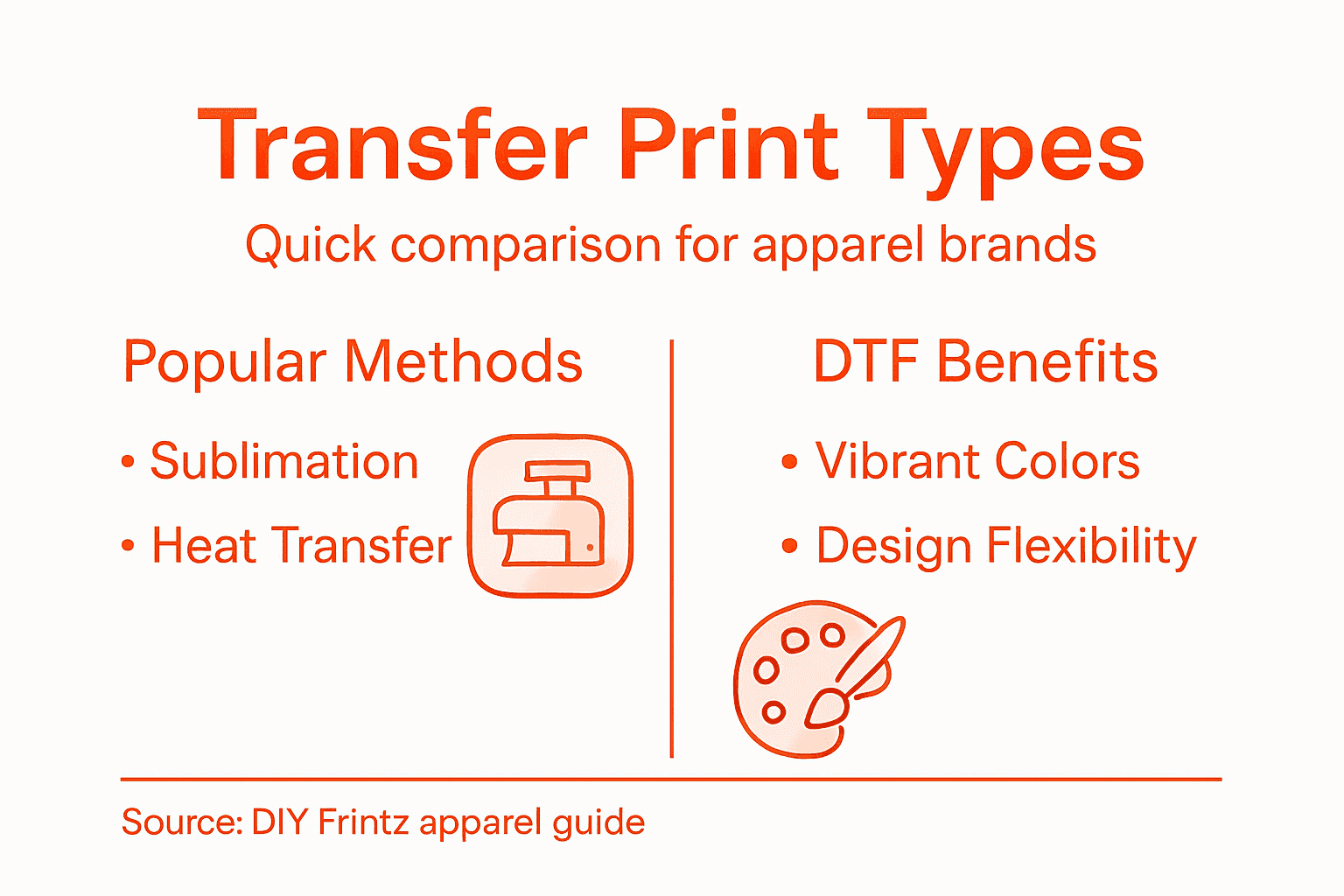
Pro tip: Always match your transfer printing technique to your specific fabric type and design complexity to ensure optimal results.
Here’s a quick summary of the main transfer printing techniques and their ideal uses:
| Printing Method | Best Fabric Types | Typical Use Cases | Durability Level |
|---|---|---|---|
| Sublimation Transfer | Polyester, synthetics | Sportswear, vibrant graphics | High, long-lasting |
| Heat Transfer Printing | Cotton, blends, synthetics | Custom t-shirts, smaller batches | Moderate, varies |
| Carrier Transfer | Various, flexible options | Boutique brands, complex graphics | Depends on carrier |
| DTF Transfer | Cotton, polyester, blends | Small runs, multicolor designs | High, versatile |
How DTF Transfer Print Technology Works
Direct-to-Film (DTF) transfer printing represents a revolutionary approach to textile decoration, offering unprecedented flexibility for apparel designers. Advanced printing technologies enable creators to produce high-quality, detailed graphics across various fabric types.
The DTF transfer printing process involves several critical technical stages:
-
Design Printing
- Create digital graphic on computer
- Print design using specialized water-based pigment inks
- Use specific polymer film as transfer medium
-
Adhesive Application
- Coat printed design with fine powder adhesive
- Ensure even, consistent adhesive coverage
- Prepare surface for fabric transfer
-
Heat Transfer Activation
- Position film on target fabric
- Apply controlled heat and pressure
- Activate thermoplastic polymers in ink and adhesive
- Transfer design permanently onto textile surface
The technological sophistication of DTF allows for remarkable design reproduction. Textile transfer mechanisms leverage thermoplastic agents to create durable, vibrant prints that maintain intricate graphic details across different fabric compositions.
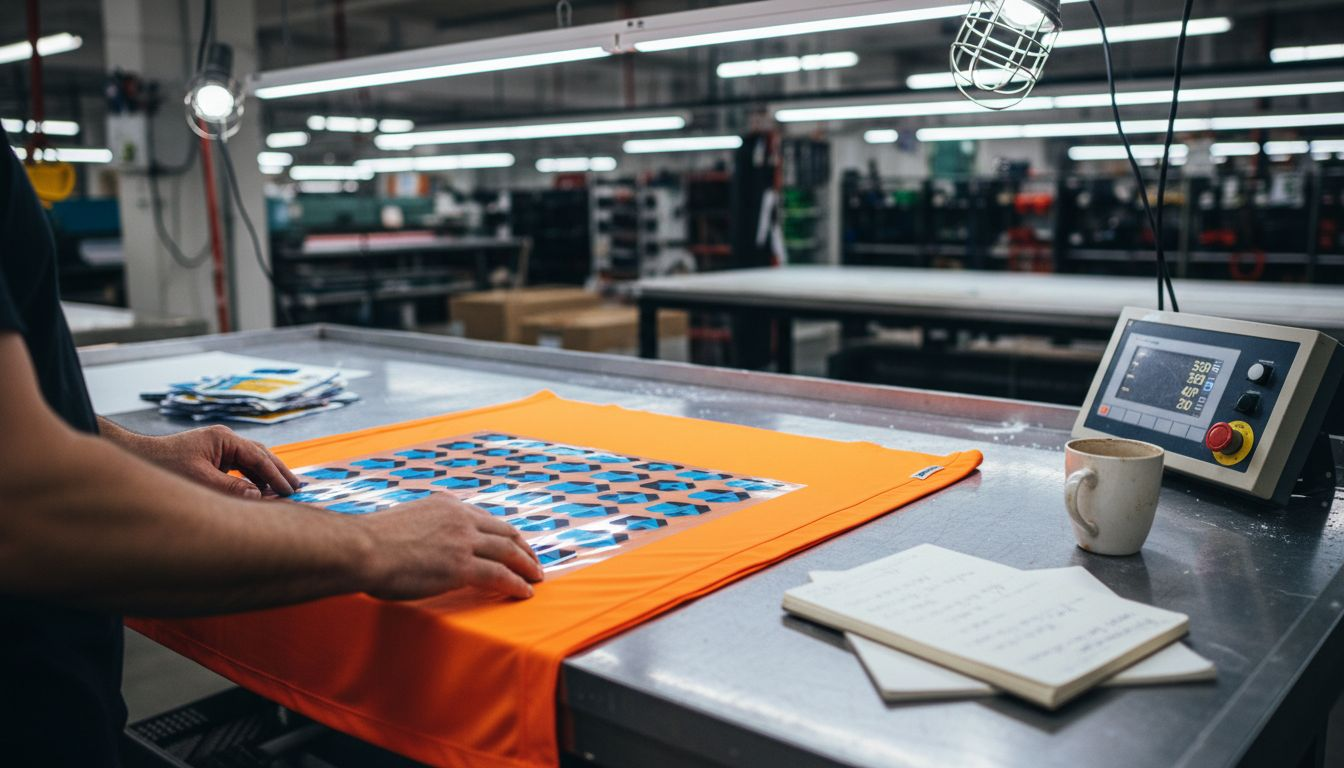
Unlike traditional printing methods, DTF transfer technology provides unparalleled versatility. Brands can now produce complex, multicolor designs on cotton, polyester, and blend fabrics without extensive pre-treatment, dramatically reducing production time and expanding creative possibilities.
Pro tip: Invest in high-quality pigment inks and calibrate your heat press precisely to ensure consistent, professional-grade DTF transfer results.
Practical Uses for Business and DIY Makers
Direct-to-Film (DTF) transfer printing empowers both small businesses and independent creators with unprecedented design flexibility. Customization techniques enable entrepreneurs to produce professional-quality apparel with minimal upfront investment.
Practical applications for businesses and DIY makers include:
-
Merchandise Production
- Create limited edition clothing lines
- Design promotional t-shirts and event merchandise
- Develop branded workwear and uniforms
- Produce small batch custom apparel
-
Personal Creative Projects
- Design unique family reunion shirts
- Create personalized gifts
- Develop hobby-related apparel
- Make custom sportswear and team uniforms
-
Small Business Opportunities
- Start print-on-demand clothing brands
- Develop niche market merchandise
- Offer custom design services
- Create low-risk product lines with minimal inventory
Sustainable fashion technologies are transforming how independent creators approach textile design. DTF transfer printing reduces waste, allows rapid prototyping, and democratizes apparel production by lowering traditional manufacturing barriers.
The technology supports rapid iteration and experimentation, enabling creators to test market demand quickly without significant financial risk. Entrepreneurs can now produce small runs of highly customized products, responding swiftly to emerging trends and consumer preferences.
Pro tip: Start with a small, focused collection of designs to test market response before expanding your product line.
Comparing Transfer Prints to Other Methods
Textile printing methods vary dramatically in their approach and outcomes, with each technique offering unique advantages and limitations. Printing method comparisons reveal critical differences that impact design quality, production efficiency, and overall manufacturing strategy.
Key comparison points between printing techniques include:
-
Transfer Printing
- Ideal for complex, multi-color designs
- Lower skill requirements
- Simplified inventory management
- Best for synthetic fabrics
- Excellent for short production runs
-
Direct Printing
- Faster production process
- Lower initial setup costs
- Better for single-color designs
- More suitable for large volume runs
- Direct application to fabric
-
Screen Printing
- High durability for graphics
- Cost-effective for bulk orders
- Limited color complexity
- Higher setup time and expenses
- Traditional manufacturing method
Transfer printing distinguishes itself through remarkable design flexibility. Textile printing technologies demonstrate that indirect printing methods can achieve higher detail and intricate graphic reproduction compared to traditional approaches.
Each printing method carries unique trade-offs in cost, environmental impact, and production scalability. Modern apparel brands must carefully evaluate their specific requirements, considering factors like design complexity, fabric type, production volume, and budget constraints.
Pro tip: Conduct small test runs with different printing techniques to determine the most cost-effective and quality-appropriate method for your specific product line.
The following table highlights key business impacts of transfer print methods:
| Method | Production Scalability | Inventory Needs | Customization Potential |
|---|---|---|---|
| Transfer Printing | Flexible for small batches | Low, made to order | Highly customizable |
| Direct Printing | Ideal for large volume runs | Medium, pre-set designs | Limited complexity |
| Screen Printing | Suited for bulk orders | High, pre-manufactured | Basic custom options |
Common Risks, Mistakes, and Best Practices
Transfer print production demands precision and strategic planning to achieve optimal results. Transfer printing risks highlight critical areas where errors can significantly impact product quality and production efficiency.
Common risks and potential mistakes include:
-
Equipment and Parameter Errors
- Incorrect temperature settings
- Inconsistent heat press pressure
- Inadequate curing time
- Misaligned transfer films
- Poor substrate preparation
-
Material Selection Mistakes
- Using incompatible fabric types
- Selecting low-quality transfer films
- Neglecting fabric pre-treatment requirements
- Ignoring fabric composition limitations
-
Operational Oversights
- Skipping initial design test runs
- Failing to calibrate equipment regularly
- Storing transfer materials improperly
- Not maintaining consistent environmental conditions
Textile printing technologies demonstrate that systematic quality control dramatically reduces production errors. Best practices involve comprehensive testing, precise equipment calibration, and maintaining strict process standardization.
Successful transfer printing requires continuous learning and adaptation. Brands must invest time in understanding their specific equipment, materials, and production environment to minimize risks and consistently produce high-quality printed textiles.
Pro tip: Develop a detailed equipment maintenance log and conduct weekly calibration checks to ensure consistent transfer print quality.
Simplify Your DTF Transfer Printing with DIY Printz
Transfer print methods like Direct-to-Film technology offer incredible design flexibility and high-quality results but mastering the process involves challenges such as precise temperature control, equipment maintenance, and consistent production quality. If you want to avoid costly learning curves and operational risks while still producing professional-grade transfers for your apparel line or creative projects you are not alone.
At DIY Printz we specialize in high-volume DTF transfer printing services that free you from owning and managing complex equipment. Whether you need ready-to-press transfers for polyester, cotton, or blends our experienced team ensures vibrant colors and durable prints that match the advanced techniques outlined in the article. Instead of spending time troubleshooting or risking inconsistent results you can focus on growing your brand and fulfilling orders faster.
Elevate your apparel production without the hassle.
Start outsourcing your DTF transfers today to save time and reduce errors with a trusted partner. Visit DIY Printz and discover how we help screen printers, merch brands, and hobbyists scale smartly with consistent quality and fast turnaround.
Ready to remove the complexity from your transfer print process and deliver top-notch apparel designs? Get started now at DIY Printz and experience the benefits of professional DTF printing without the overhead.
Frequently Asked Questions
What are transfer prints in apparel printing?
Transfer prints are a textile decoration technique where designs are printed onto a transfer medium, such as specialized paper, and then transferred onto fabric using heat and pressure. This method allows for high-quality and intricate designs, making it suitable for custom apparel production.
What types of transfer printing methods are available?
The main types include sublimation transfer, heat transfer printing, carrier transfer printing, and Direct-to-Film (DTF) transfer. Each method has its own advantages, compatibility with fabric types, and durability characteristics, allowing brands to choose the best option for their specific needs.
How does Direct-to-Film (DTF) transfer printing work?
DTF transfer printing involves printing a design onto a special film, applying an adhesive on the design, and then using heat and pressure to transfer it permanently onto the fabric. This method is highly versatile and allows for detailed designs on various fabric types without extensive pre-treatment.
What are the key benefits of using transfer prints for custom apparel?
Transfer prints enable brands to create vibrant, complex designs with lower skill requirements and minimal inventory. They are especially suitable for short production runs, helping businesses efficiently produce custom merchandise and respond quickly to market trends.
Recommended
- Why Use DTF Transfers for Apparel Success – DIYPRINTZ
- DTF Transfer Workflow Guide for Custom Apparel Success – DIYPRINTZ
- DTF Transfer Supplier for Businesses: The Partner You Need – DIYPRINTZ
- DIY Whats Trending: Embroidery, UV, and More – DIYPRINTZ
- What Is DTF Printing: Transforming Custom Apparel – Transfer Kingz
READY TO PRINT?
Send us your artwork and we'll dial in your DTF transfer, color, and same-day turnaround.


