

Fast Turnaround Printing: Boosting Apparel Efficiency
Fast turnaround printing accelerates apparel production. Learn what it is, key printing types, workflow steps, and how it minimizes costs and delays.

Running an apparel business often means racing the clock to keep up with customer demands and market changes. Fast turnaround printing is changing the way American, Canadian, and European print shops deliver quality apparel, letting orders move from design to finished garment in hours instead of weeks. With digital production technologies and Direct-to-Film transfer methods, your shop can break through old supply chain barriers and serve clients faster while protecting profit margins.
Table of Contents
- Defining Fast Turnaround Printing In Apparel
- Core Types And Technologies Explained
- How The Fast Printing Workflow Works
- Key Benefits For Apparel Businesses
- Pitfalls, Risks, And Quality Considerations
Key Takeaways
| Point | Details |
|---|---|
| Fast Turnaround Printing Enhances Delivery | Utilizing digital technologies and streamlined processes allows for quicker customer fulfillment without sacrificing quality. |
| Technology Selection is Crucial | Choosing the right printing technology influences speed, quality, and profitability; consider options like DTF, DTG, and heat transfer. |
| Outsourcing Can Mitigate Risks | Partnering with specialized printing services reduces operational burdens and enhances quality control without high capital investment. |
| Speed Must Not Compromise Quality | Establish rigorous quality control processes from the beginning to prevent defects and ensure customer satisfaction. |
Defining Fast Turnaround Printing in Apparel
Fast turnaround printing means getting quality apparel into customers’ hands quickly, not months down the line. It’s about compressing the time from order to delivery without sacrificing quality or profit margins.
At its core, fast turnaround printing uses digital production technologies and streamlined workflows to reduce lead times dramatically. Instead of traditional manufacturing bottlenecks, you’re leveraging modern solutions that keep pace with demand.
What Makes It Different
Traditional apparel printing often involves lengthy setup times, minimum order quantities, and weeks-long production cycles. Fast turnaround flips this script entirely.
Key differences include:
- Reduced setup time: Digital methods skip complex screen preparation and color separation delays
- No minimum order requirements: Print one shirt or one thousand with the same efficiency
- Faster production cycles: From order to ready-to-press in hours, not weeks
- Lower inventory risk: Produce on-demand instead of guessing what customers want
- Flexibility for trends: Respond to market trends before they’re yesterday’s news
The Technology Behind Speed
Advanced manufacturing approaches now leverage digital tools and automated systems to accelerate production. Direct-to-Film (DTF) transfers represent one of the fastest, most reliable methods for apparel printing.
DTF technology works by printing designs directly onto special film, then heat-pressing them onto garments. No screens. No months of waiting. No complicated setup procedures.
For print shops and apparel brands, this means you can accept orders Monday morning and deliver finished products by Wednesday. Customers notice when you ship faster than competitors.
Why Speed Matters to Your Business
Speed isn’t just about convenience—it’s about competitive advantage and profit potential. When you can handle rush orders, you capture customers competitors turn away. When you reduce production time, you free up equipment and staff for more orders.
Digital garment printing technologies have transformed what’s possible for small and mid-sized shops. You no longer need thousands of dollars in equipment, months of training, or dedicated technical staff to offer fast turnaround services.
Outsourcing transfer production to reliable partners like DIY Printz lets you focus on what you do best: selling, pressing, and building your brand.
Fast turnaround isn’t a luxury feature anymore—it’s table stakes for staying competitive in apparel business.
Pro tip: Start by identifying which customer orders would benefit most from fast turnaround (rush jobs, seasonal peaks, trending designs), then systematically optimize your workflow for those high-value orders first.
Core Types and Technologies Explained
Not all fast turnaround printing methods are created equal. Each technology offers different speed levels, quality output, and cost structures—so choosing the right one depends on your specific business needs.
Understanding the major players helps you make smarter decisions about what to offer customers and how to position your services competitively.
Digital Printing Technologies Lead the Market
Digital printing techniques dominate fast turnaround apparel because they handle small batches, detailed designs, and vibrant colors without the setup headaches of traditional methods.
These technologies share key advantages:
- No screen setup: Skip color separation, screen burning, and registration hassles
- True on-demand capability: Print one unit or one thousand identically
- Complex designs welcome: Multi-color, photo-quality work doesn’t cost extra
- Speed: From order to ready-to-press in hours, not days
- Lower minimum orders: Unlock profitable small-batch and custom orders
The Main Technology Options
Three technologies dominate the fast turnaround space: direct-to-garment (DTG), heat transfer, and direct-to-film (DTF) transfers.
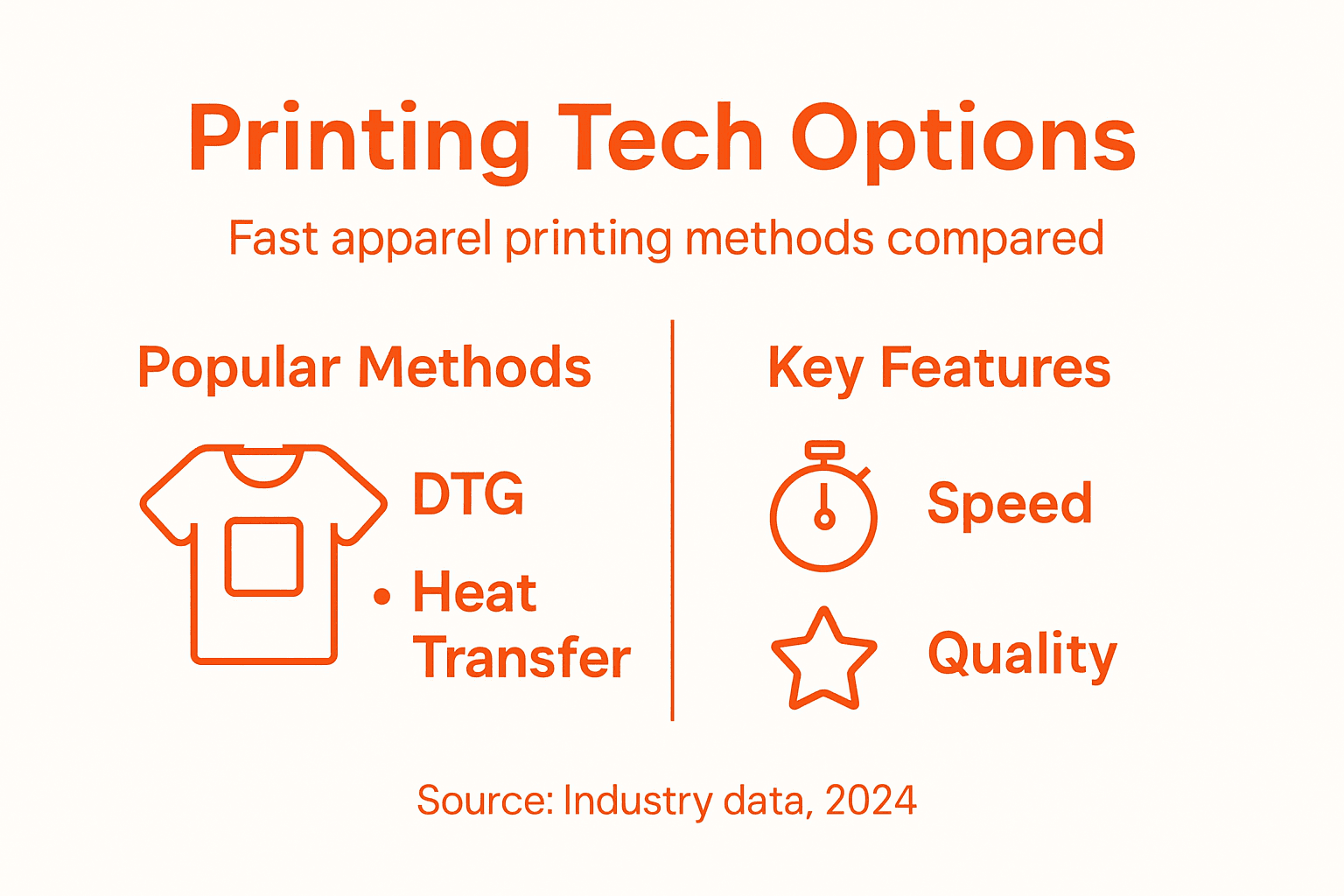
Direct-to-Garment (DTG) prints ink directly onto fabric using specialized printers. It’s excellent for detailed, multi-color designs but requires expensive equipment and ongoing maintenance. Speed depends on your printer’s capacity.
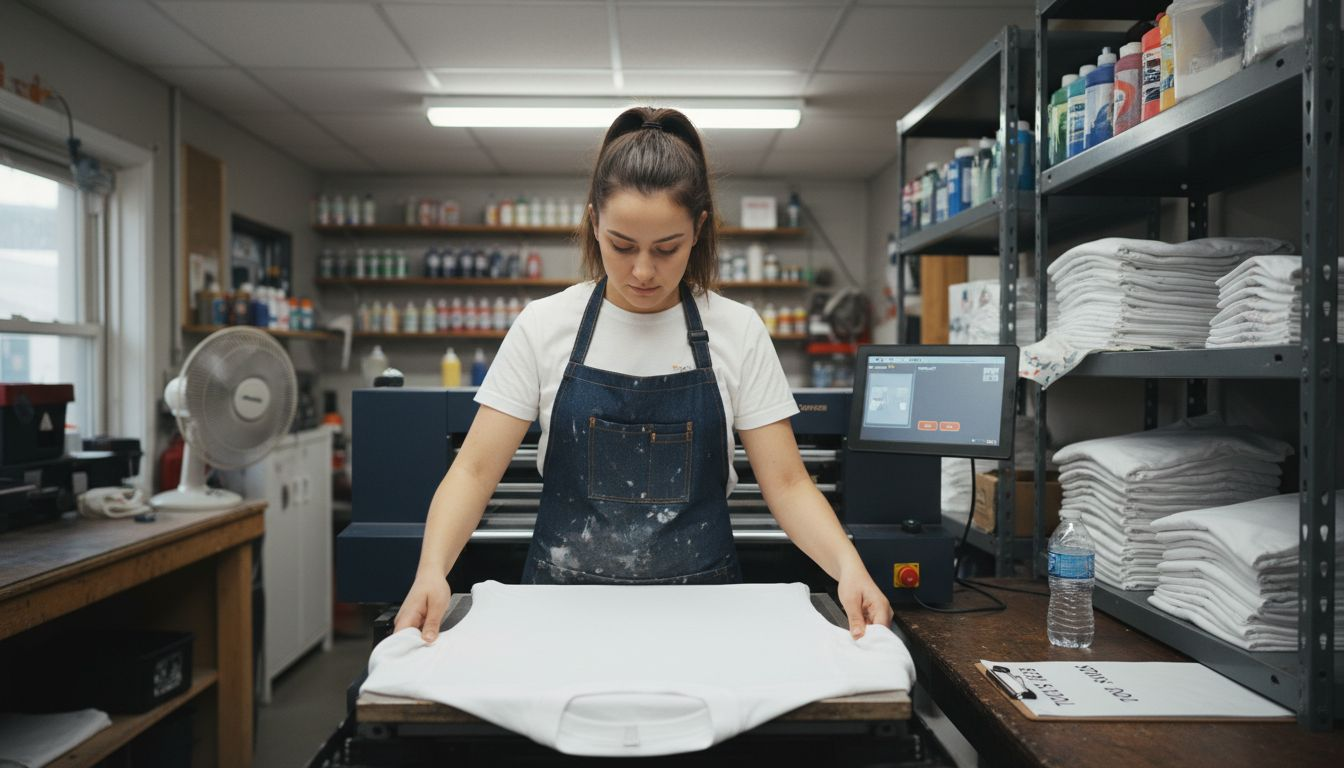
Heat Transfer uses vinyl or transfer paper pressed onto garments. It’s affordable and reliable, but quality varies by material quality and pressing technique. Setup time is minimal.
Direct-to-Film (DTF) Transfers represent the modern fast turnaround standard. Designs print onto special film, then heat-press onto garments. Single-pass printing technology achieves higher speeds without quality loss.
DTF offers the best combination of speed, quality, flexibility, and cost-effectiveness for print shops and apparel brands seeking fast turnaround without equipment investment.
Here is a performance and suitability comparison of fast turnaround apparel printing technologies:
| Technology | Speed to Production | Design Complexity Handling | Typical Upfront Investment |
|---|---|---|---|
| Direct-to-Garment | Moderate (hours to 1-2 days) | Handles detailed, photo designs | High (specialized printers) |
| Heat Transfer | Fast (within hours) | Best for simple or bold graphics | Low (basic heat press) |
| Direct-to-Film | Very fast (same-day possible) | Excellent with high-detail, multi-color | Minimal (outsourcing possible) |
Why Technology Choice Matters
Your technology choice directly impacts how fast you can deliver, what you can charge, and how profitable each order becomes. Equipment ownership ties up capital and demands technical expertise. Outsourcing transfers to specialized partners lets you offer fast turnaround without the operational burden.
The best technology for your business is one that balances speed, quality, and profitability without consuming your time and capital.
Pro tip: Test different technologies on sample orders before committing; track actual turnaround times and profit margins for each method to identify which works best for your customer base.
How the Fast Printing Workflow Works
The fast printing workflow strips away unnecessary steps and focuses on speed without compromising quality. Understanding how it works helps you identify where your business can optimize and where outsourcing makes the most sense.
Modern fast turnaround printing eliminates the bottlenecks that slow traditional methods. Instead of weeks of setup and pre-press work, you move from approved design to finished product in hours.
The Step-by-Step Process
Digital printing workflows follow a streamlined sequence designed for speed and efficiency:
- Design approval: Customer finalizes artwork and confirms specifications
- File preparation: Design gets optimized for your chosen printing technology
- Production setup: Equipment configuration takes minutes, not hours
- Printing: Single-pass or multi-pass printing produces finished transfers
- Quality check: Quick inspection ensures standards are met
- Delivery: Ready-to-press transfers ship to your location or customer
Each step is optimized to eliminate delays. No waiting for screens. No color separation headaches. No complex pre-press calculations.
Why Digital Eliminates Traditional Bottlenecks
Traditional screen printing requires extensive setup: separating artwork by color, burning screens, registering colors, and doing test runs. This takes days.
Digital methods skip all that. Your design goes directly to print without intermediate steps. This alone saves 90 percent of setup time.
Speed comes from removing steps, not from rushing existing ones.
The Role of Automation and Integration
Automated workflows integrate inventory and order management systems to reduce bottlenecks at every stage. When systems communicate automatically, delays disappear.
Your workflow becomes even faster when you outsource transfer production. DIY Printz handles printing and quality control while you manage customer relationships, pressing, and fulfillment. This separation of concerns means:
- No equipment downtime impacts your orders: Our equipment works on your schedule
- Consistent quality: Professional systems maintain standards reliably
- Faster overall delivery: Specialized partners move orders faster than generalists
- More capacity: Offload volume spikes without investing in equipment
Pro tip: Map your current workflow to identify the three slowest steps, then focus on eliminating or outsourcing those first—this produces the biggest speed gains with minimal operational disruption.
Key Benefits for Apparel Businesses
Fast turnaround printing transforms how apparel businesses operate, compete, and profit. The benefits go far beyond speed—they touch every part of your operation, from cash flow to customer satisfaction.
When you can deliver faster than competitors, you capture orders others miss. That competitive edge translates directly to revenue and growth.
Speed Creates Market Advantage
Accelerated time-to-market means your designs reach customers while trends are still hot. Fashion waits for no one—by the time traditional manufacturers complete a production run, the trend has shifted.
Fast turnaround lets you:
- Respond to trends immediately: Capitalize on viral designs before momentum fades
- Win rush orders: Customers pay premium prices for fast delivery
- Test designs faster: Launch new products and iterate based on real sales data
- Stay ahead of competitors: Your speed becomes a marketing advantage
Reduce Inventory Risk and Waste
On-demand production eliminates the inventory guessing game. Instead of predicting what customers want and printing thousands of units, you print what sells.
This transforms your business economics:
- Lower carrying costs: Money stays in your pocket, not tied up in unsold inventory
- Reduced waste: No more markdowns on items that didn’t sell
- Faster cash flow: Orders convert to revenue quicker
- Sustainability: Less overproduction means less environmental impact
Improve Customer Satisfaction
Fast turnaround means happy customers. When you deliver ahead of their expectations, loyalty follows.
Customized, small-batch orders become profitable instead of problematic. Customers increasingly expect personalization—fast turnaround lets you deliver it profitably.
This summary table highlights key business outcomes enabled by fast turnaround printing:
| Business Impact | Description | Strategic Benefit |
|---|---|---|
| Reduced Inventory Risk | Print on demand, avoiding bulk unsold stock | Frees cash flow |
| Trend Responsiveness | Launch products as trends emerge | Faster revenue generation |
| Lower Operational Cost | Minimize labor, facility, and holding expenses | Boosts overall profitability |
| Customization Profit | Profitably serve small or unique customer orders | Increases average order size |
Speed isn’t a luxury feature; it’s what customers now expect as standard.
Operational Flexibility Without Capital Expense
Outsourcing transfer production to specialists like DIY Printz gives you enterprise-level capabilities without enterprise-level investment. You scale up during busy seasons and scale down when things slow without equipment sitting idle.
This flexibility means:
- No equipment downtime: Our systems handle your volume spikes
- Predictable costs: Pay only for what you produce
- Focus on sales: Spend time selling instead of troubleshooting equipment
- Competitive agility: Launch new services without capital constraints
Pro tip: Quantify your current inventory carrying costs and lost orders from slow turnaround, then calculate how fast turnaround could impact those numbers—the financial case often justifies the operational change immediately.
Pitfalls, Risks, and Quality Considerations
Speed without quality is just expensive failure. Fast turnaround printing works only when you maintain rigorous standards throughout the entire process. Understanding the real risks helps you avoid costly mistakes.
The pressure to deliver quickly can tempt shortcuts. That’s where most businesses stumble.
Quality Control Can’t Be an Afterthought
Advanced quality control processes must be integrated into your workflow from start to finish, not added at the end. Catching defects late costs far more than preventing them upfront.
Common quality pitfalls include:
- Color inconsistency: Slight variations between batches damage brand reputation
- Transfer adhesion failures: Poorly pressed transfers peel or crack after washing
- Design registration errors: Misaligned prints look amateur and unsaleable
- Fabric damage: Wrong heat or pressure ruins garments permanently
- File optimization oversights: Low-resolution artwork prints visibly pixelated
Each defect that ships becomes a refund, replacement, or negative review. Prevent problems instead of managing complaints.
Supply Chain Dependencies Create Real Risk
Fast turnaround relies on consistent, rapid material sourcing. When suppliers falter, your timelines collapse.
Raw material availability directly impacts your ability to deliver. Quality film, ink, and garment stock must arrive reliably. One supplier delay cascades through your entire schedule.
Quality speed requires reliable suppliers as much as reliable equipment.
The Sustainability Tension
Prioritizing pure speed without considering environmental impact creates long-term liability. Waste from defects, excessive packaging, and overproduction undermines the sustainability benefits that fast turnaround should deliver.
Balancing speed and sustainability means:
- Testing before full production runs: Catch design issues on sample quantities
- Right-sizing orders: Avoid printing excess inventory you’ll discard
- Using quality suppliers: Cheap materials lead to defects and waste
- Proper equipment maintenance: Well-maintained systems produce consistent results
Why Outsourcing Reduces Risk
When you handle transfers in-house, you own every quality problem and every equipment failure. DIY Printz manages these risks professionally with redundant systems, rigorous testing, and dedicated quality teams.
Outsourcing transfer production means:
- Professional-grade quality control: Systems built specifically for consistency
- Redundant equipment: Your orders don’t stop if one system fails
- Specialist expertise: We troubleshoot problems you’d spend weeks solving
- Insurance and accountability: Professional backup if something goes wrong
Pro tip: Establish acceptance criteria upfront—specify color tolerance, transfer durability, and registration accuracy—then test samples from your first batches to verify standards before ramping to full volume.
Accelerate Your Apparel Business with Reliable Fast Turnaround DTF Transfers
Fast turnaround printing challenges like equipment costs, maintenance, and slow production cycles can hold back your growth and reduce profitability. If you recognize the need for speed, quality, and flexibility without the headaches of owning DTF printers, you are not alone. The article explains how technologies like Direct-to-Film transfers revolutionize on-demand apparel printing by delivering ready-to-press transfers with vibrant color and consistent durability.
DIY Printz solves these exact pain points by offering a trusted, high-volume DTF transfer printing service that handles everything from printing to quality control. Our professional-grade transfers help print shops, merch brands, and creators meet rush orders and seasonal peaks without investing in costly equipment or risking quality. Outsourcing your transfer production means you keep your focus on selling, pressing, and growing your brand while we ensure fast turnaround times that keep your customers coming back.
Experience the benefits of expert fast turnaround printing today. Visit DIY Printz to explore how our service removes operational hurdles and boosts your speed to market. Don’t let equipment downtime or complex workflows slow your business anymore. Partner with us now for ready-to-press DTF transfers that make your apparel production easier, faster, and more profitable.
Frequently Asked Questions
What is fast turnaround printing in apparel?
Fast turnaround printing refers to the ability to produce quality apparel and deliver it to customers quickly, often within a matter of hours, leveraging modern digital production technologies.
How does digital printing technology speed up the apparel production process?
Digital printing technology eliminates lengthy setup times and allows for on-demand printing without the need for screens or complex pre-press procedures, significantly reducing lead times from design to finished product.
What are the main types of fast turnaround printing technologies?
The main types of fast turnaround printing technologies include Direct-to-Garment (DTG), Heat Transfer, and Direct-to-Film (DTF) transfers, each with its own benefits in terms of speed, quality, and cost efficiency.
Why is speed important for apparel businesses?
Speed is crucial because it allows businesses to respond to market trends quickly, fulfill rush orders, reduce inventory risk, and improve overall customer satisfaction, giving them a competitive edge in the apparel market.
Recommended
READY TO PRINT?
Send us your artwork and we'll dial in your DTF transfer, color, and same-day turnaround.


