

Custom apparel design tips to boost quality in 2026
Discover expert custom apparel design tips for 2026. Learn fabric selection, printing methods, tech pack creation, and data-driven scaling strategies to boost quality and streamline production for your apparel business.

Custom apparel design presents unique challenges for small to medium-sized business owners who must balance quality, cost, and production timelines. Getting designs right the first time requires understanding materials, production methods, and precise specifications that align with your business goals. Poor planning leads to costly revisions, delayed launches, and disappointed customers. This article delivers expert-backed tips to help you enhance your apparel designs and streamline manufacturing processes in 2026, giving you practical frameworks to make smarter decisions from concept to finished product.
Table of Contents
- Define Detailed Design Criteria To Guide Custom Apparel Production
- Choose Fabric And Printing Methods That Complement Each Other
- Compare Print Methods: Print-On-Demand, Screen Printing, DTG, And Cut-And-Sew
- Use Market Testing And Data-Driven Decisions To Scale Production Smartly
- Explore Same Day DTF Transfers To Speed Up Your Custom Apparel Production
- What Is A Tech Pack And Why Is It Important?
Key takeaways
| Point | Details |
|---|---|
| Tech packs prevent errors | Detailed specifications reduce costly production mistakes and delays |
| Fabric matches printing method | Cotton suits screen printing and DTG while polyester works for sublimation |
| Different methods suit different stages | Print-on-demand offers flexibility while screen printing excels at bulk orders |
| Low MOQ enables testing | Starting small reduces financial risk and validates market demand |
| Quality control improves outcomes | Checkpoint reviews at each production stage ensure consistent results |
Define detailed design criteria to guide custom apparel production
Creating comprehensive tech packs and design specifications forms the foundation of successful custom apparel production. A tech pack serves as your blueprint, containing technical sketches, exact measurements, bill of materials, trims, and fabric details that manufacturers need to execute your vision accurately. Creating detailed tech packs before production prevents costly revisions and miscommunication.
Pre-production review typically spans one to two weeks, allowing you to finalize all specifications before manufacturing begins. This investment of time upfront saves money and frustration later. Your tech pack should include step-by-step quality control checkpoints for both pre and post production stages, ensuring consistency throughout the process.
Document your artwork files according to production method requirements. Screen printing needs vector files, while DTG and DTF work with high-resolution raster images. Each printing technique has specific file preparation needs that affect final output quality.
Key elements every tech pack must include:
- Technical flat sketches showing front, back, and detail views
- Complete measurement specifications for all sizes
- Bill of materials listing every fabric, trim, and component
- Color codes using Pantone or CMYK standards
- Placement guides showing exact artwork positioning
- Construction notes detailing seams, stitching, and finishing
Pro Tip: Use standardized templates for tech packs to accelerate design handoff and ensure consistency across all your product lines.
Choose fabric and printing methods that complement each other
Fabric selection directly impacts printing quality and final product performance. Sublimation requires polyester fabrics because the dye-sublimation process chemically bonds with polyester fibers. Cotton works best for screen printing and direct-to-garment printing, providing excellent ink absorption and vibrant color reproduction. Understanding these fabric and printing method compatibilities prevents production disasters.
Tri-blend fabrics combine cotton, polyester, and rayon for softness and drape, but they can mute colors compared to 100% cotton or polyester. Test how your designs appear on different fabric compositions before committing to large orders. Shrinkage and drape testing prior to bulk production prevents costly returns from sizing issues.
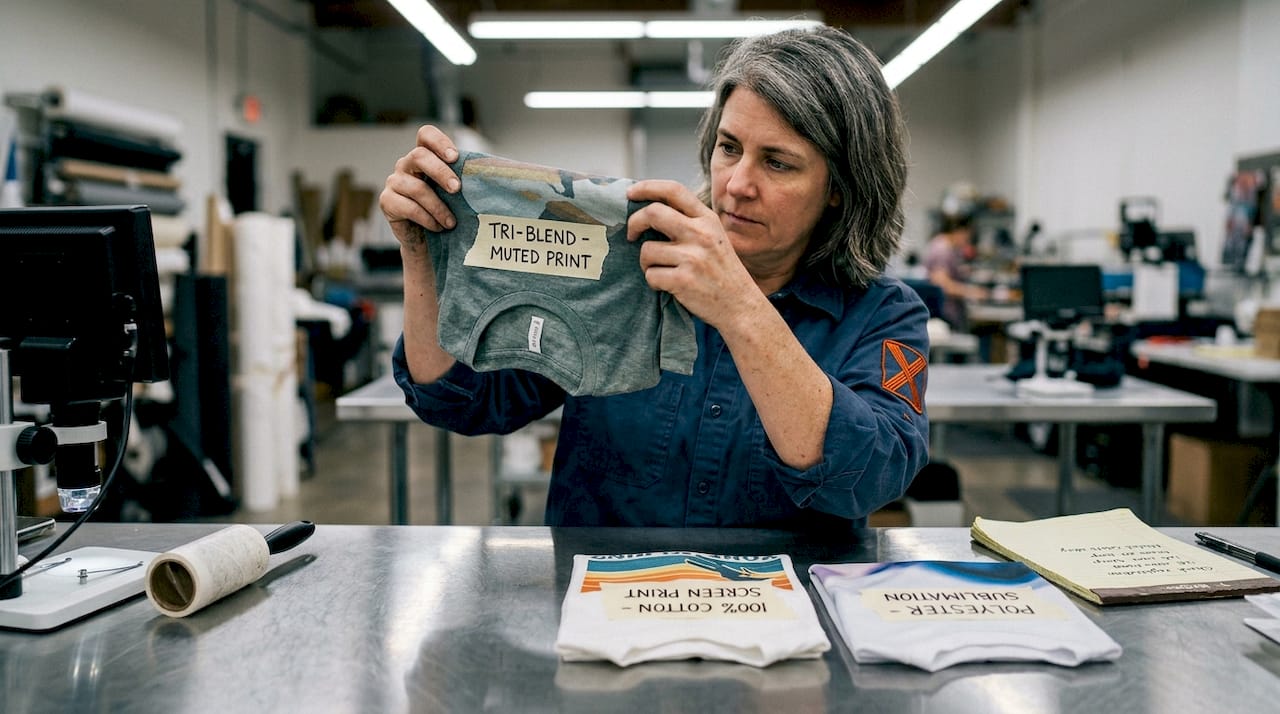
The benefits of DTF printing include versatility across fabric types, making it an excellent choice when you need flexibility. DTF transfers work on cotton, polyester, blends, and even difficult surfaces like nylon and leather.
| Fabric Type | Best Printing Methods | Pros | Cons |
|---|---|---|---|
| 100% Cotton | Screen printing, DTG, DTF | Soft, breathable, vibrant colors | Shrinks, wrinkles easily |
| 100% Polyester | Sublimation, DTF | Moisture-wicking, durable, colorfast | Less breathable, synthetic feel |
| Cotton/Poly Blend | DTF, screen printing | Balanced comfort and durability | May mute sublimation colors |
| Tri-Blend | DTG, DTF | Premium softness, excellent drape | Higher cost, color variations |
Fabric weight matters too. Lightweight fabrics (3.5 to 4.5 oz) work for athletic wear, while medium weight (5 to 6 oz) suits everyday apparel. Heavier fabrics (6+ oz) provide structure for outerwear and premium garments.
Pro Tip: Order fabric swatches and test print samples before committing to large production runs, saving thousands in potential waste.
Compare print methods: print-on-demand, screen printing, DTG, and cut-and-sew
Selecting the right printing method depends on your business stage, order volume, and design complexity. Print-on-demand offers low inventory risk but provides less customization control compared to manufacturing methods. Each approach serves different business models and growth phases.
Print-on-demand works through third-party fulfillment partners who print and ship individual orders. You avoid inventory costs and upfront investment, making it ideal for testing designs and validating market demand. However, you sacrifice profit margins and brand control.
Screen printing delivers the lowest per-unit costs for bulk orders but requires significant upfront setup fees. Each color in your design needs a separate screen, making complex multi-color designs expensive for small runs. Once setup is complete, printing thousands of units becomes highly economical.
Direct-to-garment printing provides flexibility for small batch production with photographic quality and unlimited colors. DTG excels at detailed designs and works well for orders ranging from one to several hundred pieces. The technology prints directly onto fabric, eliminating transfer steps.
Cut-and-sew manufacturing allows completely unique garments with all-over prints and custom patterns. This method requires larger minimum order quantities, typically 250 to 500 pieces minimum, and involves higher costs. You gain total design freedom and premium positioning.
| Method | Typical MOQ | Cost Per Unit | Inventory Risk | Design Flexibility | Lead Time |
|---|---|---|---|---|---|
| Print-on-Demand | 1+ | High | None | Limited templates | 3-7 days |
| Screen Printing | 50-100+ | Low (bulk) | High | Limited colors | 2-3 weeks |
| DTG | 1-100+ | Medium | Low to Medium | Unlimited colors | 1-2 weeks |
| Cut-and-Sew | 250-500+ | Medium to High | High | Complete freedom | 4-8 weeks |
Ideal use cases by method:
- Print-on-demand: Market testing, niche designs, minimal capital
- Screen printing: Established designs, bulk orders, simple graphics
- DTG: Custom orders, detailed artwork, moderate volumes
- Cut-and-sew: Premium brands, unique fits, all-over prints
Understanding the DTF vs screen printing comparison helps you choose the method matching your current business needs. Many successful apparel businesses use multiple methods simultaneously, applying each where it makes the most sense.
Use market testing and data-driven decisions to scale production smartly
Starting with print-on-demand or low minimum order quantities limits financial risk while testing designs in real markets. You gather actual customer feedback and sales data instead of guessing what will sell. This approach proves especially valuable for new brands and unproven design concepts.
Data shows custom apparel generates 40% lower return rates compared to standard inventory, signaling better fit and satisfaction with personalization. These metrics help justify scaling investments when you identify winning designs.
Collect customer feedback and sales data during initial launches to refine your designs and production approach. Track which designs sell fastest, what sizes move best, and where returns occur. Use these insights to optimize before committing to larger production runs.
Smart apparel businesses use market data to transition from flexible small-batch methods to cost-effective bulk production only after validating demand, reducing waste and maximizing return on investment.
Actionable steps for data-driven scaling:
- Launch new designs through low MOQ methods first
- Track sales velocity, customer reviews, and return reasons
- Analyze size distribution and color preferences
- Identify top performers worth scaling to bulk production
- Transition proven designs to screen printing or cut-and-sew
- Maintain flexibility for seasonal and trend-based designs
Looking at custom apparel examples from successful businesses reveals common patterns. Most started small, tested extensively, and scaled methodically based on proven demand rather than assumptions.
Applying t-shirt printing tips for 2026 means embracing hybrid production strategies. Keep fast-moving core designs in bulk inventory while using on-demand methods for experimental and seasonal offerings. This balanced approach optimizes both margins and flexibility.
When sales data consistently shows strong demand over three to six months, you have solid justification for investing in bulk production methods. Calculate your break-even point comparing current per-unit costs against projected bulk pricing, factoring in inventory holding costs and capital requirements.
Explore same day DTF transfers to speed up your custom apparel production
After understanding production methods and scaling strategies, you need reliable partners who can execute quickly without sacrificing quality. Speed matters when you’re testing markets, fulfilling custom orders, or responding to trending designs.
DIY Printz offers same day direct-to-film transfers that dramatically reduce turnaround time for custom apparel production. Instead of waiting weeks for screen printing setup or managing complex DTG equipment, you get ready-to-press transfers shipped the same day you order.
Their auto gang sheet solution helps manage multiple designs efficiently, optimizing your production workflows and reducing waste. You can mix different designs on a single sheet, perfect for small batch production and sample runs. This flexibility aligns perfectly with the market testing strategies discussed earlier.
Leveraging the benefits of DTF printing means you avoid the equipment investment, maintenance, and learning curve of owning your own printer. DIY Printz handles the technical complexity while you focus on design, sales, and customer relationships. Understanding why direct-to-film transfers work helps you see how this method fits into your overall production strategy.
Comparing DTF versus screen printing shows how each method serves different needs in your business. Use DTF for quick turnarounds, small batches, and detailed designs, then transition to screen printing when order volumes justify the setup costs.
Pro Tip: Combining same day DTF transfers with the detailed tech packs you created earlier maximizes both quality and speed advantages, giving you production flexibility without sacrificing standards.
What is a tech pack and why is it important?
A tech pack is a comprehensive document containing all design specifications, measurements, materials, and construction details that manufacturers need to produce your apparel accurately. It serves as the single source of truth, eliminating guesswork and reducing costly production errors. Without a detailed tech pack, you risk miscommunication, incorrect sizing, wrong materials, and products that don’t match your vision. Quality manufacturers require tech packs before beginning production.
How do I pick the right fabric for printing?
Choose polyester fabrics for sublimation printing because the process chemically bonds with polyester fibers. Select cotton for screen printing and DTG methods, which provide excellent ink absorption and color vibrancy. Always test fabric properties like shrinkage, drape, and color retention before committing to bulk orders. Order swatches and run print samples to verify your fabric choice works with your selected printing method.
What are the pros and cons of print-on-demand versus bulk printing?
Print-on-demand offers zero inventory risk and low startup costs but provides smaller profit margins and less control over quality and branding. Bulk printing methods like screen printing deliver much lower per-unit costs and higher margins but require significant upfront investment and inventory risk. Most successful apparel businesses use both approaches strategically, applying each method where it makes the most financial sense.
How can I reduce returns in custom apparel sales?
Use detailed size charts, accurate product photos, and customer reviews to set proper expectations before purchase. Implement consistent quality control checkpoints throughout production to catch defects early. Starting with low MOQ testing allows you to refine sizing and materials before bulk production, reducing unsellable inventory. Data shows personalized and custom apparel generates 40% lower return rates than standard inventory because customers are more invested in products they helped design.
Recommended
READY TO PRINT?
Send us your artwork and we'll dial in your DTF transfer, color, and same-day turnaround.


